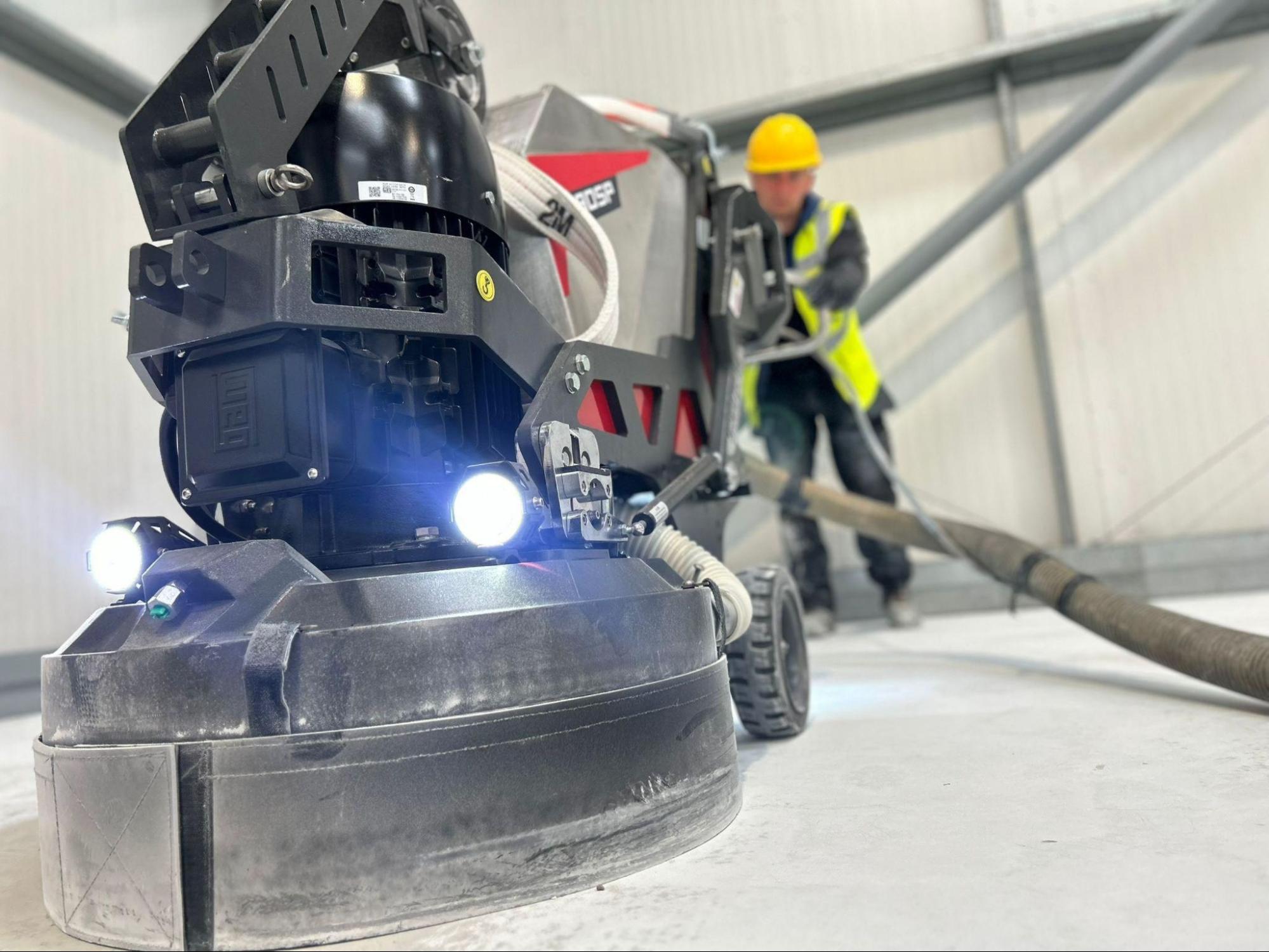
Concrete grinding and polishing is a cost-effective and efficient way to strengthen and beautify your floor. A professional job enhances any concrete’s natural beauty, boosting aesthetics and value.
It’s also environmentally friendly, low maintenance, and sustainable. There are two main methods: “dry” and “wet.” Each has unique benefits.
Choosing the correct method is crucial for the best results. Read on to compare wet vs dry concrete grinding and find the best option for your project.
What Is Concrete Grinding and Polishing?
Concrete grinding smooths rough surfaces using heavy machinery and diamond tooling. It involves multiple stages, with polishing as the final step.
Fine discs in this stage provide excellent shine and smoothness. Grinding and polishing create an exceptional concrete surface resembling polished stone.
Benefits of Concrete Grinding and Polishing
- Durability: Polished concrete floors are strong and outlast regular floors. They handle high traffic well and resist chipping, stains, and discolouration.
- Easy to Maintain: Sweep and mop ground and polished concrete floors to keep them clean.
- Affordable: Refreshing polished concrete floors in high-traffic areas every 7 to 10 years makes them cost-effective long-term.
- Eco-friendly: Concrete grinding produces minimal waste and improves air quality by reducing mould and dust.
- Enhances Safety: Polished concrete floors are glossy and attractive, reflecting light to create a safer environment and lower lighting costs.
Difference Between Wet and Dry Grinding and Polishing
The Dry Grinding and Polish Method
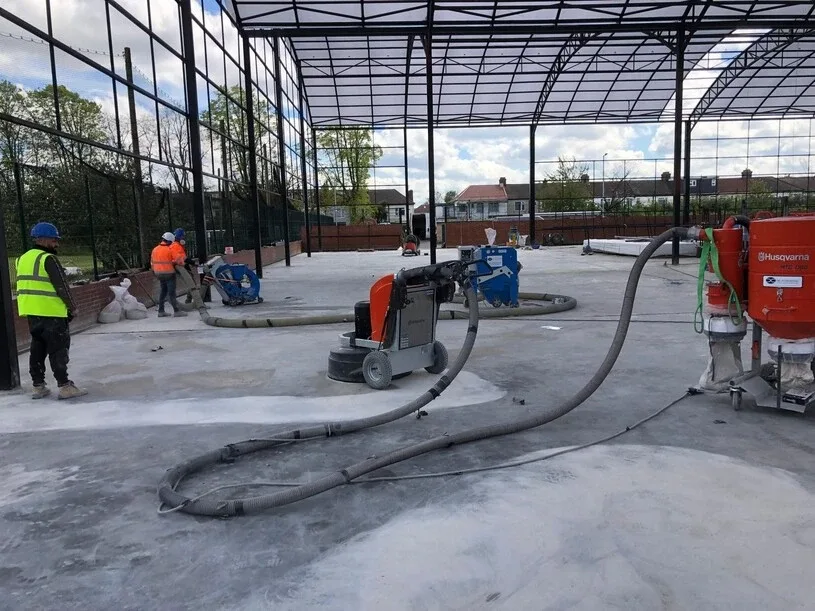
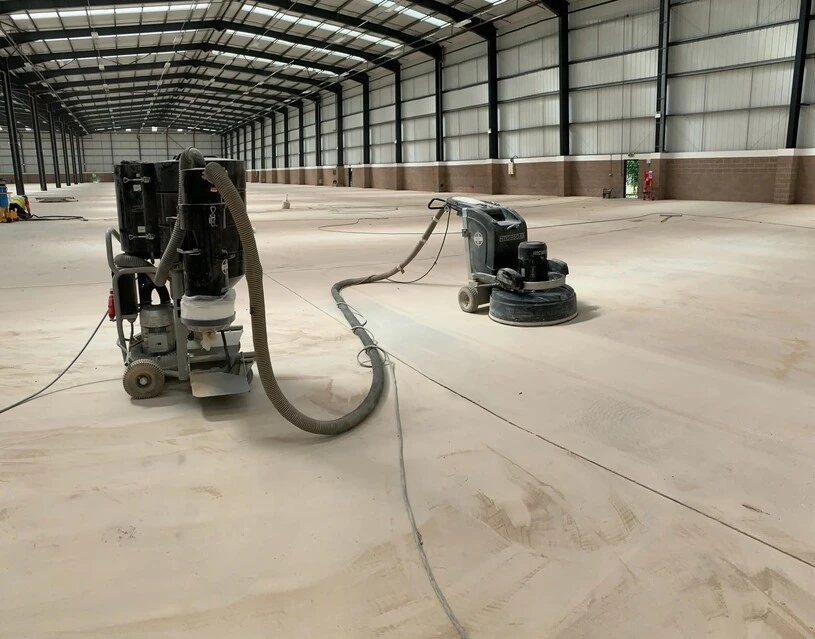
Dry method of polishing involves using commercial machines to grind concrete surfaces. These machines are tailored to achieve specific levels of shine.
A coarser diamond grit is used, followed by a finer one for the final polish. Modern grinders can connect to dust extraction systems to collect dust.
The Wet Polishing Method
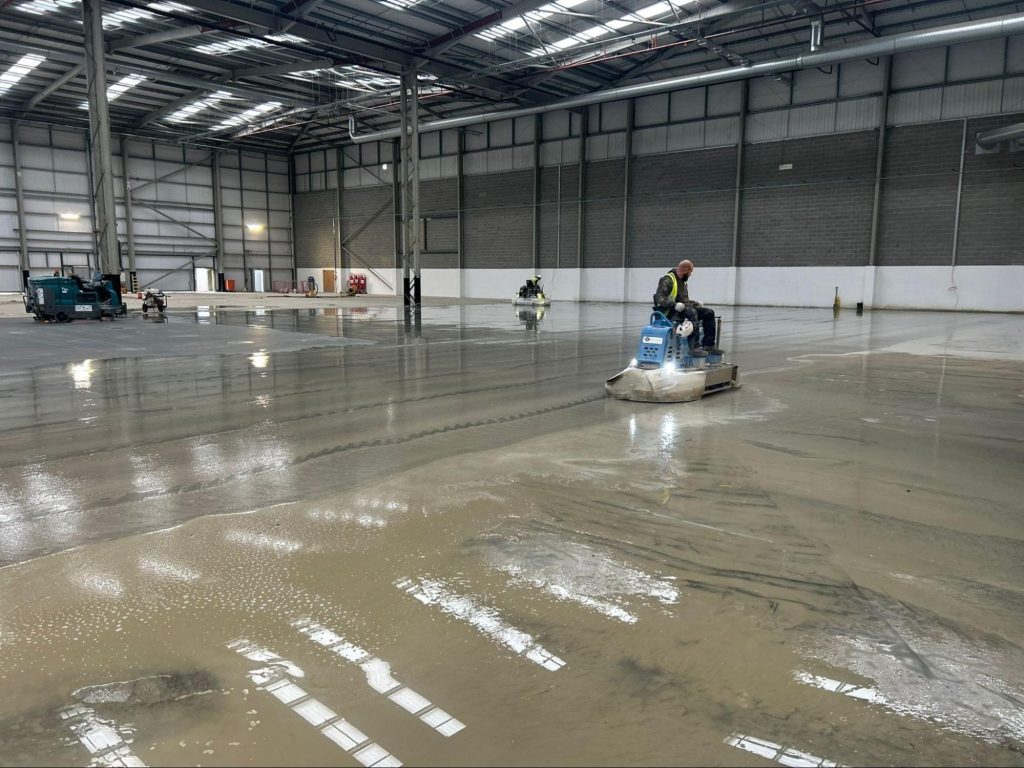
In the wet polishing method, water cools the diamond abrasives and captures dust in a slurry to keep it out of the air. The polishing discs have the same grit size, producing a low lustre shine.
To get a high shine, you should grind wet and polish dry. This approach helps expose the aggregate and removes a significant layer of concrete.
Pros of Wet Grinding and Polishing Concrete Floor
- Increases diamond lifespan: Wet grinding and polishing extend the life of diamond tools and allow for more aggressive grinding. They keep the tools cooler, preventing metal bonds from glazing. This results in faster cutting on medium to tough floors.
- Removes ugly scratches: Using water removes scratches from metal bond diamonds early on. This ensures a duller, easier-to-maintain shine on your floors.
- No dust: Wet grinding eliminates airborne dust, reducing the need for dust collectors, respirators, and vacuums, which lowers operation costs. Water protects users from toxic silicon particles, safeguarding their health.
- More familiarity: Wet concrete grinding and polishing came first before the dry grinding method. So, experienced contractors often prefer it, especially where water is plentiful.
- More options: The wet process of polishing produces a consistent finish in a range of flooring materials from porcelain, marble, terrazzo, quartz, limestone, travertine to the hardest granite.
- Less costly: Wet pads are usually cheaper than dry pads. They stay cool with water, preventing overheating and extending their life. This means your machine will last longer with this method.
Cons of Wet Grinding and Polishing Concrete Floor
- Leads to waste: Large jobs can waste a lot of water, especially when dry process is an option. With water costs rising, it might not be the best choice for big commercial projects.
- Lower shine: Achieving the same level of shine with wet polishing is challenging compared to the dry polishing process. Wet polishing may not be ideal for decorative flooring or a premium shine.
- Creates a mess: The wet grinding method reduces dust exposure but creates a slurry mess that takes time to clean. Disposing the slurry can be difficult, making it inconvenient for some contractors.
- Safety concerns: The wet method of grinding or polishing poses risks, such as slipping on wet floors and electrical hazards. Proper training and safety measures are essential to avoid workplace accidents.
Pros of Dry Polishing and Grinding
- Deliver more shine: Dry polishing makes your floor shinier than wet polishing. It ensures better light reflection and a more sophisticated look.
- Ideal for a soft concrete floor: The dry polishing method is better for soft concrete. Wet polishing causes aggressive grinding, leaving gouge marks. It also hardens and condenses the slab more.
- Immediate results: With dry grinding, results are immediate. There’s no slurry mess, so workers can quickly assess and improve their work.
- Easy maintenance: With dry grinding, the machine is typically much easier to maintain, as the bearings are not exposed to wet conditions that lead to rusting and faster wear.
Cons of Dry Polishing and Grinding
- Health hazards: Dry grinding creates harmful dust. Controlling it is crucial to prevent respiratory risks.
- Added costs: This method requires purpose-built dust collectors to maintain healthy airflow, which increases equipment costs. It also consumes more energy per unit of mass.
- Risks of glazing: Using an inappropriate tool can cause overheating and glazing. It’s also not ideal for very hard concrete.
What Is the Greener Method?
The debate between wet and dry grinding continues. Dry grinding handles disposal better since it avoids slurry mess. However, slurry disposal regulations differ by state, so check your local rules.
Wet grinding tackles toxic silicon, a major environmental concern. It also eliminates dust clouds from dry polishing. Silicon dust is a big issue in the flooring industry.
Even with proper extraction, workers face significant dust exposure during dry polishing.
Most Ideal Environments for Wet or Dry Concrete Grinding and Polishing Process
Choosing the best grinding and polishing method for concrete floors depends on the environment and project needs.
Each method has pros and cons for residential, commercial, and industrial settings. Knowing these differences helps contractors and facility managers make smart performance, cost, and safety decisions.
- Hospitals
- Manufacturing Plants
- Showrooms
- Schools / Universities
- Warehouses
Can’t Decide Between Wet vs Dry Grinding Process? Call Our Team of Professionals to Make the Right Choice
We know that choosing between wet and dry grinding can be challenging. Each method has its pros and cons. We’re here to guide you. High-gloss finish? Efficient waste management? Worker safety? We tailor our approach to your needs.
Contact us today to discuss your project. Let’s ensure you make the best choice. Achieve the perfect flooring finish with us. Reach out now and let’s bring your vision to life.
FAQs
How long should concrete cure before grinding?
Concrete should be cured for at least 28 days before grinding. This ensures it gets strong and hard enough for effective polishing. In some cases, you can start grinding after 7 days if the concrete is hard enough.
This fat track method can be achieved with our Optimal Slab installation. Always check with your contractor or concrete specialist for the right curing time based on your concrete mix and conditions.
Should I wet concrete while grinding?
Wetting concrete while grinding has several advantages. It suppresses dust, reducing health risks for workers. It also prevents the concrete from overheating, which can cause damage.
However, wet grinding creates slurry, which is hard to manage and dispose of. Weigh the pros and cons based on your project needs.
If unsure, consult a professional for guidance. Also over wetting can cause week concrete and delamination.
How do you clean concrete after wet grinding?
Cleaning concrete after wet grinding involves a few key steps. First, use a wet vacuum to remove the slurry immediately after grinding. Vacuum thoroughly to prevent residue from hardening.
Next, rinse the area with clean water and vacuum again to collect the excess water. Let the surface dry completely before applying any sealants or coatings.
Use a neutral pH cleaner to eliminate any remaining slurry for a more thorough cleanup. Always follow the manufacturer’s guidelines for cleanup products to avoid damaging the concrete.
Is it better to sand concrete wet or dry?
Choosing between wet and dry concrete sanding depends on your project’s needs. Wet sanding is better for indoor work because it reduces dust and keeps the area clean.
It also prevents the surface from overheating. Dry sanding is handy for quick touch-ups and avoids slurry. It also lets you inspect the surface quickly. Based on your project’s requirements, consult a professional for the best advice.
What happens if the concrete is too wet?
If the concrete is too wet, it can compromise structural integrity and appearance. Excess moisture leads to improper curing, resulting in a weaker, porous surface prone to cracking and scaling.
Overly wet concrete can cause “bleed water,” where excess water rises to the surface, interfering with finishing and sealing.
Too much water also segregates the mix, causing uneven density and weakened strength. To avoid these issues, use the correct water-to-cement ratio and monitor moisture levels during curing.

- Know your warehouse floor: was it built to FM or SR, and does that still matter? - October 21, 2026
- Concrete floor grinding: four machines, four different jobs, and the one your floor probably does not need - October 15, 2026
- Resin flooring: Epoxy, PU or MMA, and why the system you pick is not what decides how long it lasts - October 14, 2026