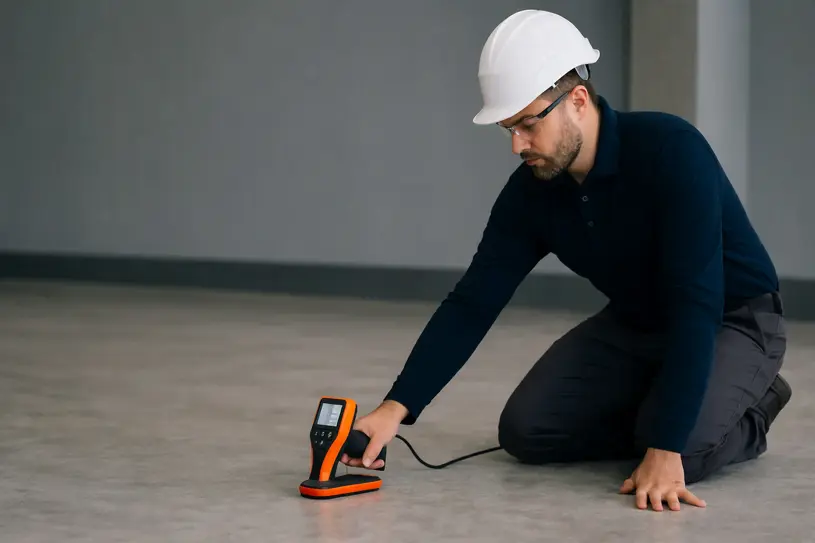
Concrete is considered one of the strongest materials on the planet when it comes to building, but even concrete isn’t perfect if it isn’t built right. The structure we all know won’t be like that if the construction workers and engineers don’t do it right.
Building concrete means putting in strong reinforcement within it. The steel bars that go inside will act as the perfect foundation for the concrete cover to be long-lasting and strong. To be sure it is built this way, there’s the cover meter survey that shows its strength and quality.
Why is Reinforcement Integrity Non-Negotiable?
The reinforcement bars are the most essential part of the structure. Without them, the concrete can’t withstand. If the reinforcement is not made properly, corrodes, or placed poorly, the entire structure is put in jeopardy of dissolving and collapsing. This is the crucial part that makes a building strong, but the concrete cover on top of it is also vital.
What Exactly is a Cover Meter Survey?
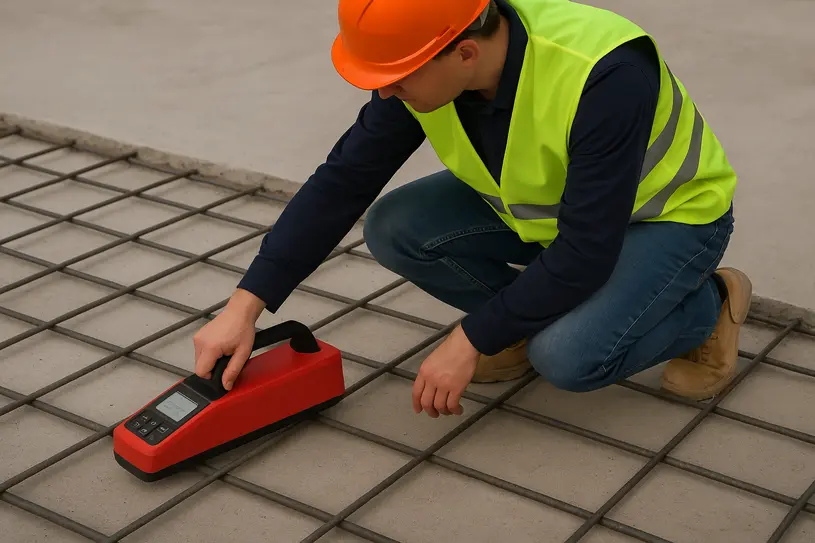
A cover meter survey uses electromagnetic induction to detect metallic objects embedded within concrete. By passing a search head over the concrete surface, it measures the depth of reinforcement and estimates rebar diameter with high precision. Unlike destructive testing, this non-destructive technique allows engineers to confirm bar placement, spacing, and orientation without damaging the structure.
Key Parameters Measured
- Rebar depth: Depth measurement is central to cover meter surveys. Engineers use the device to locate reinforcement beneath the concrete surface and measure the exact thickness of the cover. Accurate measurements ensure the steel reinforcement is sufficiently embedded to resist carbonation, chloride penetration, and fire exposure.
- Spacing: Spacing between reinforcement bars is critical for structural analysis. Using an electromagnetic cover meter, engineers can identify whether bars are placed according to design specifications or if there are irregular gaps that could weaken the concrete element.
- Position: Precise location and orientation of bars are logged during the survey. By confirming alignment, engineers can detect misplaced reinforcement or bars running off-axis, both of which reduce the structural efficiency of reinforced concrete.
How It Compares With Alternatives Like Ground Penetrating Radar (GPR)?
Cover meter surveys excel at measuring the depth and spacing of reinforcement cover with accuracy. While GPR can map larger areas and detect non-metallic features, it requires greater calibration and operator expertise, and is generally more costly. For targeted detection of embedded metallic objects such as steel reinforcement, covermeters remain the most reliable and precise tool.
Standards and Compliance for Rebar Cover in the UK
Following standards is a must when building concrete structures. Here are two key standards used in the UK:
- BS 1881-204 – This British Standard sets out methods for measuring the thickness of concrete cover using electromagnetic cover meters. It ensures accurate detection and provides guidance for calibration, confirming that measurements are consistent across different concrete structures.
- Eurocode 2 – Eurocode 2 establishes the structural design principles for reinforced concrete, including minimum cover depths based on exposure conditions. Compliance guarantees durability against corrosion and fire, making it a cornerstone for structural engineers working across the UK.
Typical Minimum Cover Depths by Structure Type
| Structure Type | Recommended Cover (mm) | Reason |
|---|---|---|
| Residential Floors | 20–25 mm | Basic durability |
| Industrial Slabs | 30–40 mm | Load-bearing & abrasion resistance |
| Bridges / Highways | 50+ mm | Corrosion protection, heavy exposure |
How a Cover Meter Survey Protects Reinforcement Integrity?
The cover meter is the perfect tool for measuring how well the structure is built. Here are four key elements that show it:
- Ensures sufficient concrete cover to prevent corrosion.
- Identifies inconsistent rebar placement during construction.
- Detects voids or insufficient compaction that compromise protection.
- Provides data for certification and compliance audits.
Common Problems Uncovered by Surveys
Once the cover meter is used and results are received, there are sometimes problems that can’t be overlooked. Here are the four most common problems uncovered in these surveys:
- Rebar too close to the surface (corrosion risk).
- Missing or misplaced reinforcement.
- Variations in cover leading to weak zones.
- Non-compliance with TR34, BS 8204, or Eurocode 2.
Cover Meter Survey vs. Other NDT Techniques
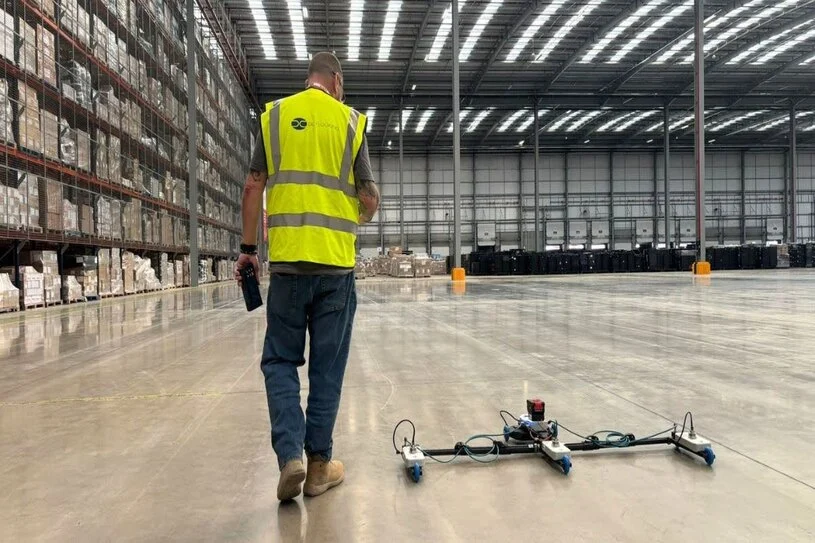
Cover meters are best for measuring rebar depth and spacing with precise accuracy, though their penetration depth is limited. GPR is useful for mapping larger concrete structures but comes at a higher cost. Ultrasonic pulse velocity works well for detecting voids and cracks, yet it is less effective for reinforcement positioning. Each method has its role, but cover meter surveys remain the most practical choice for reinforcement cover.
| Method | Best For | Limitations |
|---|---|---|
| Cover Meter Survey | Rebar depth & spacing | Limited penetration depth |
| Ground Penetrating Radar (GPR) | Mapping large areas | More costly, operator-dependent |
| Ultrasonic Pulse Velocity | Detecting voids & cracks | Less effective for rebar positioning |
As you can see, using the right method can uncover flaws in different areas. The cover meter survey is excellent for rebar depth and spacing, but other methods are better for uncovering cracks and voids or mapping large areas. Use the one that you need at the moment.
Real-World Applications
So, how exactly is this method used, and in what areas does it benefit the most? Here are four excellent real-world applications:
- Industrial Flooring: Cover meters are widely used in warehouses and factories across Essex and Basildon. Engineers conduct surveys to confirm reinforcement cover complies with TR34, ensuring concrete slabs can handle heavy machinery and constant traffic.
- Bridges & Highways: For bridges and highways around London and the M25, cover meters help engineers verify that reinforcement has sufficient protection against chlorides, water ingress, and freeze-thaw cycles, extending the lifespan of these critical structures.
- Heritage Restoration: In Kensington and other heritage-rich areas, cover meter surveys are used to investigate existing reinforced concrete without damaging its fabric. This allows conservation teams to reinforce safely while respecting architectural integrity.
- Multi-storey Buildings: High-rise developments across the UK depend on accurate depth of reinforcement measurement. Cover meter surveys ensure that multi-storey concrete structures meet Eurocode 2, providing both durability and fire protection.
Cost vs. Risk: Why Cover Meter Surveys Pay Off?
The cost of a survey is small compared to the financial risk of structural failure. By detecting problems early, engineers avoid expensive repairs, insurance disputes, and safety hazards. Investing in accurate, non-destructive surveys protects both the structure and its long-term value.
Contact Our DC Flooring Specialists for Cover Meter Survey
If you are planning or maintaining reinforced concrete projects in London, the M25, Essex, Basildon, or Kensington, our engineers at DC Flooring are here to help. We provide professional cover meter surveys using calibrated electromagnetic equipment, ensuring compliance, accuracy, and peace of mind for every project.
FAQs
How accurate is a cover meter survey compared to destructive testing?
Cover meter surveys provide accurate measurements of concrete cover depth without damage. While destructive testing can give direct readings, it is invasive and limited. A well-calibrated electromagnetic cover meter offers precision that is more than sufficient for structural analysis.
Can cover meter surveys detect both rebar and mesh reinforcement?
Yes. Cover meters can identify reinforcement bars and mesh, as long as the steel is embedded within concrete. The electromagnetic signal detects metallic objects, allowing engineers to confirm layout and spacing.
How deep can a cover meter scan into concrete?
Most covermeters can measure up to 180 mm depending on calibration, bar diameter, and concrete condition. For greater depths, GPR may be used alongside.
Do insurers or building control bodies require proof of rebar cover surveys?
Yes. Many insurers and building control authorities require documentation of reinforcement cover, particularly in high-risk structures such as bridges, industrial slabs, and multi-storey buildings.
What’s the difference between cover depth for durability vs. fire protection?
Durability cover protects reinforcement against corrosion, carbonation, and chloride attack. Fire protection requires additional depth to shield reinforcement from high temperatures during structural fires.
How often should reinforcement be checked in existing structures?
Surveys should be carried out as part of periodic concrete condition surveys, especially for older or exposed structures. Engineers typically recommend inspections every five to ten years depending on exposure and usage.
What happens if reinforcement integrity is compromised?
If reinforcement bars are too shallow, corroded, or misplaced, the structural capacity is reduced. Engineers may recommend remedial works such as concrete repair, additional reinforcement, or protective coatings to restore safety.
Can a cover meter survey be carried out on finished floors without damage?
Yes. Cover meter surveys are entirely non-destructive. Engineers can scan finished floors, walls, and slabs without leaving marks or requiring drilling.

- Know your warehouse floor: was it built to FM or SR, and does that still matter? - October 21, 2026
- Concrete floor grinding: four machines, four different jobs, and the one your floor probably does not need - October 15, 2026
- Resin flooring: Epoxy, PU or MMA, and why the system you pick is not what decides how long it lasts - October 14, 2026