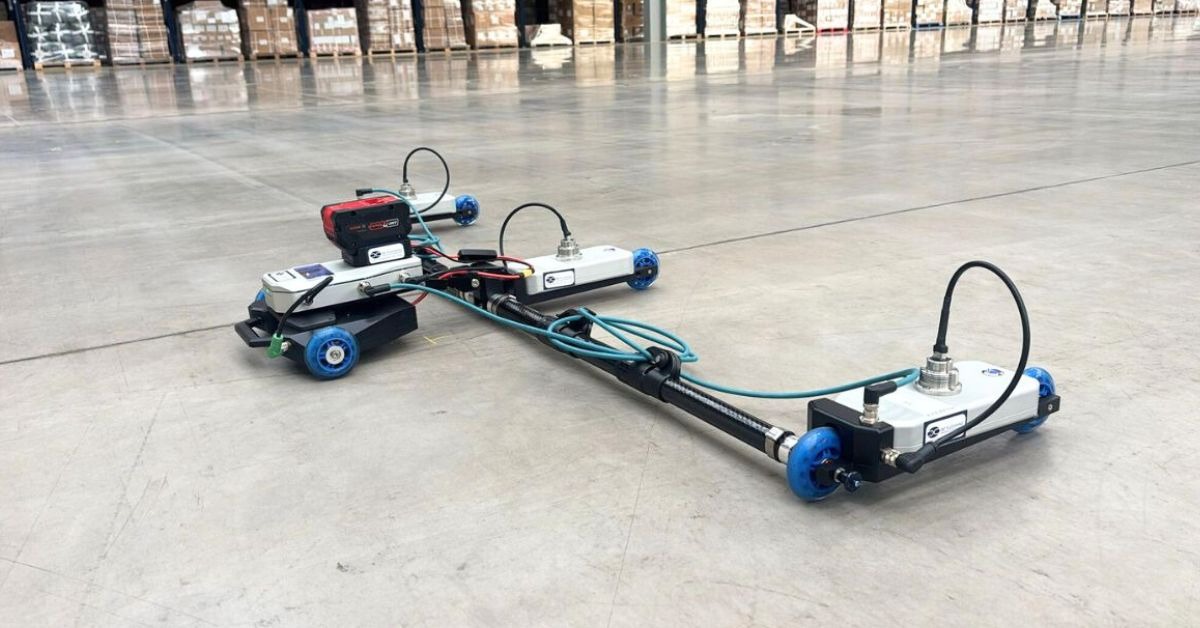
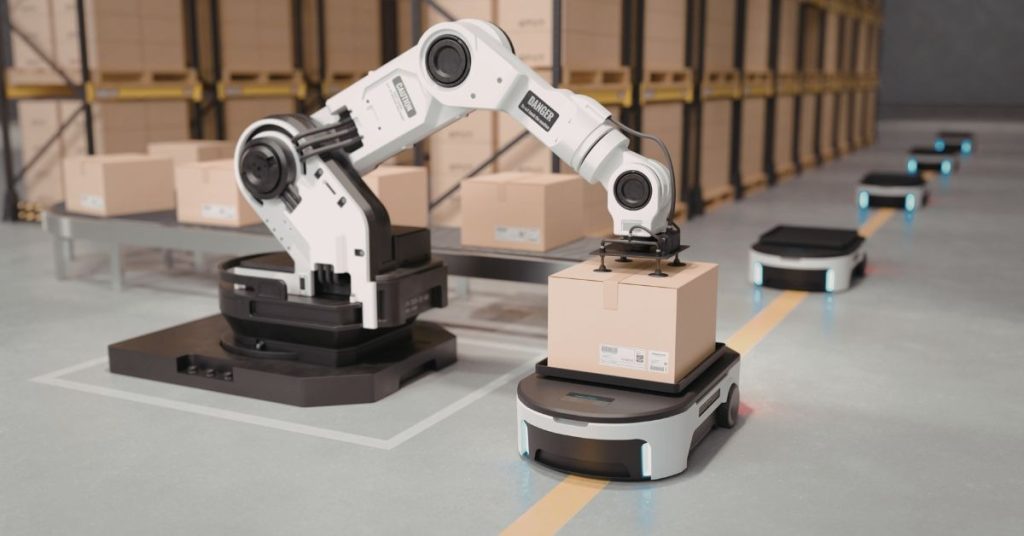
Robotic systems are transforming efficiency and productivity in warehouses and industrial facilities, with robust market growth around the world. The success of these solutions is grounded in specialised high-tolerance robotic flooring. To truly unlock the power of these technologies, it is essential to meet material handling equipment (MHE) floor requirements that adhere to high industry standards and compliance regulations.
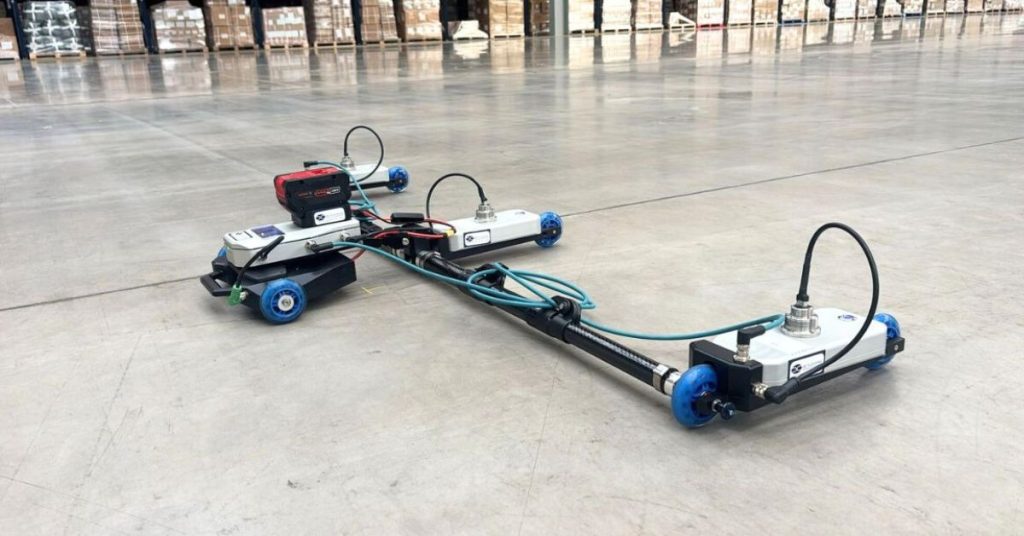
A Commitment to Workplace Safety and Performance Through Robotics Flooring
Different robotic systems have different automated flooring requirements. However, the right floor forms part of every system’s critical infrastructure, optimising productivity and performance. Poorly designed or constructed floors where robotic systems are planned can lead to errors, safety risks, damage to equipment and inventory, and impact system longevity. This comes with the risk of costly manual interventions, disruptions, and downtime.
By concentrating on compliance, many operational elements also fall into place. For example, the strict hygiene and cleanliness requirements of medical and pharmaceutical flooring simplifies cleaning and the day-to-day activities within these facilities. Similarly, high-quality high-tolerance flooring ensures consistent, uninterrupted robot performance in warehouse and manufacturing environments and protects return on investment. The objectives of these facilities are met by working with compliance-focused commercial flooring specialists.
From new builds to retrofit commercial spaces, here are the most important compliance and standards for high-tolerance robotic flooring in the UK.
BS 8204-Part 1:2003 and BS 8204-Part 2:2003 SR Flatness testing
British Standard 8204 is a widely used code of practice for the installation of commercial floors receiving specialist finishes. BS 8204-1 relates to the preparation and installation of the base and levelling screeds. BS 8204-2 covers wearing screeds or the final, top layer of both ground-supported and suspended floors.
Adhering to this British Standard for design, materials, processes, inspections, and testing ensures durable, high-performance flooring that’s safe and suited to purpose.
TR34: Robotic Flooring Guidance for Real-World Conditions
TR34 is a Technical Record by the Concrete Society that provides comprehensive guidance on the design, construction, and upkeep of commercial flooring. TR34 free movement provisions are an excellent starting point to obtain high-tolerance flooring for automation specifications.
In environments requiring super flat flooring and facilities that rely on automation and free movement systems, TR34 scrutinises four key components that ensure floors perform well over time and prioritise safety:
- Floor flatness and floor levelness. AMR flooring needs to be smooth and even concrete or resin floors. This prevents damage to robotic infrastructure, misalignment, and interruptions. TR34 sets acceptable variances and prescribes testing and assessment for the best results.
- Load bearing. Industrial flooring needs to handle the weight of staff, equipment, inventory, and racking. TR34 guides load bearing for optimal slab thickness, sub-base, strength, and weight transfer, creating floors that meet the technical requirements of AMR systems today and into the future.
- Joint detailing. Joints have the potential to become weak points and incorrectly placed and constructed joints can lead to continual repairs. TR34 4th edition provides detailed information on joint spacing, materials, and construction to keep AMR systems running smoothly.
- Surface regularity testing. This element of TR34 examines floor flatness testing. This involves precision testing, which allows for fast identification of uneven flooring and quick resolution.
BS EN 61340-5-1: Anti-Static Flooring
State-of-the art technologies are generally sensitive to static electric discharges, which can damage circuitry and components. In medical facilities and data centres, for example, anti-static flooring plays a crucial role in preventing irreversible damage to sometimes life-saving equipment and avoiding costly losses. In environments with flammable gases and dust, there is also a fire ignition risk associated with electro-static charges.

ISO 14644 Cleanrooms and Controlled Environments
High-Tolerance Flooring for Cleanrooms
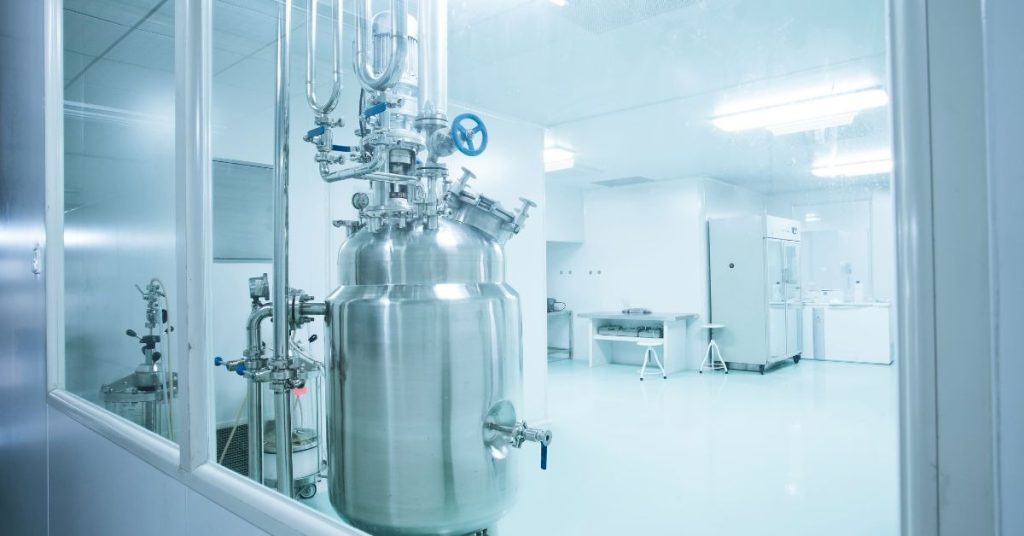
ISO 14644 is the international standard for air cleanliness in cleanrooms and controlled environments. In the UK, this has been adopted by the British Standards Institute as BS EN ISO 14644. In cleanrooms and controlled environments, the choice of materials is critical to meeting ISO and GMP requirements.
The cleanroom flooring requirements differ according to GMP class. 70% of airborne particles end up on the floor, so this testing protocol measures airborne particles at rest and in operation and prescribes thresholds according to class. Cleaning and decontamination must be easy for the flooring on these sites – and this is confirmed using the Riboflavin test, which tests for residual particles after cleaning.
High-Tolerance Flooring for Pharmaceutical and Medical
The medical and pharmaceutical industries are highly-regulated – and AMRs are providing safe, reliable internal logistics that reduce manual touchpoints. At DC Flooring, we balance high-performance, robotics-suitable flooring that simultaneously meets regulatory standards.
AMR Flooring that Meets Regulatory Compliance Protocols
UK commercial flooring supports regulatory compliance in a number of ways:
Health and Safety
AMR flooring (and all flooring) has a role to play in workplace safety. The Health and Safety at Work Act is the foundation of health and safety practices. This stipulates that all floors must be in good condition, suitable, and free from hazards.
While unrelated to compliance, slip resistance testing should be conducted to UK standards or according to the specific robotic equipment supplier’s standards to support performance of robotic technologies. This testing is primarily conducted within the guidelines of BS 7976-2 but, with the growth of smart warehouses and workplaces, the view is to harmonise testing practices internationally to establish a global standard.
Industry-Specific Compliance
Different industries have different industry-specific compliance considerations. For all high-tolerance flooring installations and processes, we work within the parameters of industry codes and regulations to ensure AMR environments that are compliant and fit for purpose.
UK Building Regulations
UK building regulations create a framework for many factors in built environments. This includes structural integrity, accessibility, and fire safety. All flooring designs and installations need to adhere to these minimum requirements. UK building regulations should be taken into account by floor designers prior to installation.
Book a professional floor survey with DC Flooring and get the data you need to make confident operational decisions.
Work With DC Flooring for Prioritised Compliance
At DC Flooring, compliance is central to every project. With operations within the UK and beyond, we ensure every high-tolerance flooring system for robotics matches relevant guidelines, specifications, and codes of practice according to your region. For specialist flooring requirements, we tailor our offering to meet the compliance specifics of your industry. Contact us for compliant, high-performance robotics flooring today.
AMR Flooring Compliance FAQs
Is there a specific UK law governing AMR flooring?
No, there is no single law dedicated purely to AMR flooring. Rather, AMR flooring compliance primarily looks to a range of regulations and standards that pertain to safety and building performance. This includes BS 8204, which looks at screeding, surface regularity, and installations; the Health and Safety at Work Act; and fire safety related regulations.
Why is floor flatness important for AMR compliance?
Accurate AMR operations rely on super flat flooring for robots to navigate accurately without interference. This is a fundamental consideration when it comes to installation and maintenance. It also has a bearing on load stability and sensor accuracy. Projects often specify SR1 surface regularity under BS 8204 and TR34 FM and DM as a basis for robotic environments – in addition to the robotic manufacturers’ specifications, which are constantly evolving.
What testing is required for AMR flooring compliance?
Common AMR flooring compliance testing requirements include:
- Surface regularity and flatness
- Load bearing and impact resistance testing
- Slip resistance testing
- Surface friction
- Joint profiling
- Electrostatic testing
Compliance will also extend to maintenance for enduring robotic high-performance and safety.
Learn More About Flooring Compliance
With experience across all sectors and flooring options, DC Flooring is uniquely positioned to advise on the best flooring solutions available for your commercial or industrial operations.

- Is Your Warehouse Floor Ready for Robotic Automation? - October 2, 2026
- Upgrading existing warehouse floors for high-bay racking: what you need to know - September 25, 2026
- Deep cleaning or restoring polished concrete: which does your floor actually need? - September 11, 2026