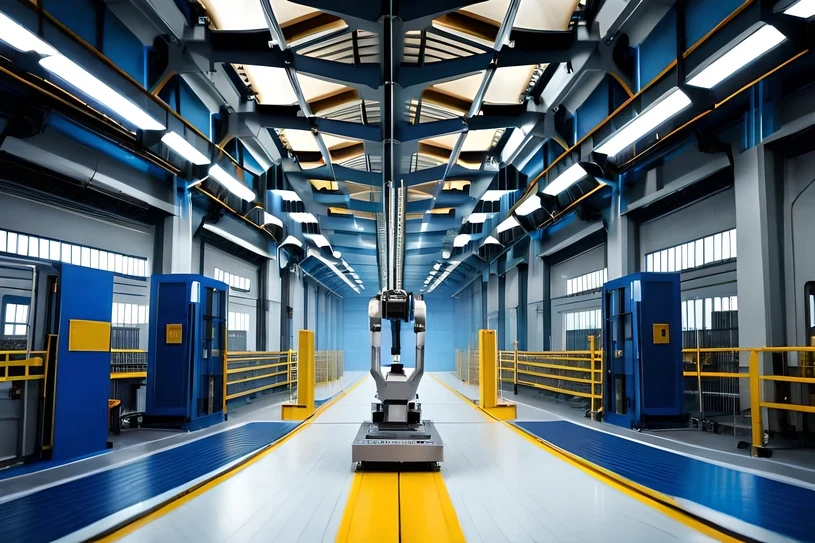
Optimising your warehouse layout is crucial, especially when introducing AMRs. Even if your warehouse is running well, there’s always room to improve organisation. Clear walkways, fewer obstacles, reduced waste, and a focus on safety are essential. Introducing AMRs means auditing your current space to create a plan that maximises efficiency and keeps workers safe in AMR-Optimised Warehouses.
Warehouse Safety: A Priority for the Industry
Warehouse safety is a key priority in logistics. Autonomous mobile robots (AMRs) have changed how safety is managed, offering ways to reduce risks and improve conditions. Here’s how AMRs contribute to safer warehouses:
Safe collaboration with humans
AMRs use advanced navigation, sensors, and safety systems to lower the risk of collisions and accidents. They can detect obstacles and adjust routes in real-time, creating a safer space for workers. These robots work alongside employees, taking over risky tasks while supporting human-robot teamwork.
Fewer accidents and injuries
Automating dangerous and repetitive tasks reduces workplace accidents. AMRs handle jobs like transporting heavy loads, allowing workers to focus on more important, less hazardous tasks. This shift leads to a safer and more efficient work environment.
What Is AMR (Autonomous Mobile Robot)?
Autonomous Mobile Robots (AMRs) are self-driving robots designed to move independently. They can plan their paths and avoid obstacles without human assistance.
AMRs are commonly used in automated warehouses to pick, move, and transport goods. They are considered an advanced version of AGV robots, with the ability to navigate and detect obstacles during travel.
Automated Logistics: Optimising Processes
Efficient warehouse management is essential in a competitive market. Automated logistics plays a crucial role in meeting modern demands. Autonomous mobile robots (AMRs) offer several benefits for improving workflows and warehouse logistics.
They optimise routes and save time by completing routine tasks like transporting parts and supplying production lines more efficiently. AMRs calculate and follow the best possible routes to speed up operations.
Inventory management becomes easier with mobile robots. They use scanning and tracking technology to maintain real-time stock data, reducing errors and preventing losses.
AMRs also adapt to changing demand. This flexibility allows warehouses to scale operations as needed without losing efficiency.
Improve Efficiency and Performance
Autonomous mobile robots (AMRs) are transforming warehouses and factories. They improve safety by reducing accidents and making inventory management more efficient. AMRs are already helping create smarter and more sustainable logistics systems.
The Integrated Information System (IIS) helps the Information and Material Flow to Move Smoothly in the Factory
Managing information flow is a key part of supply chain logistics, especially within factories. As materials move from the warehouse to production lines, inventory and data must be updated regularly. These tasks happen hundreds of times daily in a factory. However, inventory updates are often done manually using paper or Excel spreadsheets. This approach has several problems:
- Information can be misunderstood.
- Processing is slow and inefficient.
- Data is fragmented and can be lost due to a lack of storage systems.
- There is no system for analysis, reporting, or forecasting.
- Managers cannot access real-time updates easily.
Reducing Cost for Business
Using AMRs effectively can significantly lower production costs:
- Cut labour costs and related expenses
- Shorten production time and increase output
- Speed up return on investment
- Minimise risks and human errors during production
Increase Flexibility in Operations
- The AMR can easily be reprogrammed routes and factory maps
Unlike AGVs, which rely on magnetic tape and fixed routes for navigation, AMRs create their own paths and avoid obstacles. This makes AMRs much more adaptable to changes in tasks. Reprogramming routes and factory maps for AMRs is quick and simple, whereas updating an AGV requires hardware changes, like laying new magnetic tape, which is time-consuming and expensive.
- AMR automatically assesses and reacts to its surroundings
AMRs can assess and respond to their surroundings without needing supervision. SLAM navigation technology helps them adapt to changes in their environment.

Minimising Risks for Workers
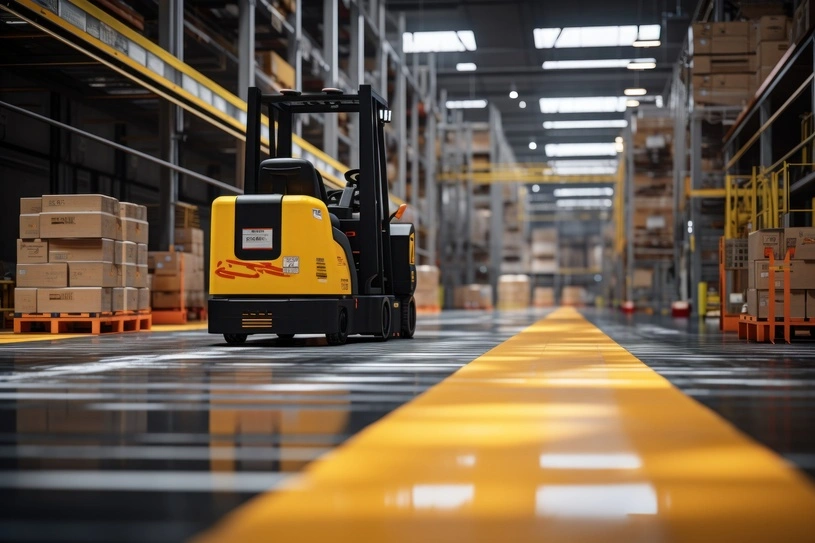
Businesses often use AMRs to handle dangerous tasks. These robots can work during disease outbreaks, carry heavy loads, or operate in extreme conditions where it’s unsafe for humans.
In manufacturing, workers face risks like injuries from material handling or accidents with machinery and transport equipment such as forklifts. Using robots can help reduce these dangers.
Real-time Inventory
AMRs help businesses track inventory more efficiently. These robots can move goods through warehouses, scanning items and updating records in real-time. This ensures accurate stock levels and reduces human counting errors. Companies can rely on this technology to improve supply chain management.
Disadvantages of AMRs for Warehouses
Automated Mobile Robots (AMRs) bring many advantages, but they also come with challenges. It’s important to understand these drawbacks before implementing them in a warehouse.
High Investment Costs
Implementing AMRs involves advanced technology and mechanical engineering. It also requires setting up shelves and developing the necessary software. As a result, the overall cost of an AMR system is high.
Existing Some Risks in Operations
Using AMR can involve safety risks. For instance, overloaded or bulky materials might fall and cause damage. Unpredictable events in industrial settings can also lead to navigation issues, disrupting operations.
Applications of AMR’s
The manufacturing industry faces many challenges. Businesses need to meet the growing demand for diverse products, but many still rely on labour-intensive processes and lack enough workers. Inflation and limited production space make it hard to expand quickly. Managing inventory and surplus storage has become a pressing issue. AMR robots, with their advanced features, are now widely used in manufacturing and automated warehouses to address these problems.
3C (Computers, Communications, and Consumer Electronics)
Needs complex technology, specialised equipment, and a highly controlled production environment.
Apparel and footwear
Large stock-keeping units (SKUs), seasonal and promotional market changes, partially automated production, and a need for human workers alongside collaborative robots.
Automotive
High-value products must have minimal manufacturing errors. These products are often large, so strict standards are needed to keep workers and consumers safe.
Pharmaceutical and medical device
Pharmaceutical products at each processing stage are highly sensitive to environmental conditions. Prolonged exposure can cause changes in the product. Manufacturers of pharmaceuticals and medical devices must comply with strict shelf-life requirements and adapt to ongoing product lifecycle changes.
Functions of a Warehouse
A well-organised warehouse improves efficiency, while a disorganised one lowers service quality. Understanding how disorganisation impacts warehouse operations starts with knowing the roles a warehouse plays. Warehouses are used for:
Shipment Hubs
A shipment hub warehouse is a facility used to store and distribute goods. These hubs are usually located in key areas that are easy for businesses to access.
Assembly Line
In manufacturing, warehouses store inventory and resources needed for production. These warehouses hold components or tools used to assemble final products, ensuring they are available when required during the production process.
Storage Space
A traditional warehouse is used to store items until they are needed for production or to increase product availability in the market.
Material Transportation Within the Warehouse
Different methods have been created to make moving materials and transporting goods in warehouses easier. These include milk runs and direct A to B transportation, among others.
Milk Runs
This process involves moving materials or loads from a central storage area or warehouse to different parts of a facility. Milk runs supply assembly lines and supports just-in-time delivery.
A to B Runs
This process involves moving loads from one place to another. Workers typically use carts or pallets to transport the load.
Points of Presence in the Territory
POPITT refers to warehouse facilities where customers can pick up finished goods or return defective items. The materials are usually transported manually using carts.
Autonomous Mobile Robots for Warehouse Management System: Increasing Productivity
Mobile robots are transforming warehouse operations and improving productivity. With staffing shortages on the rise, businesses need efficient solutions to stay competitive. These robots reduce costs, minimise errors, and improve customer satisfaction.
Warehouse automation with mobile robots streamlines supply chain management. They optimise routes, manage inventory, speed up picking and packing, adapt to changing demand, and lower error rates. This makes them a smart investment for businesses competing in the global market.
FAQs
How does AMR scanning and tracking technology contribute to inventory management?
AMR technology helps track inventory and collect data automatically. With sensors, cameras, and barcode scanners, AMRs can quickly perform inventory checks and provide real-time updates on stock levels and locations.
How do I know which robots are suitable for my warehouse?
Choosing the right robots depends on your warehouse needs and operations. Evaluate the size of your facility, the volume of goods handled, and the tasks that require automation.
Look for robots that match your workflow and can integrate with your existing systems. Consult with experts or vendors to identify the best options for your requirements.
How do AMRs navigate?
AMR robots use sensors like LiDAR, cameras, and ultrasonic sensors to collect data about their surroundings. They use navigation methods such as SLAM or waypoint navigation to create maps, plan routes, and move efficiently.
What 3 factors play a role in AMR?
Three factors influence AMR performance. The first factor is the technology used, such as sensors and software for navigation and mapping. The second is the environment where the AMR operates, including space layout and obstacles.
The third is the specific tasks assigned to the robot, like picking, transporting, or sorting items. These factors determine how efficiently the AMR functions in a warehouse.
What is the difference between AMR and AMR WB?
AMR and AMR WB differ in their design and application. AMR, or Autonomous Mobile Robot, operates on its own to perform tasks like navigation and transportation. AMR WB, or AMR with Warehouse Bot, includes additional features tailored specifically for warehouse operations.
These features may include better load handling or integration with warehouse management systems. The choice between the two depends on the operational needs and the type of tasks required.

- Abrasion Resistance: Why It’s Critical for Industrial Floors? - November 11, 2025
- The Heel Drop Test: A Fast and Simple Way to Detect Delamination - October 30, 2025
- How a Cover Meter Survey Protects Reinforcement Integrity? - October 28, 2025