Client Overview:
Our client is a global producer of food products, operating a large-scale distribution centre in the North West of the UK as part of their UK network. The facility plays a critical role in their supply chain, managing high volumes of goods through an extensive network of aisles and material handling systems.
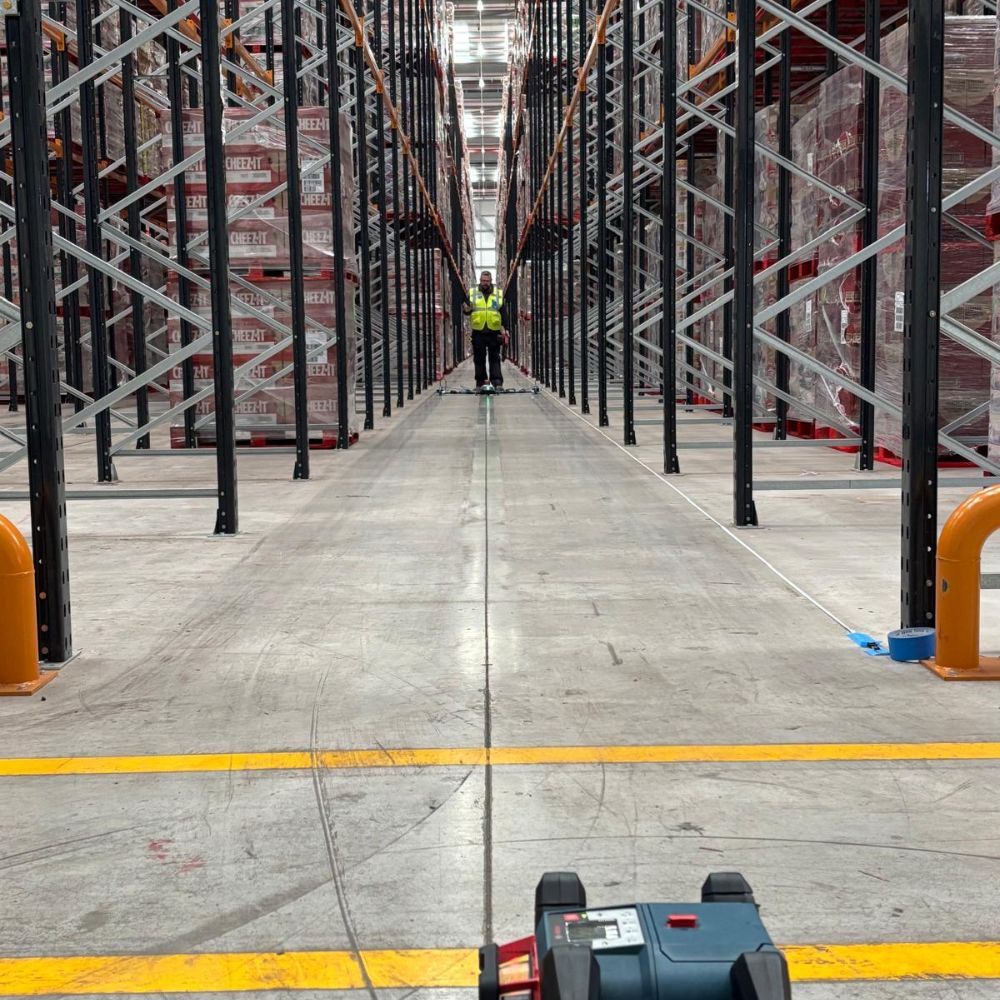
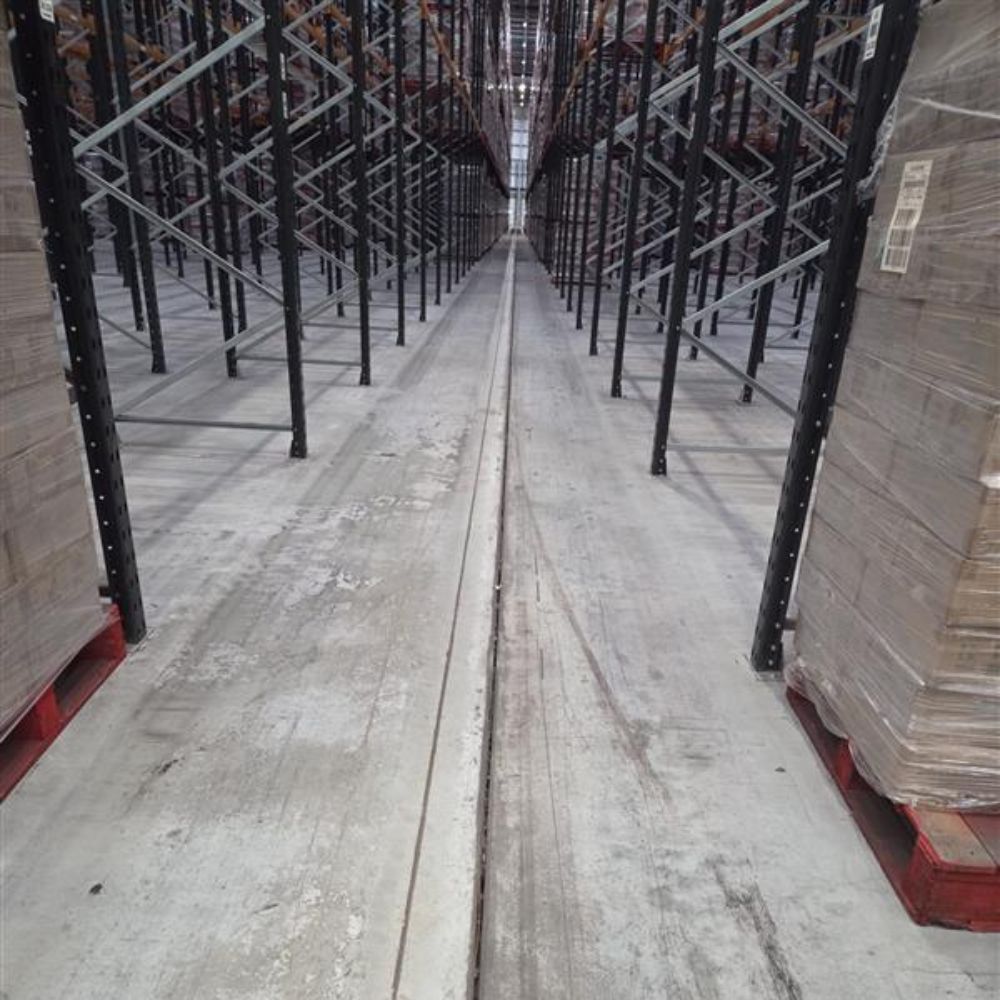
With over 8.5 kilometres of aisles in constant use, the client required a detailed floor survey to assess flatness and level tolerances across the operational space. Given the live nature of the environment, expectations were centred around accuracy, efficiency, and minimal disruption to ongoing logistics.
From the outset, the client responded positively to the survey approach, particularly appreciating the team’s ability to work collaboratively within a fully operational, fast-paced facility.
Challenge:
The primary challenge was conducting a comprehensive survey within a distribution centre running 24 hours a day, 7 days a week. The aisles were in continuous use, requiring careful daily coordination to temporarily close specific sections for surveying.
Maintaining safety standards was critical, with strict protocols in place due to ongoing vehicle and personnel movement. This meant the team had to plan each stage of the survey around live operations, ensuring that all work was carried out safely and efficiently.
In addition, while the constant use of the aisles meant the floor condition was generally well-maintained, it also required extra cleaning prior to surveying. This was essential to ensure accurate readings, as any debris or surface contamination could impact the profilograph results.
Solution:
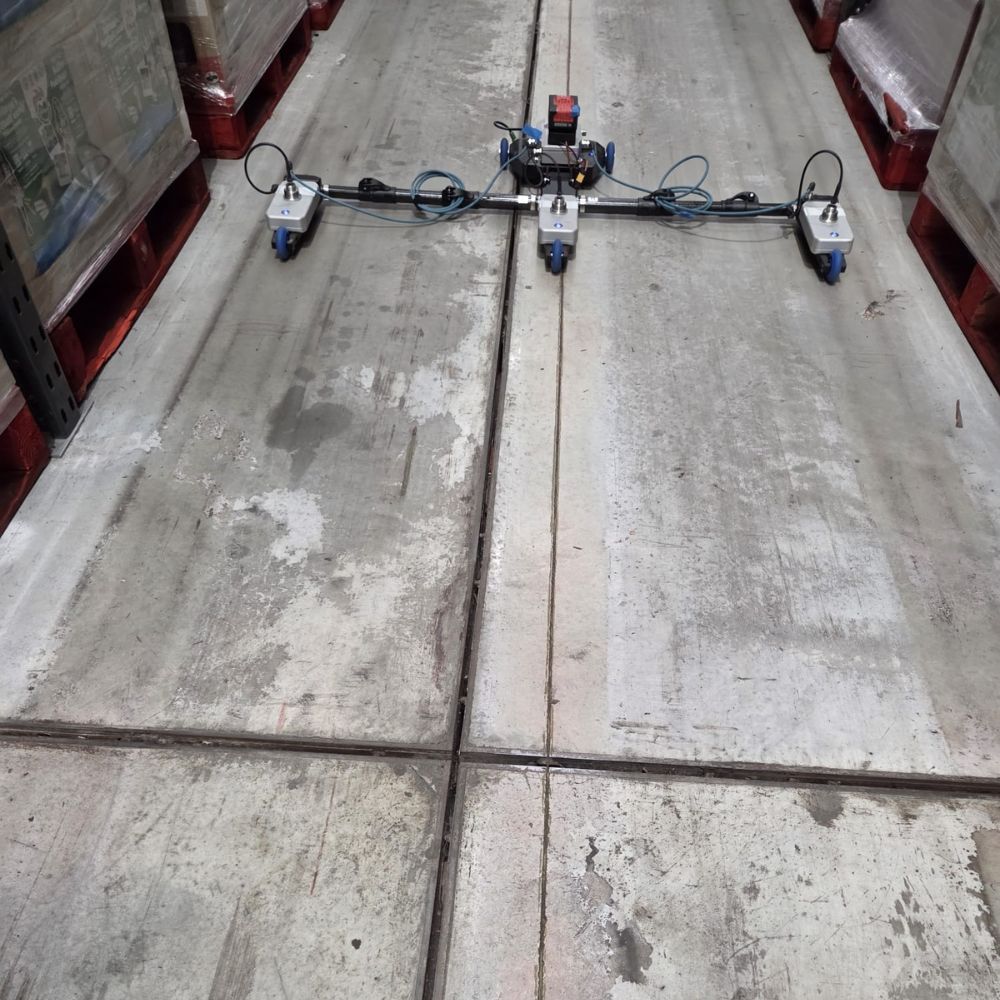
To deliver precise and reliable data, the DC Flooring team utilised our digital profilograph alongside advanced digital laser alignment equipment.
A key factor in the project’s success was consistent, clear communication with the facility manager. Daily coordination meetings allowed for effective planning around aisle closures and reopenings, ensuring that the survey process aligned with operational demands.
The team adopted a structured, phased approach; surveying designated aisles in sequence while maintaining flexibility to adapt to the site’s activity levels. This ensured that logistics operations continued with minimal interruption, while still allowing for thorough and accurate data collection.
Outcome:
The survey was completed ahead of schedule, demonstrating the efficiency of both the equipment and the coordinated approach taken on site. The data collected provided a clear and detailed assessment of the floor’s condition across the entire aisle network.
Importantly, the report identified areas that fell outside the specified TR34 DM tolerances, including construction joint areas which required reinstatement and in some areas remediation These findings aligned with feedback from MHE drivers, who had previously highlighted certain sections as problematic during day-to-day operations.
This alignment between data and real-world usage gave the client confidence in the results and enabled DC Flooring to propose targeted remediation solutions to improve overall floor performance.
Conclusion:
The success of this project was driven by strong communication, careful planning, and the use of advanced surveying technology. The ability of the team to work within a live, high-demand environment while maintaining efficiency and accuracy was central to achieving the desired outcome.
Key takeaways for future projects include the importance of pre-survey planning, clear scheduling, and ongoing collaboration between all parties involved. These elements ensure that even complex, operationally sensitive environments can be surveyed effectively.
Overall, the project was a positive experience, supported by a cooperative client and a dedicated on-site team. Following the survey, the client has engaged DC Flooring to carry out additional remediation works within the facility, further demonstrating their confidence in the service provided.