Epoxy resin flooring is created by mixing resin and hardener, which chemically react to form a rigid, plastic-like surface that bonds strongly to concrete substrates. It is widely used in factories, warehouses, laboratories, food processing plants, and hospitals due to its strength, hygiene, and ease of maintenance.
Why Choose DC Flooring for Your Epoxy Resin Installation?
At DC Flooring, we take pride in delivering flooring solutions that are built to last. With over 20 years of experience, we’ve mastered the art of epoxy resin installations, ensuring every project is completed with precision and care. Our team is fully trained and accredited, offering nationwide coverage and efficient turnaround times. From consultation to aftercare, we’re here to make the process smooth and stress-free, so you can focus on what matters most—your business.
Why clients choose us:
- Accredited by FeRFA and The Contract Flooring Association
- Over 20 years of experience installing industrial resin floors across the UK
- Nationwide coverage with fully trained installation teams
- Minimal downtime – efficient project turnaround
- Aftercare and maintenance support included
- Compliant with UK health, safety, and environmental standards
The Benefits of Epoxy Resin Flooring
Here are some key features and benefits of epoxy resin flooring:
- Durability: Epoxy resin creates a tough and resilient surface that can withstand heavy foot traffic, machinery, and equipment. It is highly resistant to impact, abrasion, and wear.
- Chemical Resistance: It is resistant to a wide range of chemicals, including acids, solvents, oils, and cleaning agents. This makes it suitable for environments where chemical spills or exposure are common.
- Hygiene and Cleanliness: It is seamless and non-porous, making it easy to clean and maintain. It does not allow liquids, dirt, or bacteria to penetrate the surface, promoting hygiene.
- Customisation: These floors can be customised with various colours, patterns, and textures. These decorative floors offer an attractive finish for creative designs and branding in commercial spaces. Metallic pigments, coloured quartz and coloured flakes are all options that are regularly used. Couple these with the extremely wide range of colours and there are endless options of designs and finishes.
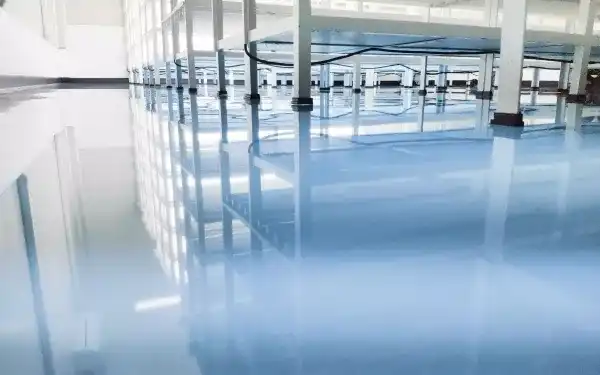
- Aesthetics: Matte, silk, or high gloss finishes are all available, enhancing the overall appearance of the space. Commercial and industrial environments often look and feel larger due to the reflective nature of a seamless epoxy resin installation.
- Quick Installation: Epoxy coatings can often be installed relatively quickly compared to other flooring options. This can minimize downtime during installation.
- Resistant to Moisture: Epoxy flooring is generally moisture-resistant, which can be advantageous in areas prone to water exposure.
- Low Maintenance: Due to its durability and resistance to stains, epoxy flooring typically requires minimal maintenance, reducing long-term costs.
UV Stability: Some epoxy formulations are UV resistant, which means they won’t yellow or degrade when exposed to direct sunlight in outdoor use.
Types of Epoxy Resin Flooring Systems
Epoxy resin flooring is incredibly versatile, offering solutions for a wide range of needs. Whether you’re looking for a light-duty sealer to control dust or a heavy-duty mortar system for industrial use, there’s an option to suit your space. These systems are designed to provide durability, safety, and style, making them a reliable choice for everything from warehouses to showrooms. With the right system, you can achieve a floor that performs well and looks great.
| System Type | FeRFA Class | Typical Thickness | Ideal For | Traffic Level |
|---|---|---|---|---|
| Epoxy Sealer | 1 | < 150 μm | Dust-proofing, sealing | Light |
| High-Build Coating | 2 | 300–1000 μm | Workshops, warehouses | Medium |
| Self-Levelling Epoxy | 5 | 2–3 mm | Laboratories, cleanrooms | Medium–Heavy |
| Epoxy Quartz / Flake System | 4 / 6 | 2–4 mm | Showrooms, kitchens | Medium |
| Epoxy Mortar System | 6 / 7 | 4–6+ mm | Heavy-duty industrial areas | Heavy |
Epoxy resin flooring systems are designed to meet the unique demands of different environments. From light-duty coatings to robust industrial solutions, each type offers specific benefits to suit your needs. By choosing the right system, you can ensure a durable, functional, and visually appealing floor coating that stands the test of time.
Specialist Options
- Anti-Static / ESD Systems – Ideal for electronic and data facilities
- Chemical-Resistant Coatings – For pharmaceutical or food sectors
- Decorative Finishes – Flake or quartz designs for commercial areas
- Slip Resistant Grades – Compliant with HSE guidelines
Our High Build Epoxy Resin Installation Process
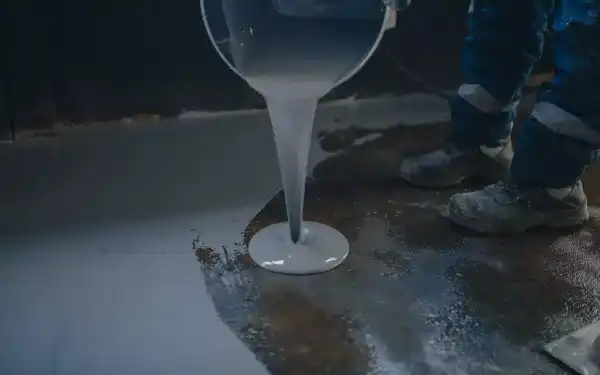
High Build Epoxy Resin flooring systems generally progress through these three steps, surface preparation, mixing and then application. The surface preparation stage is the most tedious and perhaps the most crucial, there are many things to consider. However, it can be said for all surface preparation works, that a clean and dry substrate is needed, as well as it being free from any contaminants. The mixing will then also need to be done with care, a mixing paddle or electric drill is used to ensure uniform colour and consistency. To finish, it is best advised to complete the application when the base temperature of the site is closer to room temperature.
Overseeing your Epoxy Flooring system installation
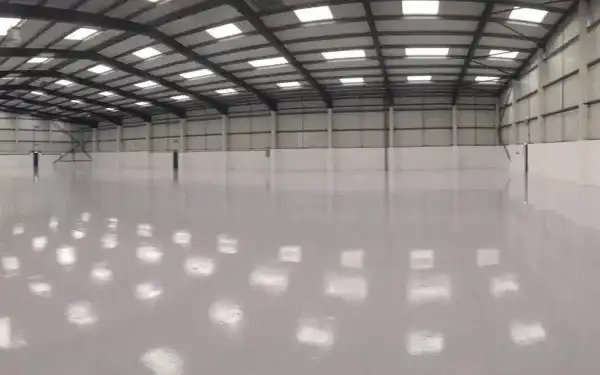
At DC Flooring, it is important to us to see a job from the initial planning stages, right through to the end. This is why we have developed an integrated service that takes care of every need you will have. Meaning that we take care of consultation and design planning, through to project management and aftercare. Through the years of our epoxy resin works, we have encountered nearly all types of problems that may arise, resulting in us being able to deal with these problems with certainty and first-hand expertise.
Our epoxy resin flooring installation follows a structured, quality-controlled process:
- Site Survey & Consultation – Assess substrate and usage requirements
- Preparation – Shot blasting, diamond grinding, or scarifying the surface
- Priming – Enhances adhesion and seals porous concrete
- Epoxy Application – Layering according to required system type
- Finishing & Curing – Ensures hardness, gloss, and performance
- Final Inspection – Quality assurance and client handover
- We manage every step in-house with our trained technicians.
- Typical installation time: 2–5 days, depending on size and thickness.
- Downtime minimised through quick-curing systems.
Sectors We Work With
At DC Flooring, we understand that every industry has unique flooring needs. That’s why we offer tailored epoxy resin solutions for a variety of sectors. From warehouses requiring impact-resistant surfaces to cleanrooms needing sterile environments, we’ve got you covered. Whatever your requirements, we’ll deliver a solution that combines functionality, safety, and style.
| Sector | Flooring Requirements | Recommended System |
|---|---|---|
| Warehouses & Logistics | Heavy vehicle traffic, impact resistance | High-Build / Mortar |
| Food & Beverage Production | Hygiene, slip resistance, cleanability | Self-Levelling / Quartz |
| Pharmaceutical & Cleanrooms | Chemical resistance, sterile surfaces | Self-Levelling Epoxy |
| Automotive & Engineering | Oil resistance, heavy load durability | High-Build / Mortar |
| Retail & Showrooms | Aesthetic finishes, branding colours | Decorative Flake / Quartz |
| Data Centres | Anti-static, dust-free environments | ESD Epoxy Systems |
Whatever your industry, DC Flooring has the expertise to deliver epoxy resin flooring that meets your specific needs. From heavy-duty industrial spaces to sleek retail environments, we ensure every floor is built to perform and designed to impress. With our commitment to quality, you can trust us to provide a solution that works for your space.
Maintaining and Cleaning Epoxy Resin Flooring
Maintaining and cleaning epoxy resin flooring is essential to ensure its durability, appearance, and safety in various commercial, industrial, and residential settings. Proper maintenance can extend the life of the flooring and keep it looking its best. Here are some guidelines for maintaining and cleaning epoxy resin flooring:
Daily and regular cleaning usually involves a soft-bristle broom, dust mop, or a vacuum with a soft brush attachment to remove dirt, dust, and loose debris from the surface. Regularly sweeping or vacuuming can prevent scratches caused by abrasive particles. For routine cleaning, damp mop the floor with a mild detergent solution and warm water. Avoid using harsh chemicals or abrasive cleaners as they can damage the epoxy finish. Always follow the manufacturer’s recommendations for cleaning products.
When it comes to spill clean-up, you must take Immediate action. Quickly clean up spills to prevent staining and damage to the floor. Use absorbent materials like paper towels or clean cloth to blot and wipe away liquids. For stubborn stains, you may need to use a mild detergent and water. If chemicals or acids are spilled on the epoxy, follow the manufacturer’s guidelines for handling chemical spills. Some chemicals can react with epoxy, so it’s crucial to clean them up promptly and safely.
We recommend periodically deep cleaning your floor. Depending on the traffic and usage of the area, perform a deeper cleaning using an epoxy floor cleaner or a pH-neutral, non-abrasive cleaner. Dilute the cleaner as instructed on the product label, apply it to the floor, and scrub the surface with a soft nylon brush or a rotary floor scrubber. This a service that we offer as part of our maintenance package.
As well as these cleaning processes, one of the best ways of looking after your floor is preventative maintenance. Entrance mats, protective mats, and furniture pads are all excellent methods of preventing scratches and unnecessary damage. But above all of these, regular inspection can have the biggest impact on the longevity of your system. Catching an issue early can be the difference between it being a major issue or tweaking the maintenance regime that you are using.
Properly maintained epoxy resin flooring can maintain its appearance and functionality for many years. After we install any floor, we will provide you with the correct information to look after your new system. We are only a phone call away and are always on hand with any queries you may have.
To maintain your epoxy resin floor’s performance and appearance:
- Clean regularly using neutral detergents
- Avoid abrasive pads and harsh chemicals
- Conduct periodic inspections for chips or cracks
- Re-coat every 5–10 years depending on traffic levels
- Contact DC Flooring for professional repairs or re-coating
Case Studies and Project Gallery
Our work speaks for itself. Over the years, we’ve transformed countless spaces across the UK with our epoxy resin flooring solutions. From large industrial warehouses to sleek, modern retail spaces, each project showcases our attention to detail and commitment to quality. Whether it’s durability, hygiene, or aesthetics, we deliver results that meet and exceed expectations. Take a look at our gallery to see how we’ve helped businesses like yours achieve flooring that performs and impresses.
Why Epoxy Resin Flooring Outperforms Other Systems?
Epoxy resin flooring stands out for its seamless, durable, and chemical-resistant properties. Unlike polished concrete, it offers better resistance to chemicals and wear. While polyurethane is flexible and UV-resistant, epoxy is a more cost-effective option for indoor use. MMA resin cures quickly but has a strong odour during installation. Epoxy resin strikes the perfect balance, making it a reliable choice for a wide range of applications, from industrial to commercial settings.
| Flooring Type | Pros | Cons |
|---|---|---|
| Epoxy Resin | Seamless, durable, chemical resistant | Indoor use only |
| Polyurethane (PU) | UV resistant, flexible | More expensive |
| MMA Resin | Fast-curing | Strong odour during install |
| Polished Concrete | Low maintenance | Limited chemical resistance |
Sustainability & Compliance
- Low-VOC, solvent-free materials where possible
- Compliance with BREEAM and ISO 9001/14001 standards
- All waste materials responsibly managed
- Sustainable sourcing from certified UK suppliers
Get a Quote or Site Survey
FAQs
How much does it cost to epoxy resin a floor?
As discussed above, there is a huge number of different systems ranging from coatings for use in industrial settings right across to domestic garage floors. Thin floor sealers, thick heavy duty systems, all the way to decorative metallic epoxy resin and table top cast resins used for penny floors. Due to the extremely diverse nature of all of these products and applications, the cost per m2 can vary from anywhere between £10 – £250.
We are always happy to offer our advice on your existing surface and recommend the use of the correct material to suit your budget and expectations of performance. Sometimes resin flooring is not the most suitable product, we would rather tell you this and guide you to the correct solution. This is how we have earned the trust of our existing clients, and this is what we will continue to promote as a business.
Can Epoxy Resin Flooring be installed over existing floors like concrete or tiles?
Epoxy floor resin can usually be applied to ceramic tiles or existing concrete, as long as they are of a sound nature.
Ceramic tiles can be costly and time-consuming to remove, so being able to install systems over the top of them can in some instances, be very beneficial to customers. Solid epoxy resin is extremely hard, but very brittle (unlike polyurethane resin which is flexible in nature). Due to this any movement in the subfloor underneath can result in the resin surface cracking. At DC Flooring we have a few different methods of preventing this ranging from flexible primers, to fibreglass matting.
We would first check that the ceramics are sound and free from movement, this is followed by diamond grinding the tiles to remove any coatings or lacquer and to provide a suitable key. We can then install the resin system, sometimes with a fibreglass mesh that acts as a bridging mechanism, this is dependent on the existing surface and the top coats being applied.
It is extremely common to choose an epoxy resin floor to give existing concrete a new lease of life. However, there are a number of factors to consider when choosing the correct primer, system, and finish. Some problems that need to be considered are moisture issues, weak concrete or screeds, and contaminated floors. We have testing systems and solutions to overcome all of these potential pitfalls, which is why it is always important to use a contractor who is experienced and knows what to look out for. Get in touch and we will be happy to offer you our expertise and knowledge.
Is Epoxy Resin Flooring suitable for areas with extreme temperature fluctuations?
In areas with extreme temperature fluctuations, the best resin flooring system will typically be one that is specially designed and engineered to withstand these conditions. Polyurethane and methyl methacrylate (MMA) resin flooring systems are often considered more suitable for environments with extreme temperature fluctuations than standard epoxy resin systems.
When selecting a resin flooring system for areas with extreme temperature fluctuations, it’s crucial to consider the specific needs of your environment. We can provide guidance on the most suitable resin formulation, thickness, and installation methods to ensure the flooring can withstand the temperature extremes in your area.
In addition to choosing the right resin system, proper surface preparation, installation, and regular maintenance are essential to maximize the performance and durability of the flooring in extreme conditions. We would highly recommend using a professional company that is FeRFA-approved, as this expertise is invaluable in ensuring a successful and long-lasting resin flooring solution for your specific environment.
How long before the floor can be used after installation?
Epoxy resin flooring usually takes 24–48 hours to cure for light use. For heavy traffic or machinery, it’s best to wait around 7 days to ensure the floor reaches its full strength. If you need a quicker turnaround, we also offer fast-curing systems. Our team will guide you on the exact timing based on your chosen system and site conditions.
How do I decide which epoxy resin system is right for my facility?
The right system depends on your facility’s specific needs. Think about factors like traffic levels, chemical exposure, and hygiene requirements. For example, self-levelling systems are great for cleanrooms, while high-build coatings work well in warehouses. Our experts can assess your site and recommend the best solution to suit your environment and budget.
What is Epoxy Resin Flooring?
Epoxy resin is a thermosetting polymer, that, when mixed with a hardening agent, undergoes a chemical reaction resulting in a strong, durable, and chemically resistant material. Epoxy resin flooring coatings are commonly used in various industrial, commercial, and domestic settings due to their beneficial properties.