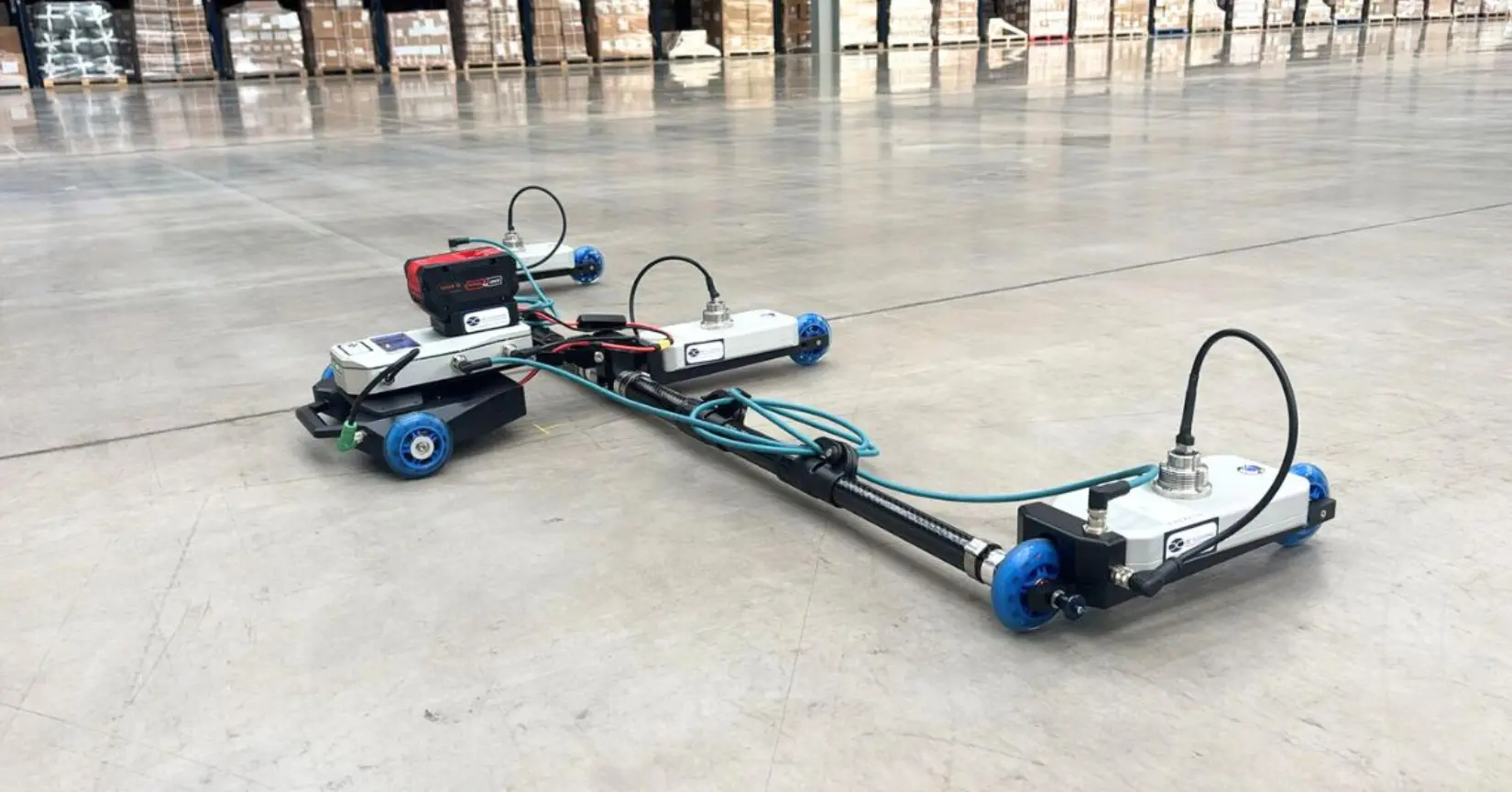
An industrial concrete floor must be flat to provide a suitable surface for materials handling equipment (MHE). It must also be level to ensure that the entire building, its static equipment, and MHE can operate effectively.
Analysing floor flatness helps organisations find surface issues that could hinder the safe and smooth operation of MHE in the warehouse.

The Importance of Floor Flatness
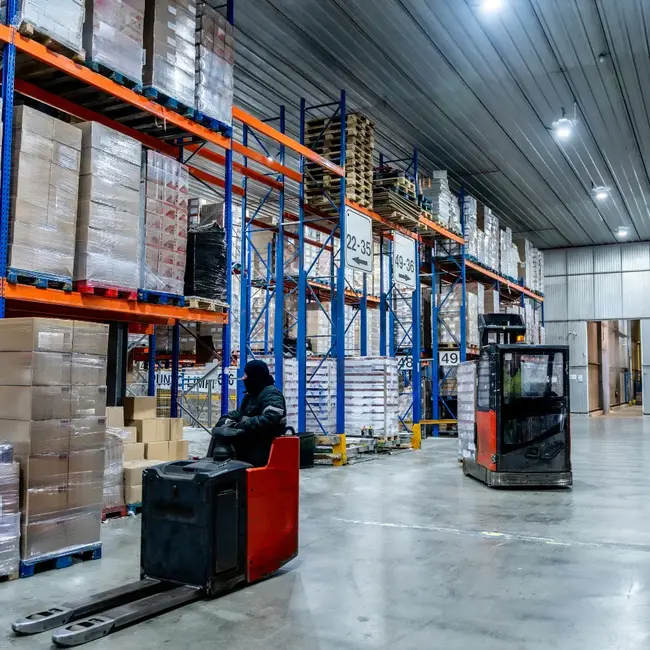
Having a flat floor is important for several reasons. For warehouses using robotics or high-reaching forklifts, an uneven surface can lead to operational errors, equipment damage, and safety risks. A flat, level floor ensures that machinery can move efficiently, reducing wear and tear while improving productivity. It also prevents costly mistakes like dropped inventory or machine downtime. A properly surveyed floor is the foundation of a modern, efficient, and safe industrial space.
Benefits of a flat and levelled floor
- Faster & safer MHE operation: A flat floor allows materials handling equipment, like forklifts, to travel at optimal speeds without the risk of tipping or losing control. This boosts productivity while creating a much safer working environment for all personnel in the facility.
- Reduced vibration: Bumps and dips in the floor cause constant vibration in MHE. A flat surface significantly cuts down on this shaking. This not only makes the ride smoother for operators but also reduces mechanical stress on the equipment itself.
- Less operator fatigue: Constant jostling from an uneven floor can be physically draining for forklift operators. A smoother ride leads to less physical strain and fatigue, helping operators stay alert, comfortable, and focused throughout their shifts, which also improves overall safety.
- Lower risk of dropped or damaged inventory: Uneven surfaces can cause loads to shift and fall, leading to damaged goods and financial loss. A stable, flat path ensures that Material Handling Equipment (MHE), such as forklifts, operates predictably, reducing the risk of tipping or unbalanced loads that could injure an operator or bystander, resulting in costly downtime and investigation.
- Ensures robotics accuracy: Automated systems and robotics rely on precise movements and predictable paths. An uneven floor can disrupt their navigation and positioning, leading to errors. A flat surface is essential for these systems to function correctly and efficiently.
- Prevents automation downtime: When automated guided vehicles (AGVs) or robots encounter an uneven spot, they may stop, slow down, or require manual intervention. A flat floor minimises these interruptions, ensuring that your automated systems run continuously and prevent costly operational delays.
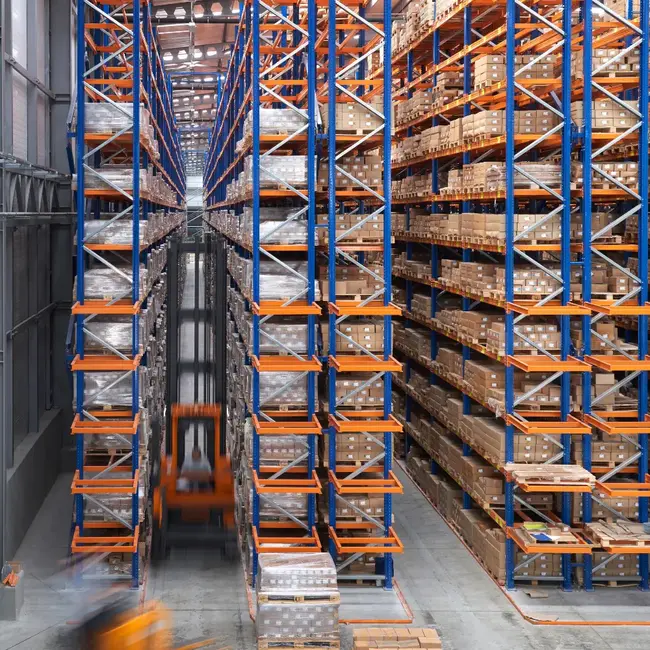
Flatness is especially crucial in high-density warehouses where narrow aisles are used by defined-path trucks. Even tiny variations can become major problems when a forklift mast is extended 13 metres high. An uneven floor can cause the mast to sway, risking collisions with racking, damaging goods, or even causing the machine to tip over. In these environments, precision is not a luxury; it’s a fundamental requirement for safe operations.
Our Comprehensive Floor Flatness Testing and Surveys Services
DC Flooring provides high-precision flatness and levelness surveys for businesses with large distribution centres or warehouses. With the rise of robotics in the industrial and logistics sectors, floors must meet flatness and surface regularity standards.
We use our state-of-the-art floor profiling equipment to assist companies worldwide, including major manufacturers, retailers, and distribution brands. Our accurate reports help save costs and improve efficiency through:
Full-Spectrum Surveying Expertise
- Flatness & Levelness Testing (Free + Defined Movement)
- Defined Movement Surveys (TR34 4th Edition DM1–DM3, ASTM, Fmin)
- Free Movement Surveys (TR34 4th Edition FM1–FM4, ASTM, FF/FL)
- Abrasion, Slip & Durability Testing (BS EN 13892-2 / Pendulum)
- Moisture Mapping & Detection
- Automation-Ready Certification for: AutoStore, AMR, AGV, ACR, Robotics, Very Narrow Aisle
Floor Flatness Standards and Specifications
As demand grows for faster and more efficient warehouse technology, floor flatness standards provide reassurance for warehouse operators. There are different flatness specifications for Free Movement and Defined Movement floors. DC Floorings’ concrete floor flatness measuring technology delivers accurate floor surveys to suit any standard or specification.
TR34 – Defined Movement Classes (DM1–DM3)
Floors in narrow aisle racking systems support materials handling equipment that moves along fixed pathways. Concrete floors are measured using DC Flooring Profilographs. A high standard of floor flatness is crucial for the safe and efficient operation of narrow aisle forklifts.
| Class | Racking Height | Use Case |
|---|---|---|
| DM1 | >13m | VNA, robotics, high-speed automation |
| DM2 | 8–13m | Standard racking |
| DM3 | ≤8m | General storage / narrow aisle |
TR34 – Free Movement Classes (FM1–FM4)
Free Movement Surveys are conducted on warehouse floors and other industrial sites where material handling equipment (MHE) can move freely in any direction, like transfer aisles or wide aisle areas. Since surveying every traffic path in these areas is impractical, a representative floor sample is examined using a 3-meter grid.
| Class | Typical Use | Max Deviation E | Max Deviation F |
|---|---|---|---|
| FM1 | Robotics | 4.5mm | 1.8mm |
| FM2 | Reach trucks | 6.5mm | 2.0mm |
| FM3 | Retail | 8.0mm | 2.2mm |
| FM4 | Workshops | 10mm | 2.4mm |
Digital Floor Flatness Testing
DC Flooring uses the latest digital equipment to test floor flatness. We check both Defined and Free Movement floors according to TR34 and all other international standards.
ASTM E1155 F-Numbers
- FF (flatness) / FL (levelness)
- Used for superflat floors globally
- Compatible with US & international warehouses
DIN 18202
DIN 18202 is a key German standard that outlines tolerances for building construction, including floor flatness. It is widely applied across Europe for industrial and commercial projects. Adhering to this standard is important for ensuring compatibility and quality in pan-European logistics operations. Our team is experienced in testing to DIN 18202 specifications, ensuring your floor complies with these established European requirements.
AutoStore & Robotics Standards
Automation systems like AutoStore grids demand exceptionally flat floors to function correctly. These systems have ultra-tight tolerances that go beyond typical standards. A small deviation can halt an entire operation. Our surveys provide the detailed compliance reporting and visual evidence needed to certify that your floor meets these strict specifications, ensuring your investment in automation is built on a solid foundation.
- Ultra-tight tolerances
- Required for grid-based robotics
- Compliance reporting with visual proof
Diverse Flooring Applications
DC Flooring has extensive experience across many sectors and has performed floor surveys and testing in different environments. Our expertise isn’t limited to just one type of facility. We’ve worked everywhere from massive logistics hubs to specialised production plants, giving us the knowledge to handle the unique challenges that each industry presents for its flooring needs.
Some of these environments include:
- Distribution centres & logistics warehouses
- Automated robotic facilities
- VNA (Very Narrow Aisle) racking installations
- Data centres and secure archive spaces
- Food, drink, and pharmaceutical production
- Public venues, stadiums, and railway platforms
We are dedicated to meeting the specific needs of each industry. For example, a pharmaceutical plant has different requirements for hygiene and surface resistance than a public railway platform does for slip resistance and durability. We understand these differences. Our approach is always tailored to provide a solution that not only meets industry standards but also supports the unique operational demands of your business.
Our Testing Methodology
Our methodology is built on three pillars: precision, repeatability, and transparency. We combine advanced floor measuring technology with a systematic approach to deliver survey results that are both highly accurate and easy to understand. This process ensures that you have a complete picture of your floor’s condition, from initial measurement to final verification, allowing for targeted and effective remediation where needed.
- Laser-guided profiling system: We use a state-of-the-art laser-guided profiler that captures data points every 25mm. This resolution is double the industry standard, providing an incredibly detailed view of your floor’s surface. This high-definition mapping allows us to identify even the smallest deviations that could impact equipment performance, ensuring no issue goes unnoticed.
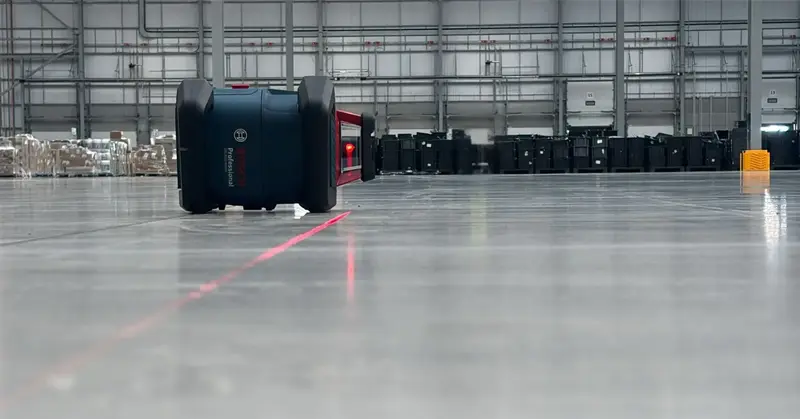
- Automatic machine-guidance: Our surveying equipment is automated to follow precise paths. This removes the variability and fatigue that can come from human operation. By automating the guidance system, we ensure that the data collected is consistent and objective. This machine-led process guarantees a level of accuracy and reliability that manual methods simply cannot match.
- Repeatability: Because our system is automated, we can survey the exact same path every single time. This is crucial for verifying the effectiveness of remediation work. We can run a survey before grinding or polishing and then run the identical path after the work is done. This provides clear, measurable proof of the improvements made.
- Graphical reporting: We translate complex data into clear, visual reports. These include profile graphs, deviation maps, and colour-coded heatmaps that make it easy to see exactly where the problem areas are on your floor. This graphical approach helps you quickly understand the survey findings and plan for any necessary remediation work with confidence.
- Transparency: We believe in complete transparency from start to finish. We pre-mark all survey paths so you know exactly what areas are being tested. You can even see the results in real-time as we work. After any remediation, our reports provide clear before-and-after visuals, giving you undeniable proof of the quality and effectiveness of our work.
By integrating these elements, we deliver a service that is not only precise but also provides clear, actionable insights for maintaining a high-performance industrial floor.
What Makes Us Different?
In a field where precision is everything, we stand out by delivering a service that combines cutting-edge technology with a client-focused approach. Our methods provide more accurate data, faster results, and greater value than industry standards. We are not just a service provider; we are a partner invested in the long-term performance and safety of your facility’s most critical asset: its floor.
Precision Without Compromise
Our commitment to precision is absolute. We use advanced, automated technology that captures data with twice the resolution of the industry standard. This eliminates the potential for human error and operator fatigue, which can compromise results. The outcome is highly repeatable and objective data that you can rely on to make critical decisions about your flooring and operations.
- 25mm data point resolution (industry standard = 50mm)
- Laser-guided automation – no operator fatigue
- Highly repeatable, objective results
Productivity and Value
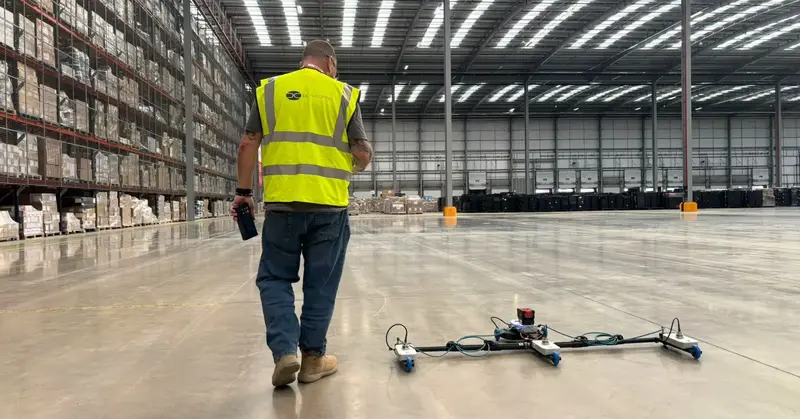
Our advanced surveying technology is not just more accurate, it is also more efficient. Our process requires fewer personnel and can be completed faster than traditional methods, which minimises disruption to your operations. The detailed reports we generate allow for highly accurate grinding maps, preventing over-specification and saving you from unnecessary costs while delivering maximum return on your investment.
- Faster surveys, fewer personnel required
- Accurate grind/testing and remediation maps
- Preventing over-specification → MAJOR cost savings
Complete Transparency
We provide full visibility throughout the entire process. From the initial planning stage to the final verification report, you are always in the loop. We pre-mark survey lines, offer real-time progress tracking during the work, and deliver comprehensive reports that show clear, undeniable proof of the results. This transparent approach builds trust and gives you confidence in the work being done.
- Pre-work: detailed grind map
- During: real-time progress tracking
- After: before/after proof in reports
Remediation Services (In-House)
Once a survey identifies areas of non-compliance, the next step is correction. DC Flooring offers a full range of in-house remediation services to bring your floor up to the required standard. Because we handle everything from testing to treatment, we provide a seamless, integrated solution. This eliminates the need to coordinate with multiple contractors, saving you time and ensuring a consistent quality of work from start to finish.
DCF Express Polished Concrete
This is more than just a polished finish; it is a complete flooring system. Our process creates a dust-free, incredibly durable surface that is easy to maintain and built to last. It offers the lowest life-cycle cost of any flooring option and comes with an extensive warranty. It’s an ideal solution for upgrading existing floors to a higher standard of performance and appearance.
- Dust-free, extremely durable finish
- 15-year warranty
- Silk, Gloss & High Gloss options
- Lowest life-cycle cost
- Increased abrasion resistance, future-proofing the floor
High Tolerance / Specification Grinding
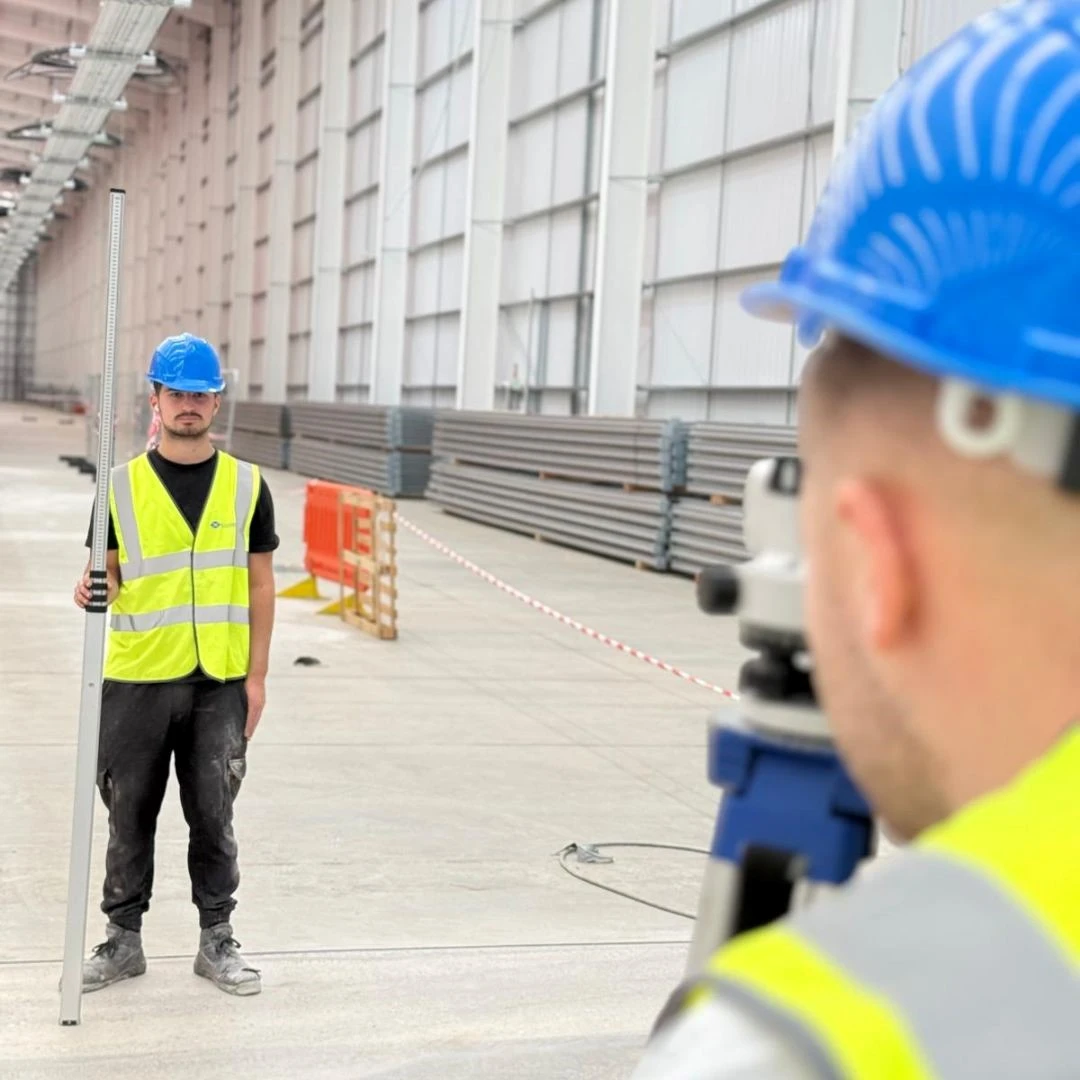
When a floor must meet extremely strict flatness standards such as DM1 or specific F-numbers, our high tolerance grinding service is the answer. Using precision equipment guided by our detailed survey data, we can methodically grind down high spots to achieve the required specification. Work can be phased to minimise disruption, and ground areas are immediately usable after treatment.
- Achieves DM1–DM3, ASTM F-Numbers, robotics specs
- Phased work with immediate usability
Expansion Joint Repairs
Damaged or failing expansion joints can be a major source of floor problems, causing bumps that damage MHE and disrupt operations. We restore load transfer capabilities, stabilise the joints to prevent movement, and replace old or broken seals. This not only smooths the floor surface but also protects the joint edges from further deterioration.
- Load transfer restoration
- Joint stabilisation
- Seal replacement
Polyurethane Slab Injection
Settlement or voids beneath a concrete slab can cause it to rock or sink, creating an unstable and hazardous surface. Our polyurethane injection service fills these voids and stabilises the sub-base. This process lifts and re-levels the slab, eliminating rocking and preventing future settlement without the need for costly and disruptive slab replacement.
- Void filling
- Stabilising sub-base
- Eliminates settlement & rocking slabs
Cementitious Screeds & Overlays
For floors with severe non-compliance or significant levelness issues, a cementitious overlay can be the most effective solution. These rapid-setting screeds can be applied over the existing surface to create a new, flat, and level floor. It’s an ideal method for correcting major deficiencies and bringing a problematic floor up to a high standard quickly. From which minor level and flatness deficiencies can be brought into specification with minimal disruption.
- Rapid solutions for severe non-compliance
- Ideal for level correction
If You Need a Floor Survey and Testing, Call DC Flooring Today!
DC Flooring prioritises customer satisfaction and precision in all floor testing services. Our team uses advanced technology to ensure accurate measurements and thorough assessments. We are committed to providing reliable results that meet industry standards. Our consultants have experience spanning multiple sectors, making us well-suited to address any specific flooring needs. For expert floor surveys and assessments, contact DC Flooring today.
DC Flooring will Pay Particular Attention to:
- Surface Quality and Condition
- Expansion, Contraction, Construction, Free Movement and Induced Joints
- Flatness and its compliance with the required Flatness Standard (e.g., TR34)
- Identifying High/Low spots or areas
- Abrasion resistance and its impact on floor durability
Our Complete Service Offering
We provide a truly end-to-end solution for all your industrial flooring needs. Our process begins with comprehensive surveying and testing that adheres to all major global standards. Based on these findings, we then design and execute a full range of remediation solutions, from precision grinding and polishing to joint repairs and overlays. By acting as a single, integrated contractor, we manage the entire lifecycle: initial survey, remediation, and final verification.
- Floor Flatness Survey and Testing for all global standards
- Remediation Solutions (grinding, overlays, polishing, injection)
- One integrated contractor: survey → remediation → verification
We are dedicated to delivering precision and customer satisfaction. Our expert team uses advanced technology to provide reliable results that meet the highest industry standards. With experience across multiple sectors, we are uniquely equipped to handle any specific flooring challenge. For expert floor surveys and assessments, please contact us at DC Flooring today.
FAQs
What is Property E and F?
Property E and F are values used in the TR34 standard to define floor flatness in Free Movement areas. Property E measures the elevation difference between two points on the floor, indicating overall levelness. Property F measures the abruptness of change over a short distance, indicating flatness. Together, they give a comprehensive view of the floor’s surface regularity and suitability for MHE.
Why is floor flatness critical for robotics and AutoStore?
Robotics and AutoStore systems operate with incredibly fine margins for error. An uneven floor can disrupt their navigation, cause sensors to misread, or lead to mechanical failures. Even small bumps can halt operations, leading to costly downtime. In the case of an Autostore system, a small deviation in the floor flatness can result in the bin flume leaning, resulting in the AS Bin Picker not being able to attach correctly. A critically flat and level floor is essential to ensure these automated systems can function with the speed, accuracy, and reliability they were designed for.
Can you upgrade or correct a failing floor?
Yes, a failing floor can almost always be corrected. Depending on the issue, solutions range from precision grinding to remove high spots, to applying a cementitious overlay to create a new, flat surface. Other techniques like slab injection can stabilise rocking panels, while joint repairs can fix bumps. A thorough survey will determine the best and most cost-effective method.
What is a good floor flatness tolerance?
A good floor flatness tolerance depends on the intended use of the space. Generally, a flatness value of 60 or lower for FF numbers is acceptable in industrial settings. This reflects minimal variation in floor height, which can help ensure safe and efficient material handling. Higher flatness values may be required for sensitive areas like data centres or high-speed operations. Consider the equipment type and the nature of the operations when determining the right tolerance.
How to control floor flatness?
To control floor flatness, begin with proper installation techniques. Ensure the concrete mix is suitable for the intended use. Use reliable laser-level tools during the pouring phase to monitor the flatness continuously. Plan for adequate curing time to avoid shrinkage cracks. Regular inspections after installation can help identify issues early. Following industry standards like TR34 and ACI guidelines is essential for maintaining quality control in flooring projects.
What is the flatness tolerance for concrete floors?
In the UK, the flatness tolerance for industrial warehouse floors is primarily governed by The Concrete Society’s Technical Report 34 (TR34), which classifies floors into different “Free Movement” (FM) and “Defined Movement” (DM) categories based on the intended use and materials handling equipment (MHE).
What is FF 50?
The F-number measures flatness and is represented as FF. FF values range from 10 to 150. Levelness indicates how much a slab tilts away from the true level.