Floor slip resistance testing is important for safety in different environments, especially in commercial and industrial sites. This testing checks the friction of flooring materials to see how well they can prevent slips and falls.
With a growing focus on workplace safety, knowing about slip resistance can help reduce accidents and improve safety standards.
Slip Testing Methods of the Floor Surface
Wet Pendulum Slip Resistance Test
The wet pendulum slip resistance test is usually carried out with a Wessex or Munro – Stanley London Pendulum Friction Tester. This device is portable and has a weighted foot with a test slider that swings down and moves across a surface wet with water. The weighted foot has a spring-loaded rubber slider that applies a set force on the surface as it slides.
The results of the wet pendulum slip test are expressed as a British Pendulum Number (BPN) and are classified according to AS/NZS 4586. The BPN provides a measurable indication of the slip resistance of a flooring surface under wet conditions.

The classification helps in determining the suitability of the surface for various applications, ensuring that appropriate safety measures are in place. The table below outlines the classification criteria based on the BPN results:
Dry Floor Friction Tester

The dry floor friction floor slip testing uses a battery-operated machine known as the “dry FFT” or “Tortus.” This device measures the force resisting the movement of a 9 mm diameter test slider made of Four S rubber as it moves across surfaces at a steady speed of 1 m/min.
The average of two measurements taken over a distance of 800 mm is calculated, and the results are shown as the Coefficient of Friction (CoF). The coefficient of friction is the ratio of horizontal and vertical forces, and the slip resistance test results are classified accordingly.
The Wet Barefoot Inclining Platform Test
The wet barefoot ramp slip resistance test uses a panel of the test surface built on a ramp that someone can walk on. During the test, two people are secured with a safety harness. After soaking their feet for ten minutes to soften the skin, they walk barefoot on the test surface.
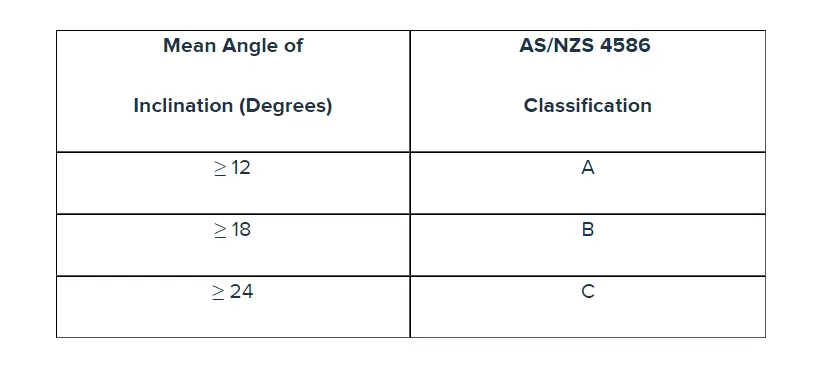
As they walk, the angle of the platform is slowly raised until they can no longer walk safely, usually when the test walker slips or feels at risk of slipping. The angle where this happens is called the mean angle of inclination. Three calibration boards—A, B, and C—are tested for comparison, and the classification of the test panel is based on the mean angle of inclination in relation to the calibration boards.
Oil Wet Ramp Slip Resistance Test
The oil wet ramp slip resistance test is different from the wet barefoot ramp test because motor oil is used instead of water, and the participants wear safety boots. The process involves walking on three calibration boards, similar to the wet barefoot ramp test. These boards provide a correction factor to standardise the walkers, reducing variance to 2.2 degrees (95% confidence interval). The slip resistance classification is based on the average angle of inclination along with a correction factor from the angles of the three calibration panels.
Benefits of Regular Slip Resistance Testing
Fewer Accidents
Regular slip resistance testing helps identify and reduce hazards on walking surfaces, lowering the chances of slips and falls. Ensuring that surfaces meet safety standards creates a safer environment for employees, customers, and visitors, leading to fewer accidents and injuries.
Compliance
Regular slip resistance testing helps meet safety regulations. Following these guidelines helps businesses avoid legal issues and penalties while showing a commitment to safety for everyone on their premises.

Productivity
A safe environment can lead to better productivity. When employees feel secure, they can concentrate on their tasks without worrying about slip hazards. Regular slip resistance testing promotes a culture of safety, which can improve morale and efficiency at work.
Cost Savings
Investing in regular slip resistance testing can save money over time. By preventing accidents and the costs of medical claims, legal fees, and lost workdays, businesses can protect their finances. Keeping surfaces safe also reduces the need for expensive renovations or repairs due to slip-related incidents.
Better Maintenance
Regular slip resistance testing encourages proactive upkeep of walking surfaces. Identifying areas that need attention allows organisations to fix potential issues before they become serious, ensuring that surfaces remain safe and functional. This approach helps extend the life of flooring materials and improves overall facility management.
Applies to a Wide Variety of Surfaces:
- Ceramic
- Porcelain tile
- Stone
- Polished and unpolished concrete
- Vinyl
- Wood
- Synthetic laminates
Cleaning Slip Resistant Flooring Surfaces
Keeping slip-resistant flooring clean is important for safety and functionality. Regular cleaning removes dirt and grime that can reduce traction and helps prevent slippery substances from building up. Use cleaning solutions that match the flooring material; often, warm water with mild detergent works well. Scrubbing with a soft brush can help remove tough stains without harming the surface. After cleaning, rinse thoroughly with clear water to remove any leftover residue, ensuring the slip-resistant qualities remain intact. Setting up regular maintenance schedules will help keep these surfaces safe and hygienic for users.
Slip Risk Awareness Training
Slip Risk Awareness Training is a key part of workplace safety programmes, focused on teaching employees about the dangers of slip and fall incidents. The training covers how to spot slip risks, the factors that lead to slips, and safe practices to reduce these risks. Participants learn to identify slippery surfaces, the importance of wearing the right shoes, and how to report hazards. Promoting safety awareness helps employees take action in their surroundings, which can lower the number of slips and falls and create a safer workplace for all.
Choose DC Flooring for the Perfect Floor Slip Resistance Test – Contact Us Today!
Complete Floor Safety Consultation
We offer a complete floor safety consultation to identify slip hazards in your area. Our team will examine your flooring materials and how they are used to suggest the best solutions for your needs, ensuring a safe environment for all.
Experience and Accreditation
With years of experience in the flooring industry, DC Flooring is accredited by top safety organisations. Our skilled team keeps up with the latest safety standards, ensuring your slip resistance testing is carried out by professionals.
Accident and Claim Prevention
Choosing DC Flooring helps lower the risk of accidents and potential slip injury claims. Our thorough floor slip testing services ensure your floors meet safety regulations, allowing you to focus on your business while we help keep your space safe.
Independent Assessment
We take pride in our straightforward approach. We assess the slip resistance and give you honest feedback and practical recommendations to improve safety in your area.
FAQs
When is the oil wet ramp slip test the most appropriate to specify the slip resistance of floors?
The oil wet ramp slip test is suitable for checking the slip resistance of floors likely to encounter oils or lubricants, like in commercial kitchens, car workshops, or industrial settings. This test replicates real-life situations where floors may become slippery from oil spills or contamination. Slip risk assessment in these conditions helps ensure that flooring meets safety standards relevant to the risks in these environments, reducing the chance of slip and fall accidents.
How does the oil wet ramp test provide the R Ratings?
The oil wet ramp test measures a surface’s slip resistance by applying a specific amount of oil, simulating conditions that can cause slips. A ramp is coated with oil, and a device assesses the friction between a foot and the surface as the ramp is tilted at different angles. The results provide a value indicating the surface’s slip resistance, which is assigned an R Rating. A higher R Rating means better slip resistance, making this test important for areas where floors may frequently encounter slippery substances. These ratings help businesses comply with safety regulations and reduce slip and fall accidents in their facilities.
Is there too much subjectivity during the ramp slip test?
The ramp slip test aims to provide clear measurements of slip resistance, but there can be some subjectivity, especially in choosing test parameters and interpreting results. Factors like the type of oil used, the ramp angle, and the equipment operated can affect outcomes. Accredited testing facilities follow set procedures to reduce these differences and ensure reliable results. It is important for organisations to collaborate with certified professionals who can provide clear assessments, which helps strengthen the credibility of the slip resistance data from the ramp slip test.
What are the pendulum test values?
Pendulum test values, also known as the pendulum slip resistance test results, are shown as the British Pendulum Number (BPN). This test uses a device that mimics foot traffic on a surface by swinging a pendulum with a rubber slider over the flooring. The BPN value indicates the floor’s slip resistance: a higher BPN means better slip resistance, while a lower value suggests a higher risk of slipping. Generally, a BPN of 36 or above is safe for pedestrian traffic, while lower values may require further action to improve safety. The pendulum test is well-known for its reliability and accuracy in measuring slip resistance, making it a useful tool for ensuring safe flooring in different settings.
What is the most slip-resistant flooring?
The best slip-resistant flooring includes options like textured vinyl, rubber, and certain ceramic tiles with a high friction rating. These materials are made to provide better grip, helping to prevent slips and falls, especially in wet areas. Surfaces treated with anti-slip coatings can also improve safety. It’s important to choose flooring that meets both style and safety needs for the specific space where it will be used. Picking the right flooring can help keep a workspace or home safe.