
Underfloor heating is becoming the new favourite over radiators. Why? It’s comfier and cheaper in the long run. But here’s the thing: it doesn’t work with every flooring type. Wooden floors, for example, need extra care during installation. So while it’s a great upgrade, it’s worth checking if it’s the right fit for your space.
Why Microcement Over Underfloor Heating Systems?

Website: nu-heat.co.uk
Microcement works beautifully with underfloor heating. Its seamless finish prevents cracks and its excellent thermal conductivity ensures heat transfer. But getting it just right takes careful steps. Done properly, this combo looks stunning and feels amazing too. It’s all about combining beauty with practicality.
Thermal Conductivity of Microcement
Microcement has great thermal conductivity which means it transfers heat evenly and effectively. No cold spots under your feet, just consistent warmth. Plus its smooth uninterrupted surface prevents issues like cracking over time. It’s not just about looking good; it’s about making a space feel like home, both visually and physically. Think of it as combining function with design in the best way possible.
How Microcement Works with Different Underfloor Heating Types?
Microcement starts with the surface beneath it, get that wrong and you’ll struggle to get the results you want. Here’s what you need to know before you start:
Electric Underfloor Heating
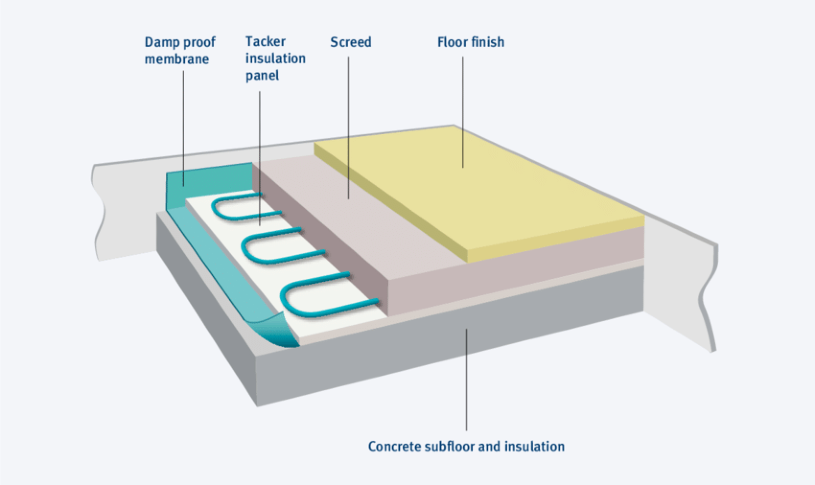
When using a screed or self-levelling compound (often called latex), make sure it’s poured deep enough to fully cover the matting. The goal? A solid floor with no movement.
Now here’s where it gets tricky. Some manufacturers say 2-8mm is enough. That might be fine for tiles but microcement needs more support. We’d usually recommend 12mm. Ultimately it’s your screed manufacturer who needs to confirm the right depth. And don’t rush it. The screed must be fully cured before you apply microcement. Moisture content should be no more than 5%.
Once that’s done, make sure your underfloor heating (UFH) goes through a full cycle (maximum temperature to minumum) within the timeframes your screed or UFH manufacturer recommends. Why? This forces out cracks before they can ruin your finish. Better to fix them now than regret it later.
Water-Based Underfloor Heating
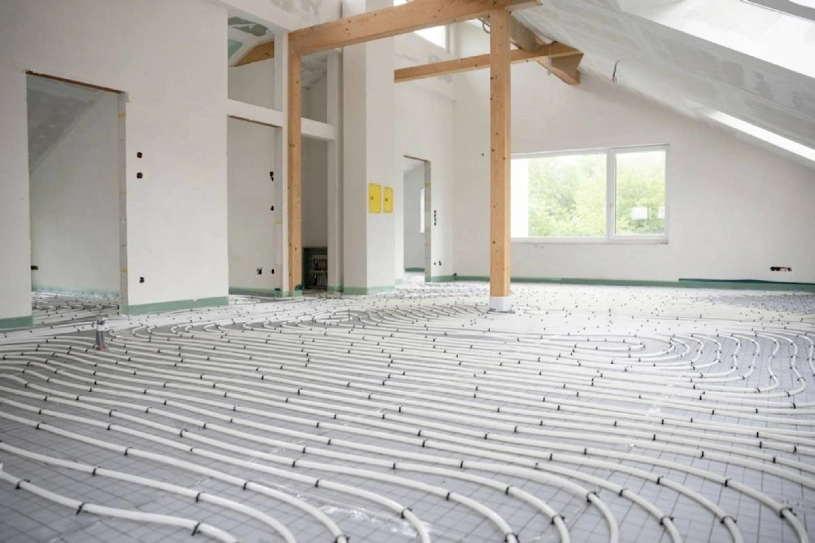
For water-based systems the rules are similar. The screed needs to fully cover the pipes creating a consolidated base with no room for movement. Stability is key. Here’s a question to consider: How dry is dry enough? Like with electric systems, the screed has to be fully cured, with moisture levels capped at 5%. Skipping this step isn’t worth the risk.
And don’t forget, just like with electric UFH you’ll need to cycle the system from max heat to its lowest setting. This helps cracks show up early so you can repair them before you apply microcement. Getting the prep right might take a little extra time but trust us, it’s worth it. A solid foundation makes all the difference.

Advantages of Using Microcement Floors Over Underfloor Heating
These are just some of the many perks of choosing microcement for underfloor heating. Curious why it’s such a great match? Let’s dive in:
- Excellent Thermal Conductivity
Microcement offers fantastic heat resistance and conductivity. It’s perfect for underfloor heating. Why? Because it transfers heat evenly and efficiently.
- Thin Application
No bulky layers here. Microcement is applied thinly, which means it works seamlessly with underfloor systems without adding unnecessary height to your flooring.
- Design Flexibility
Want something sleek and modern? Or maybe rustic? Microcement can do it all. Its versatility lets you customise the look to suit your space.
- Energy Efficiency and Long-Term Performance
Because it heats up quickly and holds warmth well, microcement helps reduce energy usage over time. Stylish and cost-effective? Yes, please!
- Heat Distribution
Say goodbye to cold spots. Microcement spreads heat evenly across the surface, keeping every corner of your space warm and cosy.
- No Expansion Joints Needed
Unlike other materials, microcement doesn’t require expansion joints. It creates a smooth, uninterrupted finish that looks clean and polished every time.
- Moisture-Resistant
Spills? Damp environments? No problem. Microcement resists moisture, making it perfect for kitchens, bathrooms, or anywhere else prone to humidity.
- Crack-Resistant When Properly Installed
Installed correctly, microcement stands up to wear and tear without cracking. This means your floors stay flawless for years.
- Highly Durable
Microcement is tough. From high foot traffic to everyday scuffs, it handles it all while maintaining its sleek appearance.
- Low Maintenance
A quick clean is all it needs. Microcement doesn’t demand regular upkeep, which means more time enjoying your home and less time scrubbing floors.
- Modern Aesthetic
If you’re after a contemporary, minimalist vibe, microcement is the way to go. Its seamless finish adds a touch of elegance to any space.
- Eco-Friendly Option
Care about the environment? Microcement is a sustainable choice. It’s made from natural materials and reduces waste compared to other flooring options.
What to Expect When Applying Microcement on Underfloor Heating?
Applying microcement over underfloor heating is a smart move, but you’re probably wondering: what’s the process like? Well, it works beautifully. The seamless design of microcement matches the even heat distribution, it’s cosy and modern. And its natural thermal conductivity means it looks great and feels amazing underfoot too.
But patience is key during the installation. Proper curing and layering is crucial to avoid cracks or other issues later. It’s about doing it right, even if it takes a little longer. If there’s moisture in the subfloor or the heating system hasn’t been calibrated correctly, these little details will trip you up. But don’t worry, working with a skilled installer will smooth out any hiccups.
The result? A warm, stylish floor that’s designed to last. If you’re combining the modern look of microcement with the thermal comfort of underfloor heating, it’s worth it. Just know that good things, like this, take time!
Suitable Rooms and Applications
Not sure where microcement with underfloor heating works best? These areas balance practicality with a modern vibe:
- Kitchen
- Bathroom
- Living Areas
- Bedrooms
- Hallways & Corridors
- Home Offices
- Commercial Spaces
Microcement Thickness and Heat Distribution
The beauty of microcement is its super slim profile, usually 2-3mm. This allows heat from underfloor systems to transfer quickly and efficiently, for evenly warmed surfaces. Too thick and you’ll lose some of that amazing heat response. A skilled installer knows how to get it just right, so you can have both style and warmth without compromise. Isn’t that the dream?
Problems with Microcement in Underfloor Heating
Like any good system, microcement on radiant floors isn’t perfect. There are a few things to watch out for to avoid headaches later. Let’s break it down.
Choosing poor-quality microcement
Microcement is heat-resistant and durable, so it’s not supposed to crack. But not all microcement is created equal. If you cut corners on quality, you’re asking for trouble. High-quality microcement offers better resistance and fewer problems in the long run.
Complex installation
Applying microcement over underfloor heating isn’t much different from a standard installation. But there’s a catch: the ignition protocol. Skip steps or rush the process and you’ll have problems. That’s why following the procedure is key. It’s not complicated, but it requires patience and attention to detail, both of which pay off in the end.
Why Choose DC Flooring UK for Microcement with Underfloor Heating Installations?
At DC Flooring, we know microcement installation can be daunting, especially with underfloor heating involved. But we’ve got it down to a fine art. We don’t just follow the steps; we commit to every detail, so the process is smooth and hassle free for you.
With our expertise, precision and a genuine passion for what we do, we’ll make sure everything works perfectly and looks stunning too. Let us take the guesswork out of it, because you deserve nothing less than perfect results.
FAQs
Does microcement crack when used with underfloor heating?
Microcement is heat resistant and won’t crack under the heat of radiant floor heating. Plus it’s seamless—no breaks, no visual interruptions. Imagine a smooth, continuous surface that feels modern and clean. Isn’t that what we all want? A flooring solution that’s practical and stylish.
Can microcement be applied over existing floors with heating?
Yes, it can! Microcement works on heated floors, even if there’s another layer beneath. No need to tear everything up, it’s all about working smarter, not harder. No need to tear everything up. It’s all about working smarter.
How long after applying microcement can I turn on the underfloor heating?
Wait 48 hours after applying the microcement before turning the heating back on. Take it slow, raise the temperature by 5ºC a day. And don’t forget: keep the room’s humidity levels in check for best results.
Is microcement energy efficient with radiant heating systems?
Yes. Microcement is great at absorbing, retaining and distributing heat. Less energy used, more savings in the long run. Plus, compared to other materials, microcement is a more cost effective option.
How long does microcement last with underfloor heating?
It depends. The quality of the material, how it’s applied and the conditions it’s exposed to all play a part. But when done right and looked after, microcement can last 20 to 30 years. That’s decades of durability with the right maintenance and care!
How much does underfloor heating with microcement cost?
It varies. Size of the space, type of heating system and quality of microcement all make a difference. But it’s an investment. Think of it as comfort and style, a practical upgrade that’s worth it in the long run.
Does microcement break with temperature changes?
Microcement is tough, no question. It’s resistant to moisture, handles temperature changes like a pro and shrugs off impacts without missing a beat. When you’re choosing materials, you want something that lasts. Microcement delivers exactly that, strength and reliability in one.

- Abrasion Resistance: Why It’s Critical for Industrial Floors? - November 11, 2025
- The Heel Drop Test: A Fast and Simple Way to Detect Delamination - October 30, 2025
- How a Cover Meter Survey Protects Reinforcement Integrity? - October 28, 2025