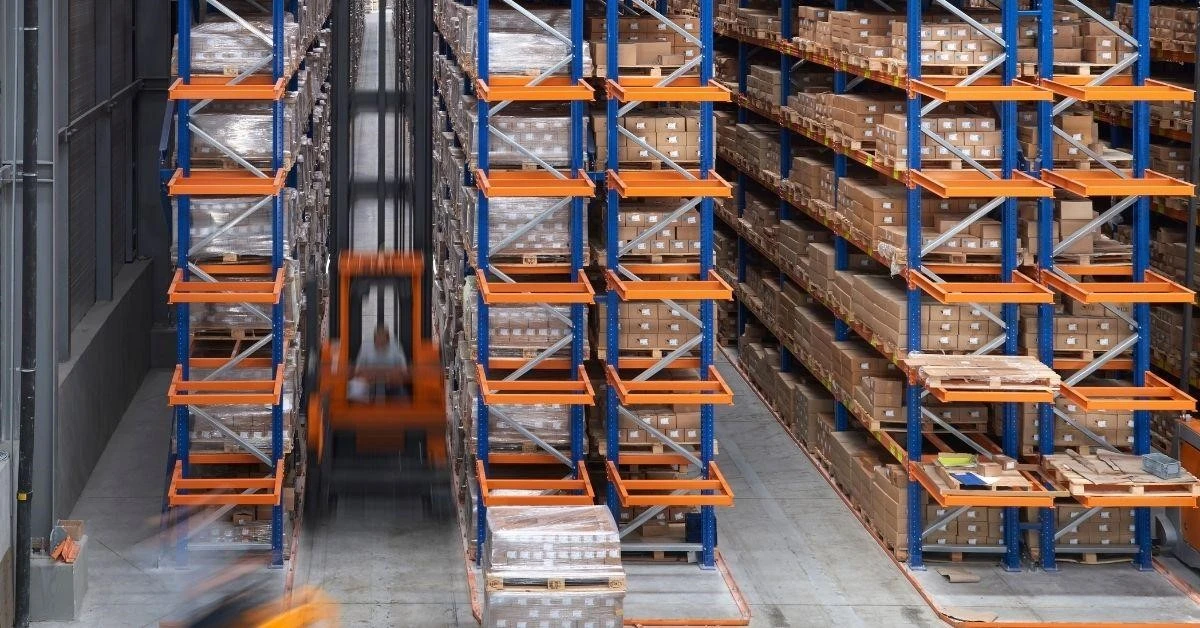
Very Narrow aisle flooring is crucial for optimising space and enhancing efficiency in warehouses and distribution centres. Designed to withstand heavy loads from pallet racking and frequent foot traffic, this flooring offers a durable surface that supports the rapid pace of logistics operations.
The Importance of Warehouse Flooring
VNA Warehouse flooring is crucial for safety, efficiency, and durability in work environments. A robust flooring system can minimise the risk of slips and falls, enhancing worker safety. High-quality flooring also supports heavy machinery and high-traffic areas, reducing wear and tear and helping to prevent costly repairs and downtime. The right flooring solution further aids inventory management by facilitating the smooth movement of equipment, making logistics more effective and boosting productivity.
Superflat Floors for Very Narrow Aisles (VNA)
Superflat floors are a flooring solution that enhances the efficiency of very narrow aisle (VNA) operations in warehouses. These floors are engineered for high flatness, allowing for improved manoeuvrability for forklift trucks and other equipment. The smooth surface minimises the risk of accidents and equipment damage, facilitating quicker movement in tight spaces. Superflat flooring also accommodates higher racking, maximising vertical storage while ensuring accessibility. Implementing superflat floors results in improved operational efficiency and cost savings in logistics management.
Engage a Flooring Specialist Who can Provide the Following:
- Highly skilled and experienced workers, directly employed and quality-driven
- A dedicated flatness team working alongside seasoned finishers to meet and achieve the precise floor tolerance specifications
- Precision in-house developed machinery and maintenance
- Robust quality control processes
- Concrete mix design, delivery, and quality
The Right Time to Narrow Down Your Aisles
Narrowing your aisles is a savvy decision that can enhance warehouse efficiency and space utilisation. The ideal time to implement this change is when you have a consistently high inventory turnover or when new product lines require better storage solutions. If you’re purchasing new equipment, such as narrow aisle forklifts, it’s also an opportune moment to rearrange your layout. Planning to narrow aisles during quieter periods or maintenance can help minimise disruption and ensure smooth operations.
The Benefits of Deciding on VNA are:
- Better space utilisation and higher storage capacity
- Alternative to warehouse extension or external storage
- Lower cost per square meter
- Higher productivity and throughput
- Greater lift height
- Lower traveling time in picking
Select a Guidance System to have Your VNA Trucks Move in a Straight Line
Implementing a guidance system in narrow aisle (VNA) environments is essential for the precise navigation of forklifts and other material-handling equipment. These systems help keep trucks on a straight path, minimising the risk of collisions and damage to racking and inventory. Technologies such as laser guidance, magnetic strips, or floor markings can enhance operational accuracy and consistency. Selecting the appropriate guidance system can assist warehouses in improving efficiency, increasing safety, and optimising workflow in tight spaces where manoeuvrability is a challenge.
Elevated Heights Call for Extended Safety Measures
When working at height, warehouses must implement safety measures to protect both workers and assets. This includes using fall protection systems such as guardrails, safety nets, and harnesses to prevent accidents. Training employees on safe lifting techniques and the proper use of equipment is crucial for complying with safety regulations. Regular inspections of the work area and equipment enhance safety, fostering a secure environment that supports productivity and reduces the risk of injuries at height.

Rethink Before you Redesign
- Determine the perfect aisle width and ceiling height
- Design an ideal floor for delicate warehouse and logistics operations
- Select the correct guidance system
Why Choose DC Flooring? Get in Touch With Us for the Best Warehouse Flooring Solution
- We provide great services – When it comes to warehouse and logistics operations, safety should always be a top priority. This not only includes implementing proper protection systems and providing thorough training for employees, but also carefully considering the design of your warehouse floor. At DC Flooring, we understand the unique needs and challenges that come with running a warehouse or logistics facility. That’s why we offer top-of-the-line flooring solutions that are specifically designed to meet these needs and enhance safety. One of the key factors in creating a safe working environment is having the right aisle width and ceiling height. Our team at DC Flooring will work closely with you to determine the perfect dimensions for your specific space, taking into consideration factors such as equipment size, storage requirements, and traffic flow. With our expertise in
- 24/7 Service – In addition to providing high-quality flooring solutions, we also offer 24/7 service to ensure that your warehouse is always in top condition. We understand that warehouses and logistics facilities often operate around the clock, and any downtime can result in significant losses. That’s why our team is available round-the-clock to address any maintenance or repair needs. Our 24/7 service not only includes prompt response times but also a dedicated team of experienced professionals who are trained to handle any flooring issues efficiently and effectively. Whether it’s a minor repair or a complete flooring replacement, our team will work tirelessly to minimize disruptions to your operations.
- Knowledge – Our team consists of experienced professionals who are trained to handle any flooring issues efficiently and effectively. They are available at all times to address any maintenance or repair needs promptly. This means that no matter when an issue arises, you can count on us to provide a quick response and resolution.
What We Do
- Surveying: We carry out floor flatness tests, strength tests, ESD tests, surface gloss testing…..to name but a few.
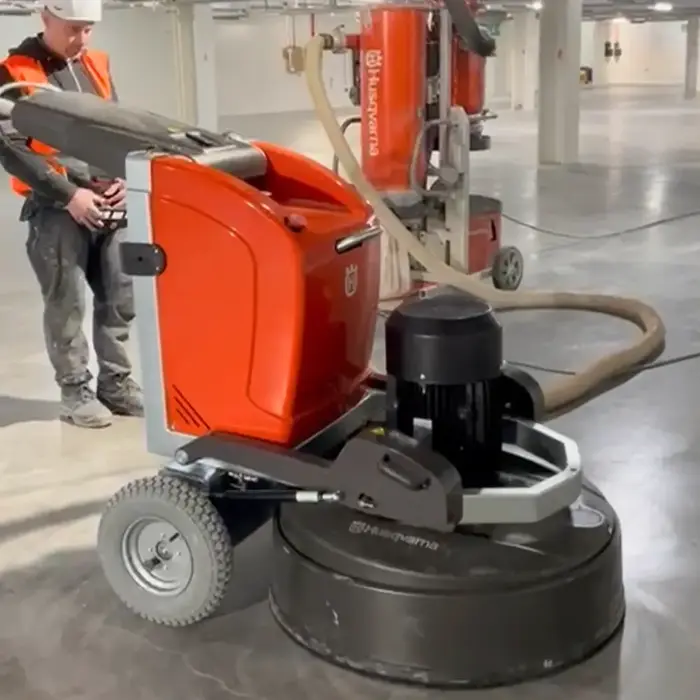
- Floor Flatness & Grinding: Achieving good floor flatness through precise grinding creates a smooth surface for various applications.
- Wire Guidance: The use of wire guidance systems enhances efficiency and accuracy in material handling.
- Floor & Joint Repairs: Timely repairs to floors and joints help prevent damage and maintain safe and functional environments.
- Maintenance: Regular maintenance is crucial for extending the lifespan of equipment and ensuring optimal performance.
FAQs
How wide should an aisle be for walking?
The width of a walking aisle typically depends on the requirements of the warehouse and the equipment used. A minimum width of 36 inches (91 cm) is recommended for comfortable passage. In high-traffic areas or when transporting large items, 48 inches (122 cm) or more may be preferable. It is important to consider safety and efficiency when designing aisle widths, ensuring there is sufficient space for movement while utilising warehouse space effectively. Regular checks can help adjust aisle sizes to meet changing needs.
Is special materials handling equipment needed for very narrow aisle?
Yes, specialised materials handling equipment is required for very narrow aisle (VNA) operations. Standard forklifts are typically too wide, so it’s crucial to use equipment designed for VNA environments. This often includes narrow aisle forklifts, which can manoeuvre in tight spaces while lifting for high racking systems. These machines feature articulated or turret designs and work effectively in narrow aisles, helping to save space and enhance efficiency in warehouses.
What is the acceptable flatness of concrete floor?
The levelness of a concrete floor is typically determined by industry standards, often employing the F-number system. For most warehouse applications, an F-Number of 25 to 30 is deemed acceptable, indicating a flat surface that supports operations and equipment. However, for sensitive tasks, such as high-speed automated systems, a flatter floor with an F-Number above 30 may be required for optimal performance. Regular checks and measurements should be conducted to comply with these standards, as floor flatness impacts efficiency, safety, and the longevity of equipment.
What signage must be at the ends of all racking?
At the ends of all racks, it is essential to have clear signs that provide safety and operational information. This typically includes load capacity indicators, warning signs for heavy equipment, and arrows to guide fork-lift operators. Labels indicating the type of inventory stored can assist with stock management and retrieval. Using bright colours and reflective materials can enhance visibility and reduce the risk of accidents in busy warehouses. Regular checks should ensure that signs remain clear and intact over time.