
The floor section of a schedule of dilapidations is usually a short paragraph, and it is almost always the part nobody can price confidently.
Warehouse floor dilapidations are probably 80% of our work. We are on them daily, we have been for a very long time, and no two are the same.
Here is the thing about them that catches people out, and it is not in any schedule. Most of the time nobody knows who is moving in.
Who is the floor actually being specified for?
In the vast majority of what we do, the building is being renovated to be leased again and the incoming occupier has not been found.
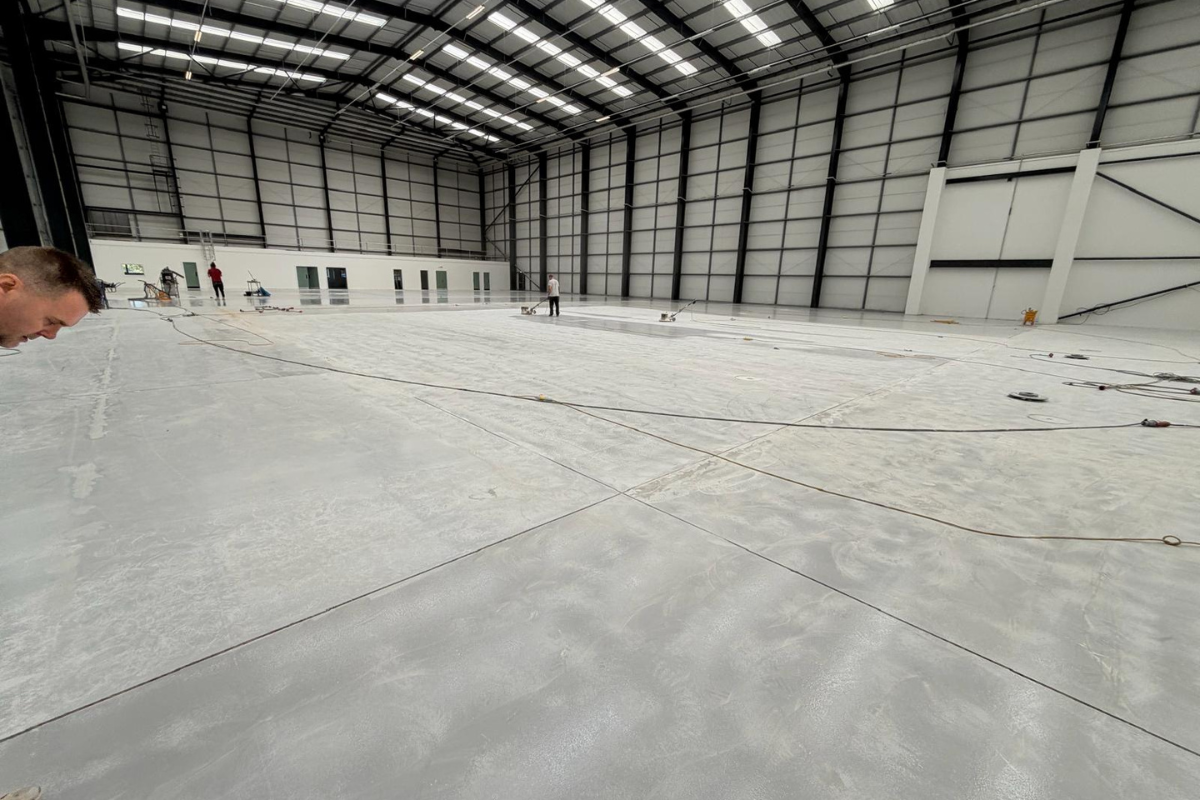
So the specification cannot be tailored, because there is nobody to tailor it to. What it has to do instead is make the floor aesthetically acceptable and fit for whatever industrial machinery might end up on it. That is a genuinely different brief from a floor specified for a known operation, and it is the reason two apparently identical warehouses get handed back to completely different standards.
It also explains an outcome that surprises people the first time they see it. We once laid a system across 10,000m² exactly as specified. The incoming occupier moved in, did not want it, and took the lot up again. That happens a lot, because we put down what the specification says, and the specification was written before anyone knew who was coming.
The question we actually ask on a site walk
People expect us to arrive and start sorting the floor into fair wear and tear on one side and damage on the other. That is not how it works, and it is not what tells you anything useful.
The question is whether the coating is still bonded.
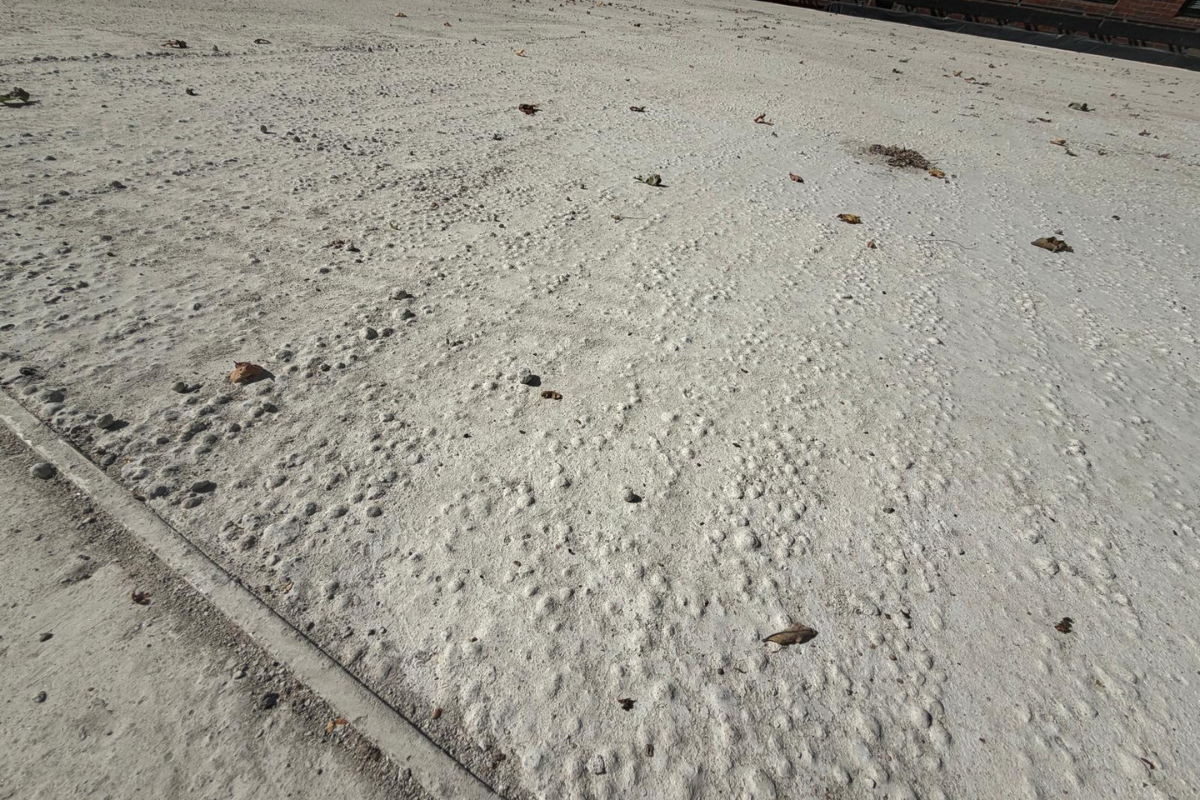
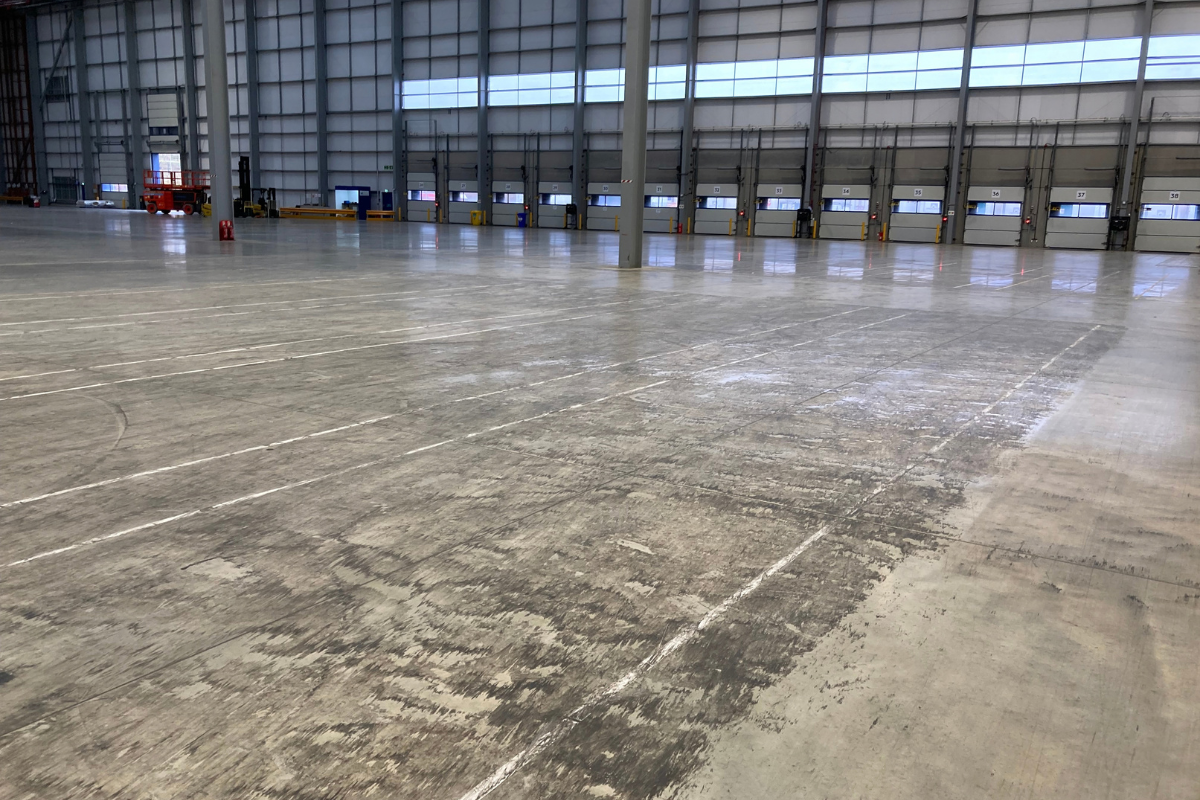
A coating put down correctly should not simply peel off a floor. We walk into buildings where the coating is worn in places, scratched, dull, discoloured and stained, and it is still down and still doing its job, because whoever laid it prepared the substrate properly. We walk into others where no preparation was done at all and the coating has lifted off in sheets.
And then there are the ones where somebody has kept putting layers on top of layers over the years. A smorgasbord of different finishes, and every one of them sitting on whatever was underneath it.
How worn a floor looks tells you how long it has been used. Whether the coating is still stuck to it tells you what has to happen next, and those two things are not related as closely as people assume.
Coated or polished, and the trade-up nobody explains
Two routes get specified for a floor being handed back, and the difference between them lands on whoever is in the building next.
Two coats of epoxy resin flooring can wear, scratch and chip within a few years even when it is looked after. Which means the tenant who takes the lease is, at the end of their own tenancy, expected to make it look how it was in the first place. They inherit the obligation along with the building.
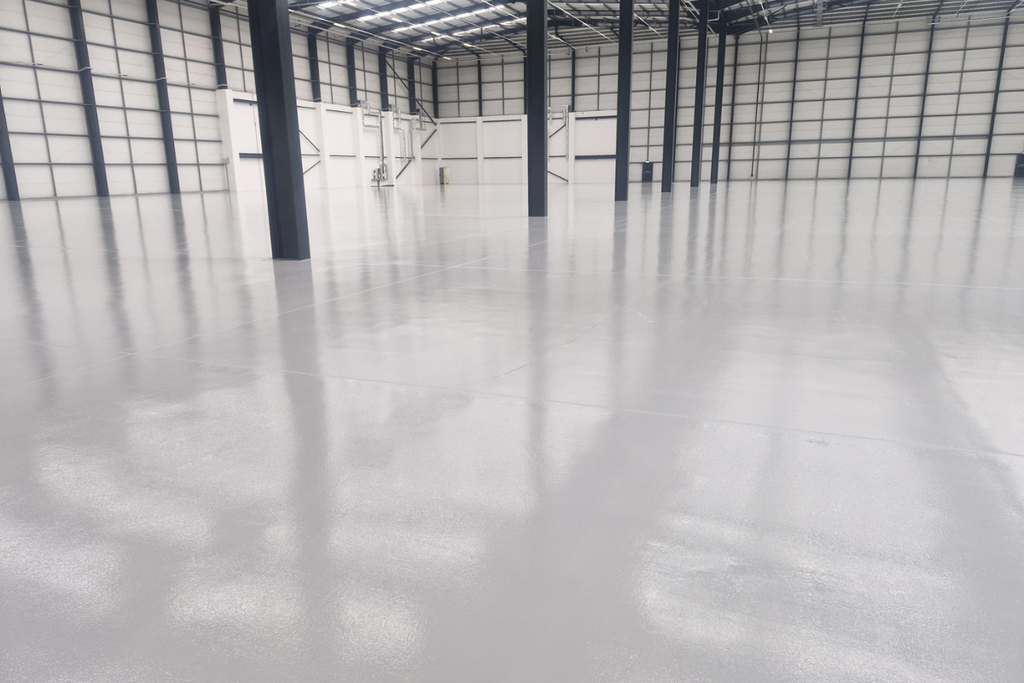
A polished system does not wear out in the same way, does not chip, and still looks right years later. The tenant coming in at the end of their tenancy does not have to do anything to the floor. Landlords lean towards it for exactly that reason, and it is a real trade-up rather than a specification preference.
Which one suits the floor in front of us is a different question, and it comes down to what we find.
Where a floor is genuinely scarred, carrying a lot of repairs, a patchwork quilt of previous work, a coating covers that. Where it is a sound power-floated slab that has not been smashed up and does not carry repairs everywhere, DCF Express polished concrete is usually the better answer, because there is a good floor underneath worth bringing out.
Where the money actually gets wasted
Not on the wrong system. On expectations that never travelled down the chain.
We usually talk to the builder. The builder talks to the surveyor. The surveyor talks to the end customer. By the time a specification reaches us, several people have interpreted it, and what the customer pictures is often nothing like what has been priced.
The classic version: somebody hears the word epoxy and pictures an absolute mirrored finish, completely level, no bumps, no lumps. The people we are working for want it done on a budget. You are never going to get it looking like that, and nobody finds out until the floor is down.
Managing that expectation is not really ours to do, because we are rarely the ones talking to the person who holds it. It has to be fed down the line. The builders who are good at this have the conversation before the job is priced, and say plainly what the end customer is expecting. The ones who are not will come in, slap down a coat, and tell everyone it is only a warehouse floor.
We have worked for a lot of different customers for a very long time, which means we usually know what a particular builder and their client are expecting even when it has not been written down. We go above and beyond on the small things, the little repairs, filling the holes and indentations, and we always try to get a floor to the higher end of the finish rather than the lower. Not every company does the filling at all.
What this costs
Dilapidations work is priced on what the survey finds, which is why nobody can quote a floor from a photograph. Two warehouses of the same size, handed back under the same kind of schedule, can be completely different jobs depending on whether the existing coating is bonded, how much repair the slab carries, and which route the specification goes down.
We look at the floor first and quote against what is actually there. You get a detailed quote before any work begins.
Why it is worth getting somebody in before the schedule is priced
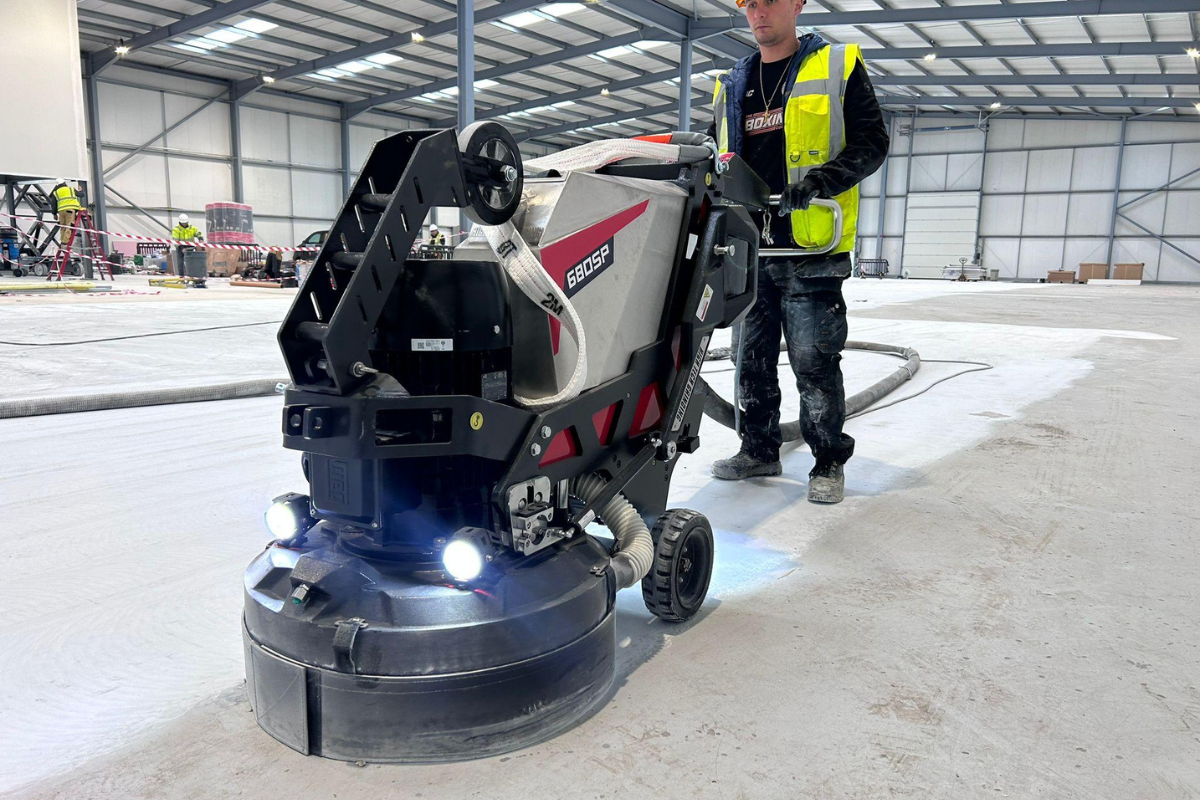
All our machinery is owned and maintained in house. On dilapidations that matters, because when we open up a floor and find three previous finishes on it, we change the approach that day rather than waiting on a hire company to send something else out.
“Because DC Flooring installs every major commercial flooring system, we’re not limited to recommending what we know best. We recommend what’s right for your floor, your environment, and your budget.”
On a floor being handed back that cuts both ways. Sometimes the honest answer is that the existing coating is sound, and the right job is a great deal smaller than the schedule suggests.
Rated 4.8 stars from 76 verified reviews on Trustist, you can read them on our website before making contact.
DC Flooring is the UK’s specialist in commercial and industrial flooring for warehouses, logistics facilities, food production environments, and automated warehouse systems — with over 20 years of completed projects across the UK and into Europe.
Tell us your floor size and approximate condition — we’ll come back to you with a detailed quote. No obligation, no sales pressure. Just straight answers.

- You asked three companies to clean your warehouse floor and got three completely different prices - November 11, 2026
- Over Christmas your building is either quiet or flat out. Both are workable. - November 5, 2026
- A warehouse floor can be worn, scratched and stained and still be doing its job. Nobody knows who is moving in yet. - November 4, 2026
