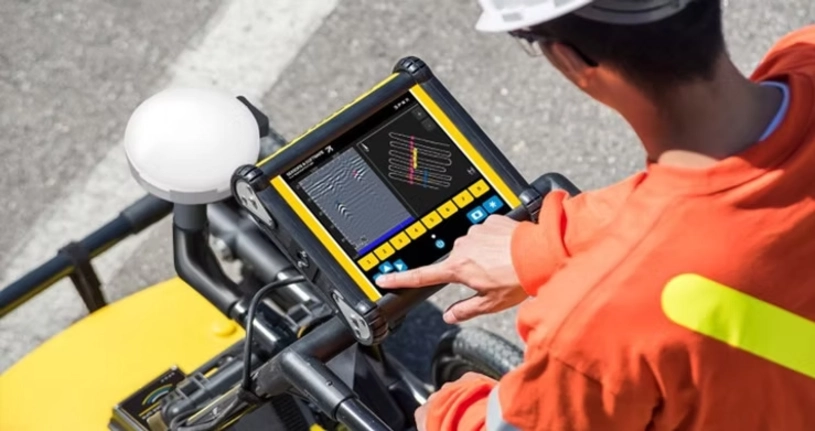
Before doing more serious work on the construction site, you must perform all necessary checks and ensure safety. When you’re about to drill through a concrete slab, you must be 100% certain that it is safe.
People often forget what’s beneath the surface and in many cases, there’s no way how to find out about it. This is why GPR scanning was invented. A ground penetrating radar will scan through it and see if there’s anything of concern. If everything’s clear, work may begin, but if there are cables, plumbing lines or anything that may cause problems, additional caution must be used.
What is Ground Penetrating Radar Scanning?
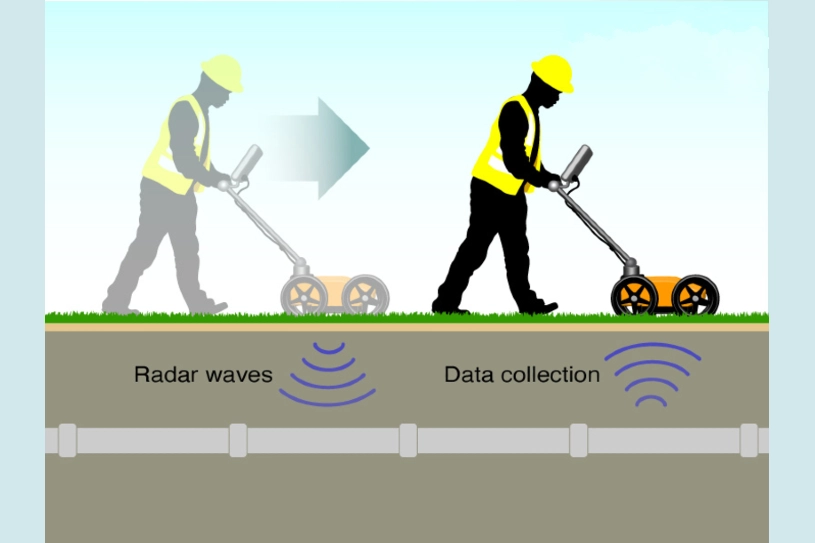
As the name itself suggests, this is a radar that penetrates through the ground and sees what’s beneath the surface. It is a geophysical method that is able to scan through concrete slabs, but also other hard surfaces, and go deep into the soil.
The technology uses electromagnetic waves which are sent into the soil, and depending on the returned signals, we know what’s inside. A skilled and experienced technician will interpret the results and report with a high degree of certainty what’s under the slab. This is a useful method before digging, because it often saves time and money.
How Ground Penetrating Radar Works?
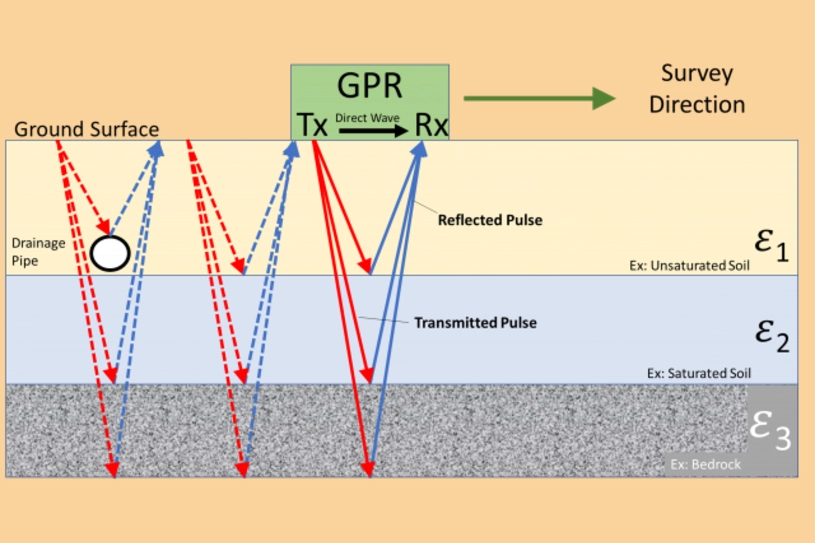
The radar works by emitting electromagnetic waves into the ground and receiving signals back from it. The technology is pretty simple, but you need the proper equipment to get it done right. Also, not just anyone can do it. You need a skilled technician who will read the results.
Depending on the reflected pulse, the technician will know if there’s just soil beneath the slab, pipes, cables, rock, more concrete, or something else. All of these materials reflect a different type of signal, so it’s easy for a skilled expert to know what’s under the concrete slab.
What Can Be Detected Beneath a Concrete Slab?
A concrete slab can look solid from the outside, but inside it’s often packed with hidden details that matter for every project. Ground penetrating radar gives construction professionals a way to see what’s there before work begins. From reinforcement steel to utilities, and even empty spaces that weaken support, GPR technology makes it possible to understand the true condition of the slab without breaking it open.
- Reinforcement bars (rebar) – Rebar is the steel framework that gives concrete its backbone. If it’s hit by a drill or saw, not only is the tool at risk, but the strength of the slab can be compromised. By using GPR scanning, technicians can map where those bars run, allowing work to move forward without putting the slab’s support system in danger.
- Post-tension cables – Post-tension cables are vital for holding the slab under stress. Striking one during cutting or coring can create serious hazards in seconds. With GPR services, each cable can be traced with precision so teams know exactly where they are. That level of certainty protects both the structure and the people working around it.
- Electrical conduits and plumbing lines – Beneath the surface of many floor slabs runs a maze of electrical conduits and plumbing lines. Accidentally damaging them is expensive and disruptive. GPR can detect and map these services accurately so construction teams know where to avoid cutting. It’s a simple step that prevents costly repairs and keeps projects on track.
- Voids and anomalies – Sometimes the problem isn’t what’s there but what’s missing. Voids beneath the slab may look harmless, but over time they can lead to deterioration and even structural failure. GPR can detect these gaps and other irregularities, giving a clear view of risks that might otherwise go unnoticed.
- Thickness of slab – The thickness of a slab is one of the first details a technician will check. GPR provides accurate measurements, helping teams understand the strength of the concrete and plan their work with precision. Knowing this information means fewer surprises and safer decisions on-site.
4 Key Benefits of GPR Scanning in Construction
There are so many benefits from conducting a GRP scan in construction. The first and essential reason to do so is safety. Nothing can compensate for human life, and live cables or pipes with water under pressure pose a serious threat to human lives. Here are the most valuable benefits of doing a GPR scan:
- Safety: Using GPR ensures safety by helping technicians accurately locate targets of interest before any drilling or cutting takes place. This prevents hazards such as striking a post tension cable or damaging underground utility lines.
- Cost savings: Another valuable reason is saving money. When you’re not using a GPR scan, you might damage something that costs millions. Instead of risking, you should hire the right team and ensure that there’s nothing valuable under the construction site.
- Accuracy and non-destructive method: Unlike invasive inspection methods, GPR can detect structures beneath the surface without damaging the concrete slab. The technology delivers precise locations and depths, producing a reliable deliverable for construction professionals.
- Compliance with construction standards: Professional concrete scanning with advanced GPR technology ensures compliance with safety regulations and construction standards. By identifying obstructions and providing accurate location and extent data, GPR helps maintain industry best practices.
Applications of GPR Concrete Scanning
GPR scanning has become a go-to tool across construction and maintenance because it gives answers without breaking into the concrete. It’s used before drilling or cutting to avoid hidden utilities, during renovations to uncover what lies inside older slabs, and in inspections to check the slab’s condition. Here are the most common applications:
- Pre-drilling and cutting surveys: Before a core drill or saw touches the slab, GPR surveys provide the map services and conduits needed to avoid hazards. This reduces risk and guarantees a smoother workflow.
- Renovation and refurbishment projects: During renovations, concrete scanning helps locate hidden utilities and structural features. GPR can be used to identify obstructions that would otherwise remain unseen beneath the surface.
- Structural integrity assessment: Assessing the integrity of the slab is critical for preventing structural failures. GPR provides valuable insight into the condition of concrete slabs, including any extent of voids or deterioration.
- Facility maintenance and asset mapping: GPR can detect and map underground utility lines, making it essential for facility maintenance and asset management. Accurate location and extent data allow teams to track services and conduits without invasive work.
Limitations of GPR Scanning
While GPR technology is highly advanced, it does have limitations. Depth penetration limits mean that extremely thick slabs or deep soil beneath may reduce clarity. Soil conditions and slab thickness also affect the quality of reflected signals. In certain cases, X-ray might be more suitable for detecting very fine details within concrete structures. Here are in short the three main limitations:
- Depth penetration limits
- Soil conditions and slab thickness impact
- When x-ray might be more suitable
Why Choose Our Professional GPR Scanning Services?
When choosing who’s going to do your GPR scanning, you need to consider a company that has experience and a positive work portfolio. We’re a highly experienced enterprise with modern equipment, using the latest technology to uncover what’s beneath the ground of your construction site. Contact us today, schedule a meeting, and learn more about our work.
FAQs
How deep can GPR scanning detect beneath a slab?
GPR can typically detect features up to 600mm beneath the slab, though results vary depending on the slab’s thickness and soil conditions.
Is GPR scanning safe for workers and the environment?
Yes. GPR emits low-energy electromagnetic waves that are entirely safe for technicians, construction teams, and the environment.
How long does a typical GPR survey take?
A standard survey of an area of concrete can be completed in just a few hours, though larger projects may take longer depending on complexity.
What information is included in a GPR survey report?
Our reports provide precise locations and depths of detected features, CAD drawings, and clear visual deliverables to support construction decision-making.
What factors affect the cost of a GPR scan?
The cost depends on the area of concrete to be scanned, the slab’s thickness, accessibility, and the level of detail required in the deliverable.
Can GPR locate unmarked graves?
Yes, GPR can be used for utility locating and even archaeological work, including detecting unmarked graves. The technology is versatile and sensitive to changes beneath the surface.

- Abrasion Resistance: Why It’s Critical for Industrial Floors? - November 11, 2025
- The Heel Drop Test: A Fast and Simple Way to Detect Delamination - October 30, 2025
- How a Cover Meter Survey Protects Reinforcement Integrity? - October 28, 2025