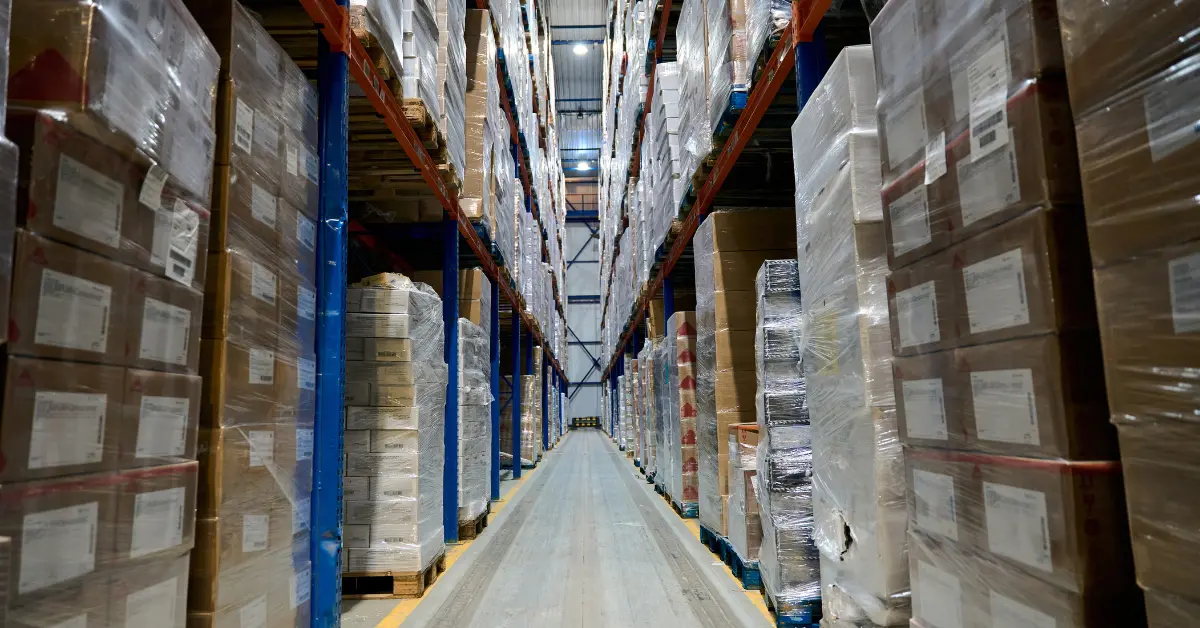
The correct flooring specification is essential in a high-bay warehouse. It serves as the foundation for daily operations and supports the industrial racking used to store goods. The systems and materials chosen for the flooring solution must be suitable for the specific tasks carried out in each warehouse.
Essential Characteristics of Quality High Bay Warehouse Flooring
For flooring to perform well in a high bay warehouse, it must meet these requirements:
Surface Flatness And Levelling
Out of all the requirements for the proper operation of modern high reach pallet racking, surface flatness is the most significant. It has a substantial effect on the accuracy of forklift operations, in terms of both speed and safety.
A perfectly level floor not only ensures that racks are plumb and vertical, but it also reduces the likelihood of products falling over during picking or put away. This is especially crucial when working at extreme heights, as even the slightest slope can cause issues with stability.
Traction And Slip Resistance
Another essential factor for high bay warehouse flooring is traction and slip resistance. With the use of heavy machinery such as forklifts, there is always a risk of accidents due to slipping or sliding on smooth surfaces. It is crucial to have a flooring material that provides enough grip to prevent such incidents.
At the same time, it’s important to find a balance between sufficient traction and not creating too much resistance for the movement of forklifts. A flooring material that is too rough can slow down operations, be difficult to clean and cause unnecessary wear and tear on equipment.
Strength And Abrasion Resistance
Due to the heavy forklifts or automated robots that operate in these facilities, it’s important that your flooring solution is able to stand up to constant wear of the machinery trafficking the same path over and over. If the floor does start to groove or wear down, this will then affect the high bay racking systems.
Our high strength industrial flooring sytems such as DCF Express or Optimal slab are designed to withstand impact resistance and the constatnt traffic that can causeother systems to fail over time. These systems have the highest Mohs Hardness ratings and Abrasion Ratings in their field.
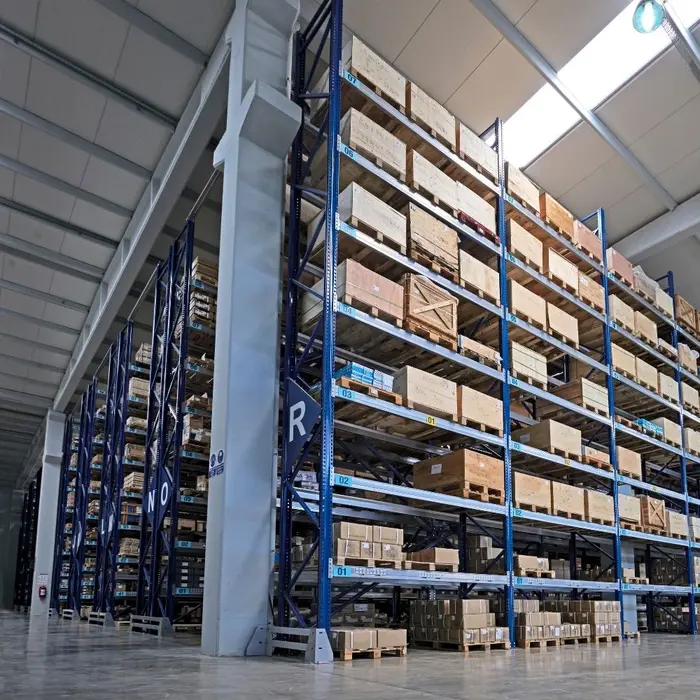
High Bay Warehouse Flooring Solutions and Options
As leaders in flooring solutions for warehouses of this nature, DC Flooring can offer a system that is right for your application. Here are the main solutions that we offer our clients.
High Strength Concrete Flooring
Concrete floors are the most popular solution. However, all concrete floors are not equal. Traditional power floated concrete is hard-wearing. However, the traditional sealers that are used degrade rapidly, causing the concrete to begin to dust and wear. But with our specialist overlays and polishing sytstems they become enhanced to a level that is perfect for the demands of a high bay warehouse.
Concria Optimal Slab
This is the ultimate flooring solution, combining unrivalled strength and aesthetics. This dry shake topping system is laid and finished on wet concrete, meaning fast installation, ultra-quick curing, low maintenance costs, and an extremely long lifespan. Three times more durable than terrazzo tiles, with a wear resistance of A6 (Bohme) and Hardness 7 (Mohs scale), there isn’t a better floor on the market.
DCF Express
DCF Express enances new or existing concrete to become exremely strong and durable. The fact that it can transform existing concrete slabs means that it is fast becoming the go to option in warehouse refurbishment
Epoxy Resin Coating & Self-Levellers
Epoxy resin and self-levelling compounds are popular choices for warehouse floors. Epoxy resin is durable and resists chemicals and impacts. It provides a seamless surface that is easy to clean. Self-levelling compounds quickly fix uneven floors, creating a smooth, flat surface that can hold heavy loads. Both options improve safety by reducing trip hazards and providing a stable footing for workers and machinery.

Polyurethane Flooring
Polyurethane is highly resistant to high temperatures. It performs well in outdoor settings and cold storage, withstanding extreme temperatures without damage. Its main features include abrasion resistance, durability against strong impacts, and protection from solar and ultraviolet rays.
Polyurethane-Cement Flooring
This polyurethane material is strong and durable for warehouse flooring. It resists harsh chemicals and temperature changes. This flooring is designed for warehouses and distribution centres in the food, pharmaceutical, and chemical sectors.
Cementitious SL Compounds
Cementitious self-levelling compounds create smooth surfaces in high-bay warehouses. They fill small cracks and imperfections in the existing floor for a flat foundation. These compounds cure quickly, reducing downtime during installation. The finished surface is strong and can withstand heavy loads, making it ideal for industrial settings. Cleaning is easy, and these compounds can be painted or coated for extra protection and a better look.
Top Coats
Top coats are essential for high bay warehouse floors. They protect the underlying surface and resist scratches, stains, and chemical spills. These coatings also make the floor look better. Applying top coats simplifies cleaning and prolongs the floor’s life. It is crucial to select a top coat that suits the specific needs of the warehouse environment.
Warehouse Pump Screed Surfaces
Warehouse pump screed surfaces work well in high bay areas. They create a smooth finish that supports heavy loads. These surfaces are easy to apply and cure quickly, leading to minimal downtime. Pump screeds resist wear and are suitable for industrial use. Regular maintenance can extend their lifespan and reliability. The right type of pump screed depends on the specific needs of the warehouse.
Why Choose DC Flooring for Your High Bay Warehouse?
- Testing
- We focus on key aspects to ensure a great experience for our clients.
- Professional Installation: Our team guarantees precise installations that meet industry standards for a perfect setup.
- Quality Materials: We use only top-quality materials for durability and longevity in our projects.
- Industry Experts: Our experienced professionals bring years of knowledge to every project for high-quality results.
- Support: We provide ongoing support after installation. Our team is always ready to answer questions or handle concerns.
FAQs
How thick should a warehouse floor be?
Industrial floors need to be at least 15 cm thick for light to medium use, 20 cm thick for heavy use, and 20 cm or more for a warehouse that stores heavy machinery or large inventory.
What is the best concrete floor for a warehouse?
Optimal Slab, DCF Express and epoxy-coated concrete floors are great warehouse choices due to their strength and smooth surfaces. To improve functionality, you can also combine other options with concrete and epoxy flooring systems.
How do you mark a warehouse floor?
Marking a warehouse floor is important for safety and efficiency. Clear lines help to direct traffic and define areas. Use durable paint that can handle heavy use. Bright colours improve visibility and organisation. Planning the layout before painting is essential to ensure all areas are marked correctly. Ensure markings are maintained regularly to keep them clear and visible.
How to create a warehouse floor plan?
Creating a warehouse floor plan is crucial for effective space management. Begin by measuring the entire area. This helps identify available space for storage and operations. When creating a warehouse floor plan, it is crucial to designate specific areas for pallet storage and ensure that aisles are wide enough to accommodate forklift movement.
Properly marking these areas on the floor can prevent congestion and facilitate smooth traffic flow, allowing forklifts to easily access pallets during the loading and unloading processes. Additionally, it’s essential to consider the height of pallet stacks and the safe operation of forklifts to comply with safety regulations, ensuring that your warehouse remains both functional and safe for all employees.
Lastly, ensure compliance with safety regulations. Regularly review and update the plan to meet changing operational needs. A clear and organized layout improves efficiency and workflow.