Ever thought about how much a warehouse floor really changes things? In a VNA warehouse, it can make or break your workday. The concrete floor slab under your forklift truck matters a lot. In that busy logistics environment, a good flat floor keeps the VNA truck safety and lets all materials handling equipment (MHE) do its job. Get the floor flatness and levelness right, and you dodge many headaches.
What is Floor Tolerance?
Floor tolerance is about making sure the floor is flat and level enough for all the equipment. Think of it as a rulebook for your concrete floor. You check, measure, and double-check if the floor matches the flatness specification you need. Bumpy or sloped spots make life harder for anyone using a lift truck, so keeping to the required flatness helps everyone stay safe and get things done.
Key Standards for Floor Tolerance
Floor flatness is controlled by several key standards, and each one has a role in the daily work of a VNA warehouse or modern logistics environment. These standards list the correct specification for different needs and the type of equipment in use, such as robotics, ASRS, or traditional materials handling equipment. Following these rules keeps operations safe, helps products move smoothly, and keeps future costs down by preventing accidents or costly repairs. Ignoring best practices leads to more downtime and higher risk throughout the warehouse.
- Fmin (Floor Minimum Flatness): The Fmin flatness standard, described in TR34 guidance, is the main reference for many UK warehouses. It measures exactly how flat and level the concrete floor must be to support the VNA truck safety at height. A high Fmin score is a sign that the slab is close to perfect, helping prevent mast sway or sudden tilts. Meeting or exceeding the right Fmin in your flatness specification protects staff, goods, and the life of your truck fleet.
- VDMA Standards for Industrial Warehouse Floors:The VDMA standards set out by Germany focus specifically on environments where automation is normal – think ASR technology and robotics handling pallets. These standards take into account how a concrete floor needs to function with high-speed movement and heavy MHE. Many large sites choose VDMA because it encourages consistency in floor quality. Following VDMA improves compatibility and reliability, especially when your site expects rapid evolution in warehouse tech.
- DIN 15185 and EN Standards for European Compliance: DIN 15185 is a German standard that combines with EN standards across Europe, creating one agreed-upon way to check racks, MHE, and concrete slab conditions. These standards set out the required flatness so equipment like VNA forklift trucks won’t tip or catch. Meeting EN guidelines supports warranty claims and makes working with partners in other countries easier and safer. If you want your warehouse to run easily between borders, having these standards is critical.
How Is Floor Tolerance Measured?
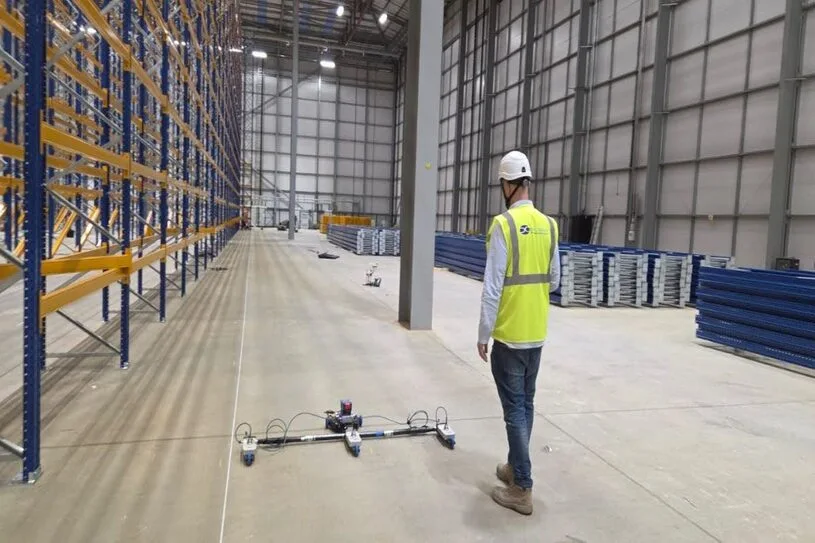
You can’t spot dips or bumps just by looking. You need the right tools. Profilographs, laser scanners, and digital measuring gadgets scan the floor to catch any spot that’s too high or low. The quick straightedge test helps, but it isn’t perfect for VNA warehouses. Regular checks show if your slab meets the flatness spec, so nothing slows down, from racks to robotics.
- Tools: Special equipment such as digital profilographs, 3D laser scanners, and laser level checks the concrete floor across its full length. These devices offer accurate data showing high and low areas, helping confirm that he required flatness standard is achieved for MHE and ASRS operations.
- Methods: Floors get checked using a combination of scans and hands-on techniques. Digital maps are made along the same tracks that VNA trucks and robots follow daily. Technicians measure and review these results, compare them with the flatness specification, and create plans for fixing any problems found.
The Role of Floor Tolerance in VNA Truck Operations
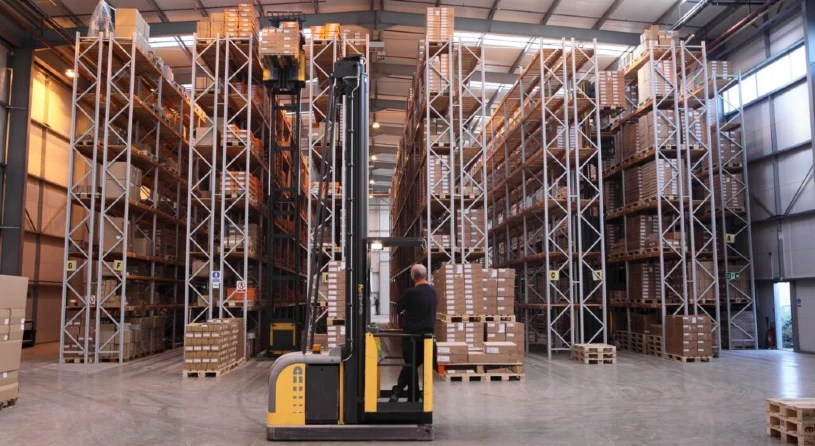
The floor is just as important as the VNA truck safety itself. If the concrete floor slab isn’t good, all the materials handling equipment will have a harder time. The flatness and levelness of the slab help keep things steady. Bad floors make for bumpy rides, slower work, and more broken gear.
- Safety Implication: Safety comes first. When the floor isn’t even, any lift truck or forklift truck can start shaking. Imagine carrying a pallet up high, and the mast starts shaking because of a bump. Things could drop. Hitting a rack or having a mast move too much is a recipe for mistakes that can quickly lead to an accident.
- Operational Efficiency: A smooth slab means your warehouse runs better. Fewer bumps means operators don’t have to slow down. More pallets can move every hour. You lose less time stopping and starting. Bad dips or rough areas make everyone drive carefully, but floor flatness is what keeps everything moving at the right speed.
- Equipment Longevity: Broken or rough floors damage machines over time. More bumps cause more wear on wheels, sensors, and bearings. The parts for your MHE or lift truck wear out fast. With a concrete floor slab that’s flat, parts last longer, so you save money fixing things. With smooth floors, you spend less on repairs.
Consequences of Non-Compliant Floors
A floor that doesn’t match the flatness specification creates lots of problems. First, you notice things shake, then you might break something, and suddenly you face big bills or a serious injury. If the slab is wrong, it slows people down, costs more, and puts everyone working at risk.
Increased Maintenance Costs
Bad flooring wears out trucks. Parts fail fast and breakdowns become normal. Bearings, tyres, and steering end up in the shop. Each time, you pay and lose more working hours. Good floors save companies every month, cutting down on repairs and keeping the main work on track.
Safety and Liability Risks
The flatness and levelness of a floor matter. If the floor is bad, forklifts and VNA trucks struggle to stay upright. That means a greater chance for things to tip, crash into racks, or drop a pallet. Hurt workers, broken goods, or even court trouble are possible. All because the slab didn’t match the right floor standards.
Operational Disruptions
Having to slow down for rough spots harms everything. Workers wait, pallets don’t move, targets are missed. Every pause for a dip or fix just slows the day. Non-compliant floors keep the warehouse from hitting its goals and earning as much as possible.
Achieving and Maintaining Optimal Floor Tolerance
| Category | Focus Areas | Techniques & Solutions | Standards & Compliance | Costs & Benefits |
| New Construction | Screed, vibration control, levelling | Careful pouring, laser floor screeding, slow curing | TR34, Fmin, VDMA at start | More money at first, but saves in repairs and makes the VNA warehouse run smoother. |
| Retrofitting Existing | Levelling up old floors | Grinding, overlays, resin, surface polish | Update floor to TR34/Fmin, robotics | Cost depends on how bad the floor is. It makes old floors last, keeps jobs safe and fast. |
| Ongoing Inspections | Watching for dips, staying certified | Frequent checks, laser scans, 2–3m straightedges | Test to BS 8204, repeat TR34 checks | Service plans are cheaper than large repairs. Inspections keep insurance and work rolling. |
DC Flooring’s Expertise in VNA Floor Compliance
DC Flooring helps every type of warehouse with floors. We know setting up a VNA space with good flatness takes serious skill. Whether pouring a new slab or fixing an old one, DC Flooring makes floors that match the right specification, so your forklifts and MHE can work safely. We worry about the floor flatness, so you don’t have to.
Proven Track Record
DC Flooring has worked in all sorts of warehouses, including some of the busiest logistics facilities in the region. Our experience covers everything from new builds to challenging retrofits. Every floor we complete is checked to the right flatness specification for that site. This reduces risks and keeps equipment and staff safe. Clients have relied on our work for years, confident that compliant concrete floor slabs support our VNA systems, racks, and materials handling equipment.
Services Offered
DC Flooring offers a full range of services to make sure your slab is fit for use in a VNA warehouse. We handle planning, design, levelling, repairs, and screeding. We also provide detailed surveys, laser scanning, digital profileograph reports, and regular inspections for ongoing assurance. If the floor fails to meet standards, our team can repair it with grinding, overlays, or new resin. These steps help you avoid future problems and reduce costly downtime caused by out-of-tolerance floors.
FAQs
How do floor irregularities affect mast stability in narrow aisle trucks?
When there’s a low point or bump, the mast moves and sometimes shakes. If the mast’s up high, that shaking is even more dangerous. Just a small dip can mean the top wiggles. It might bang into the rack or even drop the pallet, making it unsafe for everyone nearby.
Are there challenges in retrofitting older warehouse floors to VNA standards?
Yes, older buildings can hide cracks or be hard to get into. Some places are listed or need work to stay open. Repairs might mean only fixing part of the slab at a time. With planning and care, though, it’s possible to bring even tricky floors up to the flatness standard.
How often should warehouses perform floor tolerance checks?
Most new floors get one check before things start. Busy places should be inspected every year. If lots of forklifts roll through, maybe do two checks yearly. Using digital tools and profileographs, you’ll catch problems before they cause bigger trouble and keep the logistics environment safe.
How does floor tolerance influence automated guided vehicles (AGVs) performance?
AGVs and robotics follow lines and need smooth floors. If floors are uneven, sensors get mixed up, and robots can go the wrong way or just stop. Bad spots slow down work, block paths, or hurt wheels. Good floor flatness lets AGVs or ASRS systems do their jobs without getting stuck.

- Abrasion Resistance: Why It’s Critical for Industrial Floors? - November 11, 2025
- The Heel Drop Test: A Fast and Simple Way to Detect Delamination - October 30, 2025
- How a Cover Meter Survey Protects Reinforcement Integrity? - October 28, 2025