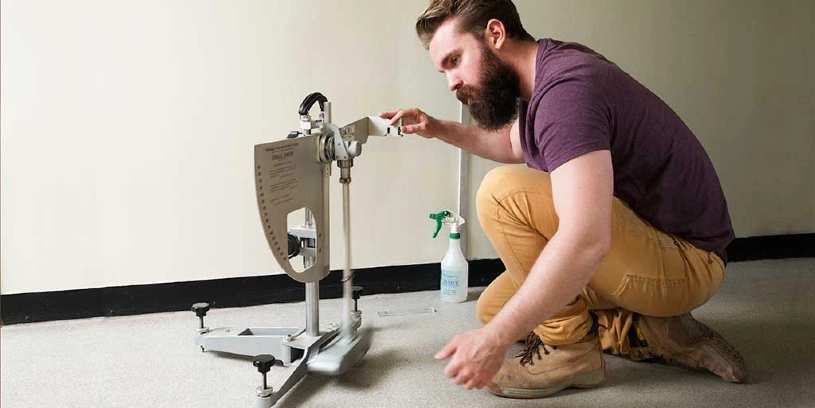
Slipping while walking is not just uncomfortable, but highly dangerous. Slip resistance testing can prevent serious injuries at the workplace. Before putting a new floor to use, it’s best to do some tests and find whether it is ready and safe for the workers.
New flooring at the workplace must provide excellent grip and allow everyone to use it without worrying. Inadequate skid resistance is dangerous, so complying with UK regulations on safe environments is a must.
What Is Slip Resistance Testing?
This method ensures the new flooring is safe for use. With slip resistance testing, contractors will determine the friction or skid resistance coefficient on the particular floor surface. There are strict UK standards to follow, including those from the UK Slip Resistance Group. Following them and getting passable results means the floor is safe and ready for use.
Common Testing Methods Used in the UK
In the UK, several testing methods are employed to measure slip resistance, including the Pendulum test, the Ramp test, and the use of Tribometers. Each method evaluates the floor slipperiness and slip potential under varying conditions, from dry floors to wet environments. These methods follow European standard guidelines to assess floor slip resistance comprehensively and help prevent slip accidents.
Understanding the Pendulum Test and Its Role in the UK
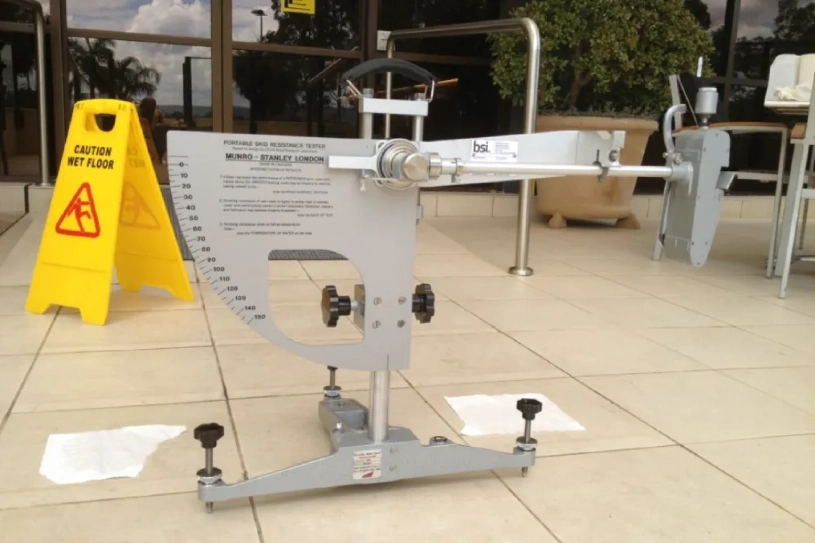
The Pendulum test is the preferred test method for measuring slip resistance across many industries. It is carried out using a pendulum tester equipped with a standard slider to simulate a shoe sole. The test measures the dynamic coefficient of friction by swinging the pendulum over the surface under test and recording the pendulum slip value (PTV). This test is widely recognised for its reliability in predicting slip potential in both dry and wet conditions.
Interpreting slip potential
- High: High slip potential floors are the ones you’d rather avoid-like stepping onto a patch of ice without realising it. They give you that instant “uh-oh” feeling because your feet can’t quite grip. It’s the kind of surface that makes you second guess every step, especially when it’s wet or dusty. If your floor’s this slippery, it’s a red flag flashing for urgent fixes before someone ends up on the floor.
- Moderate: Moderate slip potential means the floor’s mostly okay but not perfect. When it’s dry and clean, you’re fine, but when water is spilled over it, you’re facing something that is dangerous. If you’re careful, you will be fine, but this is not what we’re aiming for.
- Low: Low slip potential floors are the unsung heroes of safety. They quietly hold your weight, no drama, no surprises. Whether it’s a busy corridor or a shop floor, they make walking feel natural and safe. Floors like this save businesses from headaches and keep people confident on their feet.
Dry vs. Wet Environments
Imagine your favourite pair of shoes on a dry pavement-nice and steady, right? Now picture those same shoes on a freshly mopped floor or a rainy street. The difference is huge. Floors that grip well when dry can suddenly turn into slip zones when wet. Most slip accidents happen on wet floors because water acts like a sneaky slide. That’s why testing just dry floors misses the bigger picture. To really keep everyone safe, you’ve got to test floors how they’ll be used-wet, slippery, and all. It’s about being prepared, not surprised.
How Flooring Materials Affect Slip Resistance?
Different floor coverings respond uniquely to slip resistance testing due to their texture and material composition.
- Resin – Resin floors typically offer smooth finishes but can be treated with anti-slip additives to enhance slip resistance. Their resistance of a surface depends on these treatments and surface profiles.
- Vinyl – Resilient floor coverings – polyvinyl chloride – are common in commercial spaces. Vinyl can vary widely in slip resistance, especially when particle-based enhanced slip resistance is added.
- Tile – Tiles often have a naturally higher slip risk due to their hard surface but can be manufactured or treated to improve skid resistance. Testing bodies advise careful evaluation using the pendulum slip test.
- Concrete – Concrete generally offers good slip resistance but can become hazardous if worn smooth or covered with dust and liquids. Testing of floor slip resistance helps monitor these changes.
- Microcement – Microcement surfaces offer a modern finish with good inherent slip resistance, though finishes and coatings can influence performance. Surface profiles and anti-slip finishes play a key role here.
Surface Profiles and Anti-Slip Finishes
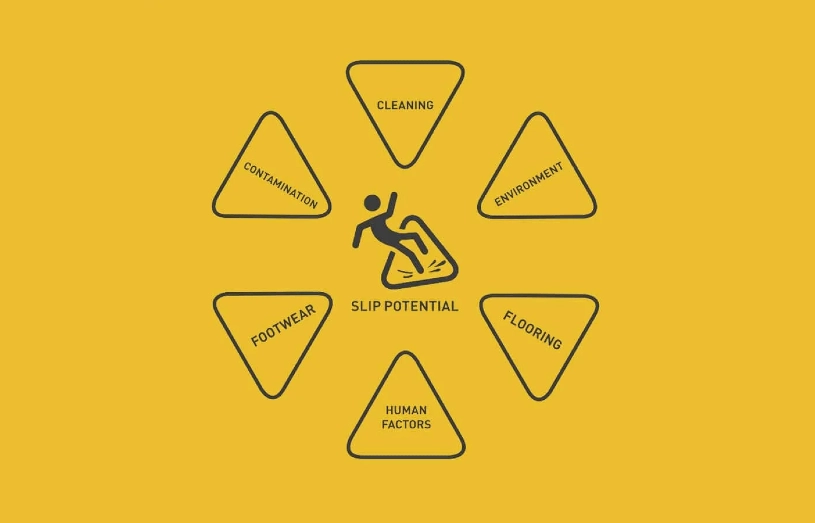
The texture and profile of a floor surface significantly affect slip resistance. Rougher profiles and particle-based enhanced slip resistance coatings increase the angle of slip and improve safety. Anti-slip treatments provide additional grip, helping surfaces maintain performance under repeated wear and wet conditions.
Importance of Ongoing Maintenance
Slip resistance is not static. Floors require regular cleaning and maintenance to prevent the buildup of contaminants that reduce skid resistance. Regular floor slip testing services ensure ongoing compliance and identify areas needing repair or treatment to maintain floor safety.
Slip Resistance Ratings and Their Meaning
Slip resistance ratings, such as R-ratings (R9 to R13), PTV scores, and ramp test values, provide benchmarks for acceptable floor safety levels. R-ratings relate to the walking method – ramp test – classifying surfaces from low to high slip resistance. PTV scores from the pendulum test are used to evaluate dynamic coefficient of friction, offering an objective measurement aligned with UK Slip Resistance Group guidelines.
Minimum Ratings Recommended for Commercial Spaces
Commercial spaces typically require minimum slip resistance ratings to protect workers and visitors. For example, R10 or above and a PTV score exceeding 36 in wet conditions are generally advised. These minimums help reduce slip risk and align with health and safety recommendations.
Legal Obligations for Workplace Safety and Floor Slip Testing
Employers must comply with health and safety legislation, which includes managing floor slip risks to prevent accidents. Proper floor slip resistance testing and maintenance are essential parts of fulfilling these obligations.
Health and Safety at Work Act 1974
The Health and Safety at Work Act 1974 places a duty on employers to ensure, so far as reasonably practicable, the health and safety of employees and others on their premises. This includes assessing and mitigating slip risks through regular testing and maintenance of floor surfaces.
Employer Responsibilities Under the HSE
The Health and Safety Executive (HSE) expects employers to carry out slip risk assessments and use recognised test methods to measure floor slip resistance. Employers should address any identified hazards to reduce the likelihood of floor slips and trips.
Legal Consequences of Non-Compliance
Aside from injuries, legal non-compliance also leads to legal action. Putting slippery floors that aren’t complying with slip resistance requirements will result in financial fines and compensation claims. In other words, passing these tests is essential both for ethical and legal reasons.
Why Are Slip-Testing Services Important?
Slipping is dangerous no matter where it happens, but at the workplace it also means employers’ responsibility. As a business owner or manager, you must provide a slip-free floor. These services comply with regulations and ensure everyone’s safety.
- Ensure pedestrian and operator safety by quantifying grip under expected conditions (wet, oily, dusty).
- Reduce risk of slips, trips and falls – lowers injury rates and associated downtime.
- Demonstrate compliance with health & safety regulations and industry standards.
- Minimise legal and insurance exposure by providing objective test evidence.
- Inform appropriate surface selection and treatments (coatings, textured finishes, matting).
- Guide maintenance regimes and verifies performance after cleaning or remediation.
Tip: test floors before handover and after any surface treatment or major change in use to confirm ongoing suitability.
When Should Slip Resistance Testing Be Performed?
This kind of testing should be performed just once. It should be done regularly, especially in places that see high frequency and lots of traffic, but especially in wet areas. Periodic testing means ongoing oversight on the situation and being sure everyone’s safe from hazards.
How DC Flooring Helps Businesses Stay Compliant?
DC Flooring offers comprehensive floor slip testing services using the latest UK Slip Resistance Group guidelines and testing equipment. It’s a professional business that regularly takes care of slippery floors and ensures safety at the workplace. You wouldn’t want to slip and hurt yourself, so why let others do it?
FAQs
How often should slip testing be done in commercial spaces?
Slip testing frequency depends on floor usage and conditions but generally should be performed at least annually or after any significant changes to the floor surface.
What is considered a ‘safe’ PTV (Pendulum Test Value) score?
A PTV score of 36 or above in wet conditions is typically considered safe for most commercial environments according to UK Slip Resistance Group guidelines.
Do different industries have different slip resistance requirements?
Yes, industries like food production or healthcare may require higher slip resistance due to wet or oily conditions compared to standard office environments.
Can anti-slip coatings improve PTV scores?
Anti-slip coatings and treatments can significantly enhance slip resistance, increasing PTV scores and reducing slip risk.
What’s the difference between static and dynamic slip resistance?
Static slip resistance measures friction when stationary, while dynamic slip resistance, assessed by tests like the pendulum, measures friction during movement, better reflecting real walking conditions.
Does slip resistance degrade over time, and how can it be restored?
Yes, wear and contamination can reduce slip resistance. Restoration involves cleaning, resurfacing, or applying anti-slip treatments to restore floor safety.
Will a failed slip resistance test require a full floor replacement?
Not necessarily. Often, anti-slip coatings or surface treatments can improve slip resistance without the need for full replacement.

- Abrasion Resistance: Why It’s Critical for Industrial Floors? - November 11, 2025
- The Heel Drop Test: A Fast and Simple Way to Detect Delamination - October 30, 2025
- How a Cover Meter Survey Protects Reinforcement Integrity? - October 28, 2025