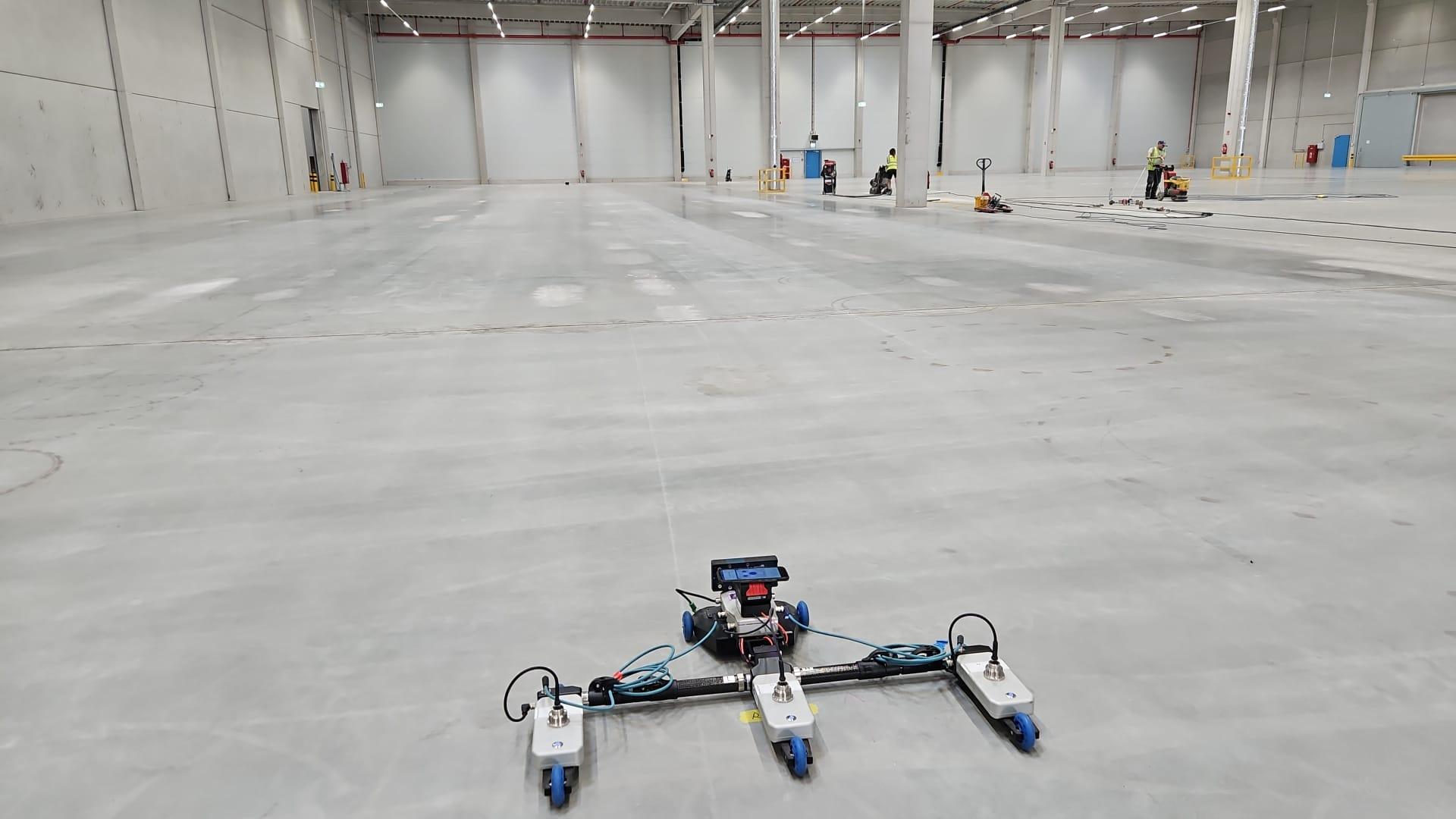
Warehouse automation is growing fast. 3PL and logistics operators are putting in autonomous mobile robots (AMRs), automated storage and retrieval systems, and robotic picking to keep up with demand. A lot of time and money goes into choosing the right robots. The floor they run on gets far less attention.
That’s a costly mistake. Robotic systems work to much tighter tolerances than forklifts or people do. A floor that looks fine, and has served the warehouse well for years, can still fall well short of what an automation supplier needs. If the floor isn’t right, the robots won’t perform as intended.
We saw this on a recent project for a 3PL logistics facility in Hannover, Germany.
What robots need from a warehouse
Before any automation goes in, the floor has to meet the robotics supplier’s specification. On this project we assessed six things:
Joints are often a point of issue , Raised damaged or uneven construction joints can interrupt smooth robot movement across the floor resulting in internal wear and tear and shuttles bouncing off designated track.
Flatness: How smooth the floor is over short distances. Small bumps and dips affect how robots travel and stay stable.
Levelness: How close the floor is to true level across longer distances. This matters for lining up with racking and for accurate positioning.
Surface hardness: A soft surface wears faster under the constant, repeated traffic of robotic systems.
Gloss: How consistent the surface finish is, which can affect sensors and navigation.
Slip resistance: when the robot is travelling to its designated point it needs to strop on point location without skidding past and missing its target turning or delivery point
Resistivity: Important when running equipment with sensitive control boards susceptible when static electricity cannot be dissipated in the slab
Why older warehouse floors often fall short
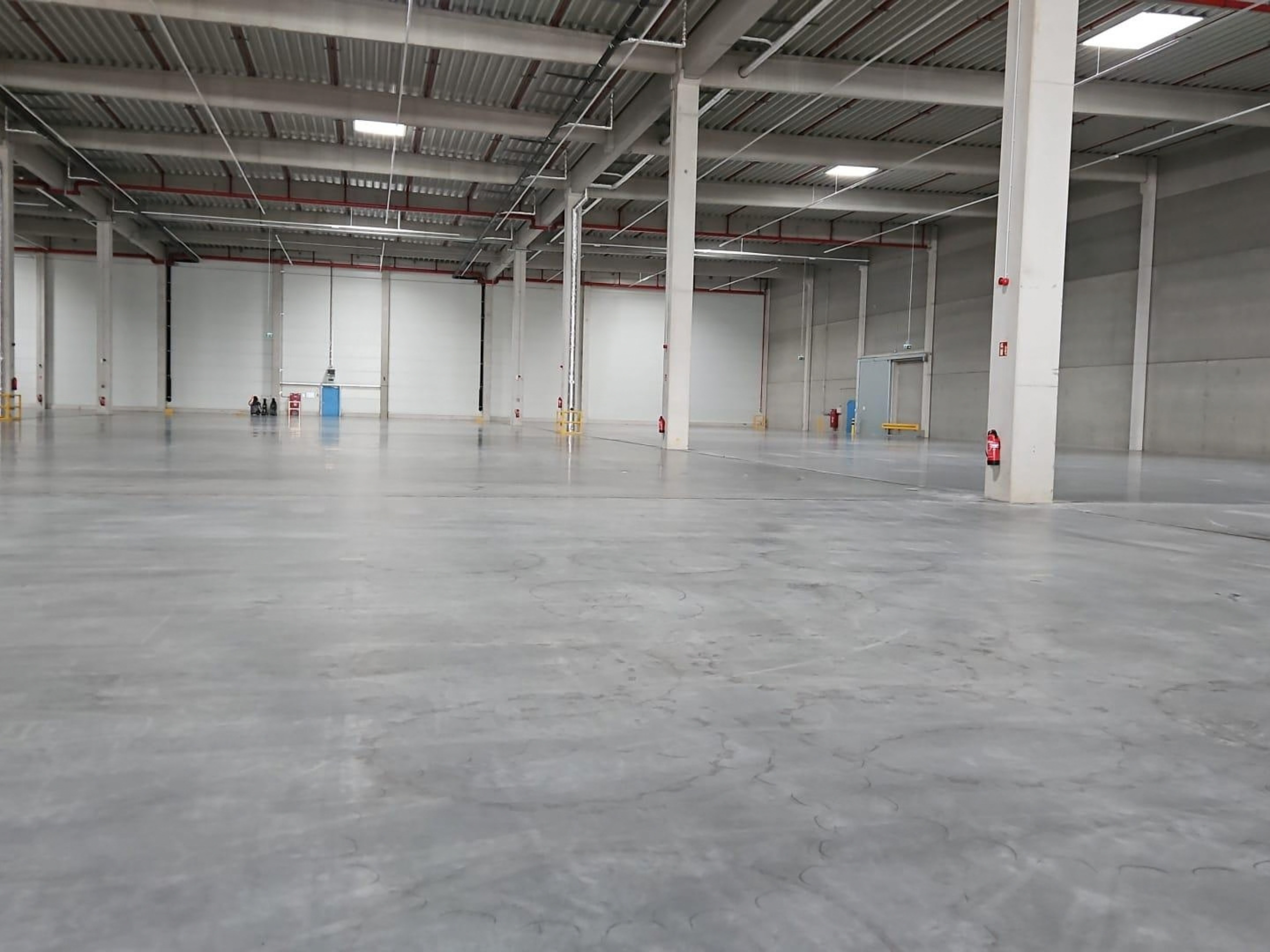
Many established warehouses have had different flooring systems installed over the years: a repair here, a new coating there. The result is a floor whose appearance and performance vary from one area to the next. People and forklifts cope with that. Robots, which need consistency across the whole floor, don’t.
The Hannover project: the challenge
When a long-standing partner approached DC Flooring with a new project, the initial visual inspection suggested a pristine concrete slab. However, our advanced technical testing revealed a different reality: the surface failed to meet the strict tolerances required for their newly acquired robotic automation system.
Our survey found:
- Flatness and levelness out of tolerance in several areas
- Problems at the steel construction joints, raised lips on ariss, curling of slab at joint locations
- Surface hardness of Mohs 4 and below, short of the robotics company’s specification
On top of that, the timescale was tight. The survey and all the remediation work had to be finished within a demanding programme.ly from a photograph or a phone call.
Our solution
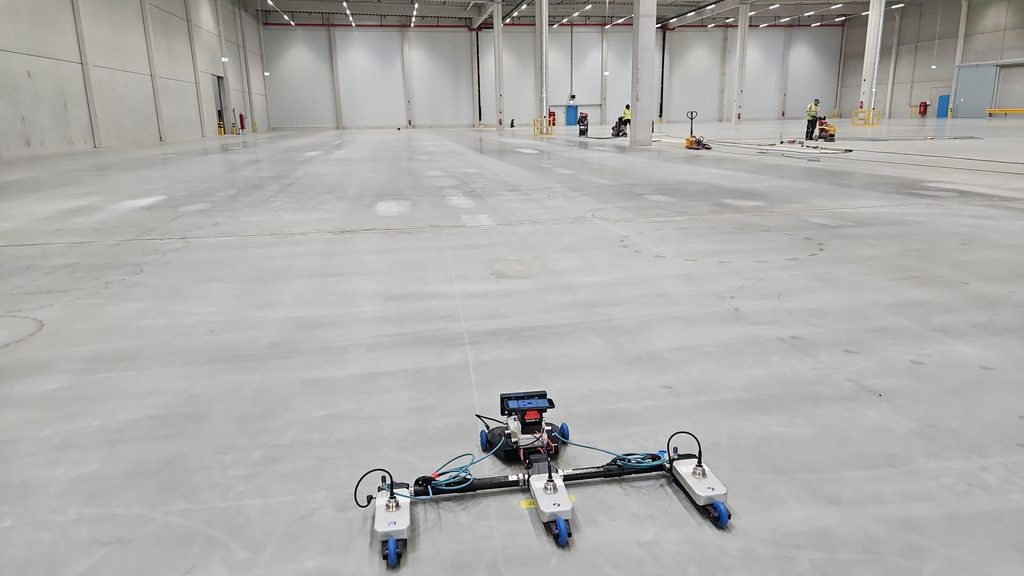
1. A full survey before any work began
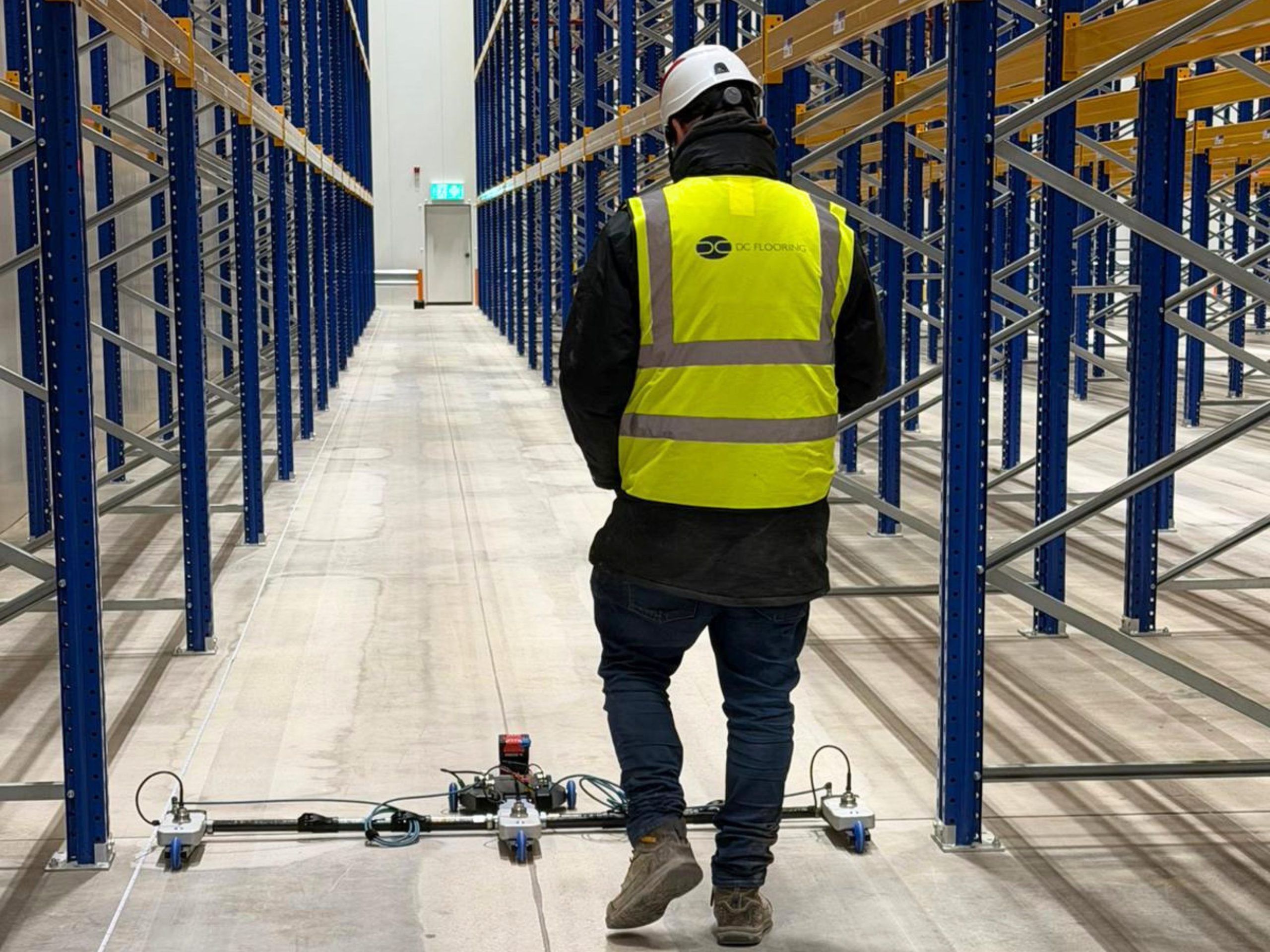
We started by surveying flatness, levelness, gloss, surface hardness, slip resistance and resistivity. That gave us an accurate picture of where the floor stood and which areas were out of tolerance.
2. Precision grinding to the robot specification
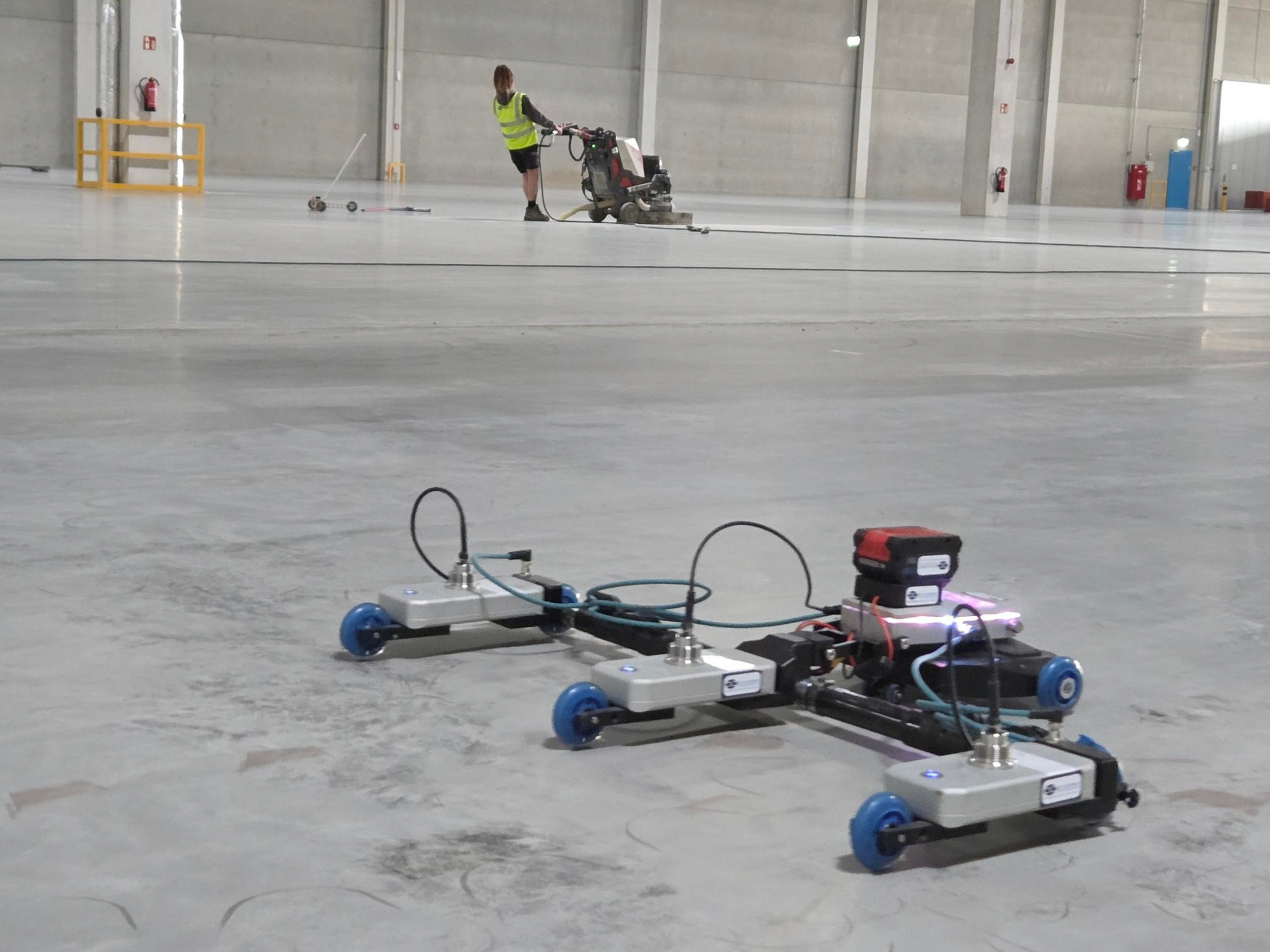
Grinding a floor until it looks good is easy. Grinding it to meet a robotics specification is a different job. Because the automation supplier had exact requirements, we didn’t grind to a visual finish. We used continual monitoring and surveying alongside our precision remediation process, re-surveying repeatedly throughout the work so every area came into tolerance.
3. Densifying and polishing with the DCF Express System
To tackle the low surface hardness, we used the DCF Express System, our own densification and polishing process. It strengthens the concrete surface itself. Hardness went from Mohs 4 and below to Mohs 7 and above.
4. Working around the client’s operation
Good collaboration made the tight timescale achievable. The client allowed multiple working shifts and gave us a clear, destocked warehouse, so our team could work efficiently without losing accuracy.
The results
All required tolerances achieved across the warehouse floor
Floor hardness increased by up to 75%
Robotic automation requirements met in full
Phase Two approved by the client
Growing interest: the robotics supplier has since asked about DC Flooring’s services across Europe and the UK
Both the 3PL client and the robotics supplier were pleased with the outcome. We kept both updated with progress and results throughout the project.a safety issue whilst the MHE is traveling and you have dynamic lean on the mast.
What this means for your warehouse
If automation is on your roadmap, the floor should be one of the first things you look at, not the last. Here’s what we’d recommend:
Choose a contractor with automation experience. Getting the right result depends on the right team, the right equipment and a commitment to demanding tolerances.
Survey early. Find out where your floor stands against your automation supplier’s technical specification before the robots arrive.
Don’t assume you need a new floor. In many cases the existing slab can be brought within specification with precision grinding, densifying and polishing. That’s faster, cheaper and less disruptive than replacing it.
Work to the numbers, not the look. A floor that looks great isn’t necessarily one that meets robotic tolerances. Make sure your contractor measures throughout the process.
Read the full case study
Want the full details of the Hannover project? Read the 3PL Logistics Facility case study →
Planning a move to automation?
DC Flooring specialises in preparing industrial and warehouse floors for robotic automation, across the UK and Europe. Get in touch to arrange a floor survey

- Is Your Warehouse Floor Ready for Robotic Automation? - October 2, 2026
- Upgrading existing warehouse floors for high-bay racking: what you need to know - September 25, 2026
- Deep cleaning or restoring polished concrete: which does your floor actually need? - September 11, 2026