

January is the month you can finally get at the floor. It is also the month the building is coldest, and for a resin floor those two facts pull hard against each other.
Cold weather resin flooring has a narrower window than most people planning a January programme realise. The floor can be perfect, the preparation can be right, the product can be the correct one, and it can still go wrong because of what the air and the slab were doing on the day.
Here is what actually changes, and what to do about it.
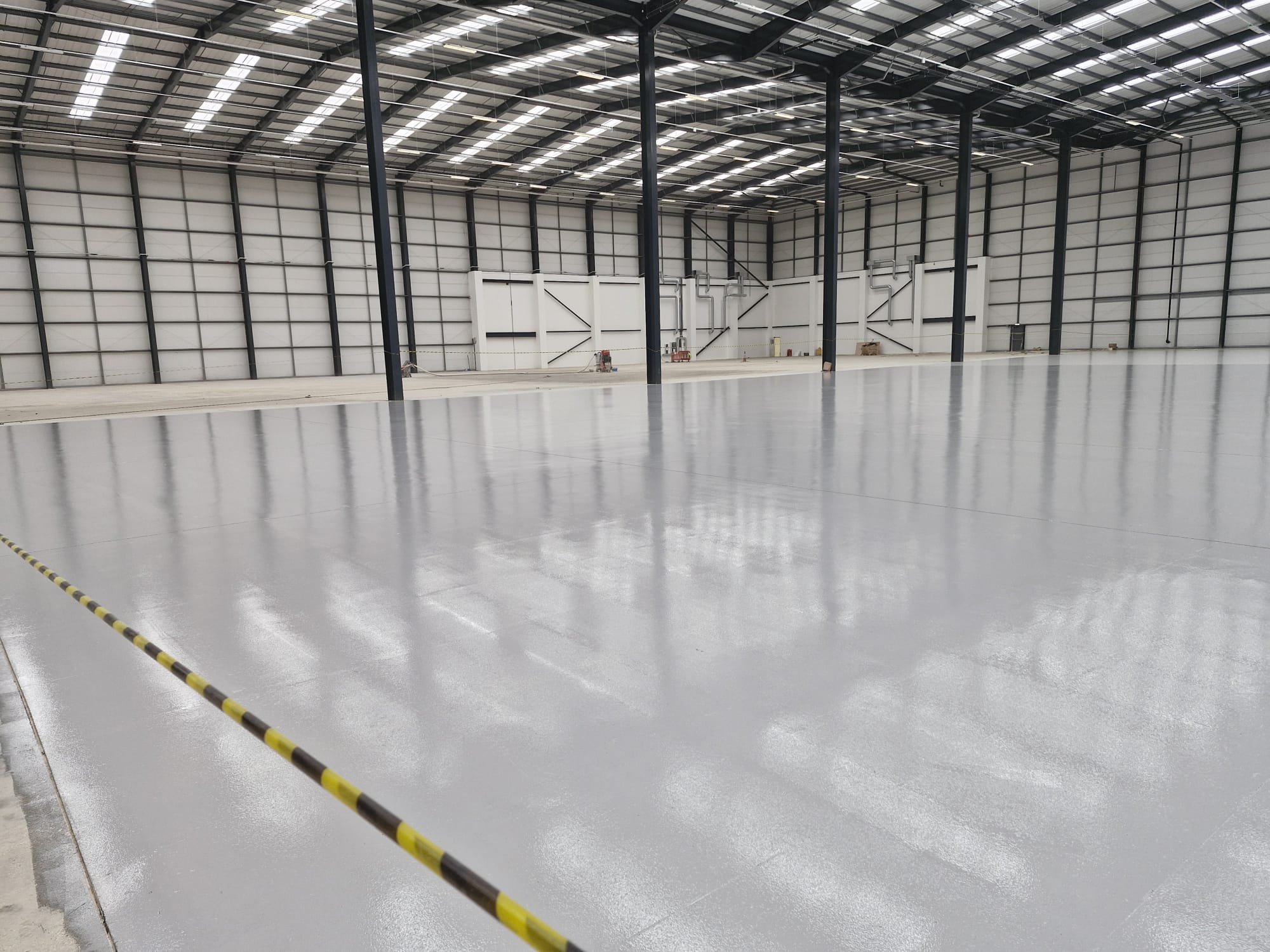
Temperature and dew point are the whole problem
Those two are the big consideration in winter, and they are not the same thing. Temperature decides how the resin behaves and how it cures. Dew point decides whether moisture is forming on the slab while you are trying to bond to it.
What makes this harder than a rule of thumb is that every manufacturer sets its own window. Each system has a different sweet spot for the conditions it should be laid in, and the right numbers for your job come from the data sheet for the system going down, not from general advice on a web page.
That is the first question to ask whoever is laying your floor in January. Which system, and what does its data sheet say about the conditions on the day.
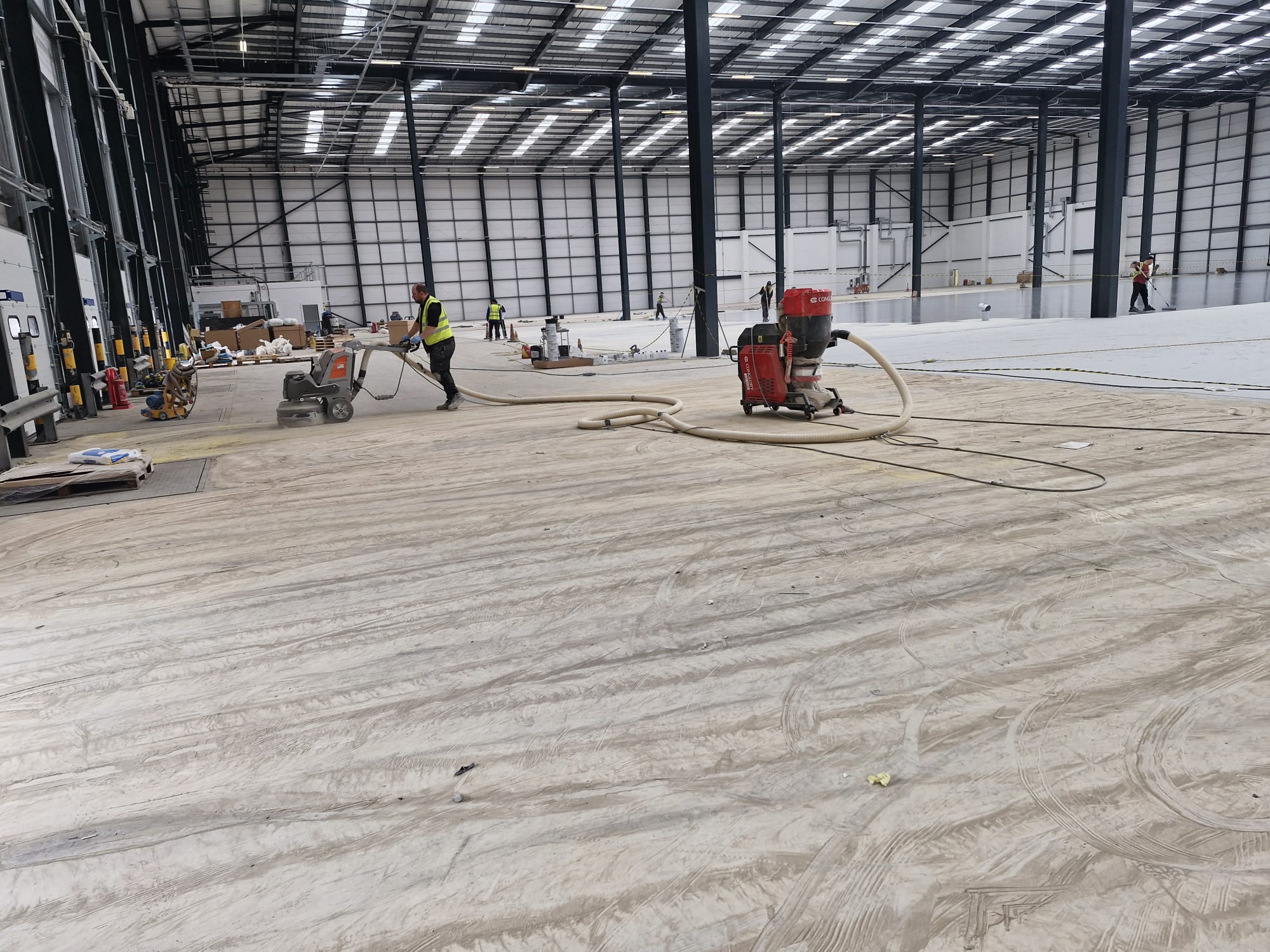
Bloom, and why you look at it for years
Lay a resin in the wrong conditions and it can bloom.
What that means in practice is a white film on top of the resin, sitting discoloured against the rest of the floor, so the whole area looks patchy. It is not a stain you clean off. It is in the finish.
A warehouse floor is the largest visible surface in the building, and a patchy one gets noticed by everybody who walks in, including the tenant you are trying to let the building to. That is the real cost of a January floor laid in the wrong week, and it does not show up until the job is finished and paid for.
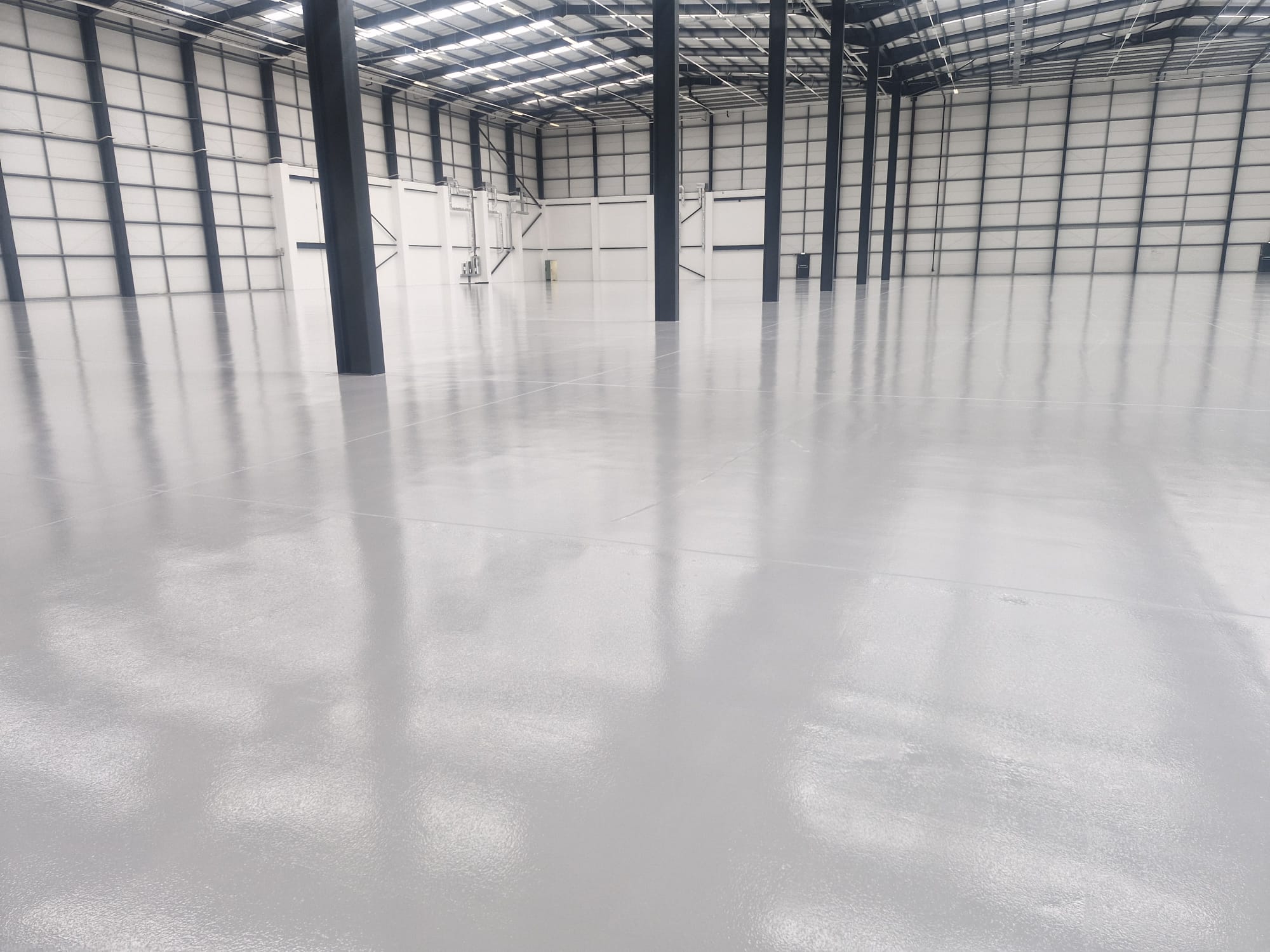
Cold resin does not spread
The second thing cold does is physical and immediate.
Resins become really stiff in low temperatures and difficult to push around. A material that spreads easily at normal temperature fights you, and you may not get the coverage out of it that you should.
That matters commercially as well as practically. Coverage is how the job was priced, so a resin that will not spread is a floor that either comes up short or costs more than the quote said.
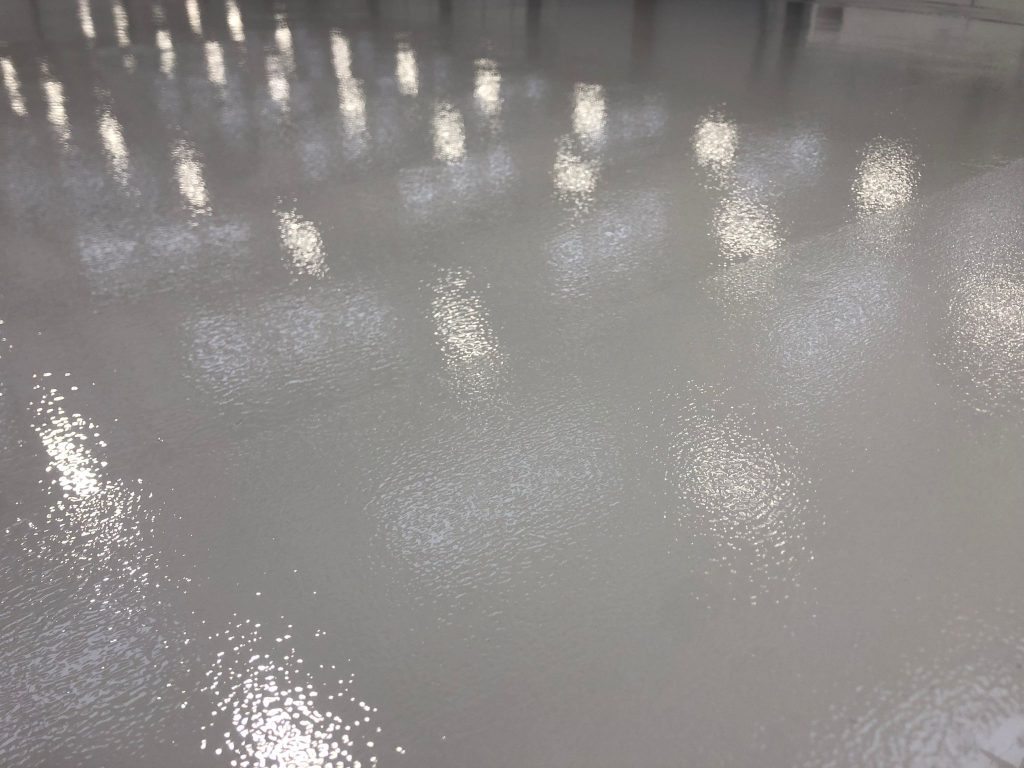
What we do differently in winter
Four things, and none of them are complicated.
We ask the customer to heat the building, if they can. That single step removes most of the risk, and it is the reason we ask early rather than on the morning of the pour.
We keep the product out of the cold. Material left in a freezing warehouse overnight is a different product by the morning, so it gets stored at the correct temperature until it goes down.
Some systems cure at lower temperatures than others, and where the conditions are genuinely marginal that changes what we put forward. And we tell the customer the risks before the job starts rather than explaining them afterwards. A polyurethane screed in a wet production area and a thin coating in an unheated warehouse are different propositions in January.
There is nearly always a way, and the size of the area decides it
There are always options. Low temperature curing resins exist, and there is nearly always a way to heat an area.
The limit is how big that area is. A small area is easy to control and hold at the right temperature. A whole warehouse is a different matter, and that is the point where heating stops being a line on a programme and becomes the thing the programme is built around.
So the useful question in December is not whether the floor can be done in January. It is how much of it has to be done at once.
January is also the best survey you will get all year
Here is the part of winter that works in your favour.
A free movement survey, the whole-floor kind, needs clear sightlines across the slab for the laser equipment. Give us a largely empty warehouse and we can survey 4000m² in a single day. Racking in place and stock in the way, and it becomes a slower and more expensive job.
January is when distribution centres reconfigure after peak and when buildings being prepared for re-letting are at their emptiest. Most operations get one window like that a year.
What comes back is not a report telling you the floor varies. It is a grind plan: where the floor is out, by how much, and what has to come off to bring it back into tolerance with the least work. If the building is going to be clear, use the window for that, and request a floor survey before the racking goes back in rather than after.
Doing nothing is also a decision
Waiting until March is a real option and sometimes the right one.
It is just not a free one. You lose the empty building, you survey around stock and racking instead of across a clear floor, and the work lands in the months when your operation is busiest. Pushing ahead regardless, in a cold building with no heat and no check on the conditions, risks a floor you will be looking at for the next ten years.
The version that costs least is the one where somebody looks at the building in November and decides which of those two it is going to be.

Why it is worth asking what is in the quote
All our machinery is owned and maintained in house. In winter that matters more than usual, because conditions change between the survey and the day, and we change the approach that day rather than waiting on a hire company.
“Because DC Flooring installs every major commercial flooring system, we’re not limited to recommending what we know best. We recommend what’s right for your floor, your environment, and your budget.”
In January that cuts both ways. Sometimes the honest answer is that the conditions are wrong this month and the money is better spent on the survey.
Rated 4.8 stars from 76 verified reviews on Trustist, you can read them on our website before making contact.
DC Flooring is the UK’s specialist in commercial and industrial flooring for warehouses, logistics facilities, food production environments, and automated warehouse systems, with over 20 years of completed projects across the UK and into Europe.
Tell us your floor size and approximate condition; we’ll come back to you with a detailed quote. No obligation, no sales pressure. Just straight answers.

- What a warehouse floor costs, and why nobody will price yours from a photograph - November 17, 2026
- Your resin floor is going down in January in an unheated warehouse. Here is what the cold does to it. - November 13, 2026
- You asked three companies to clean your warehouse floor and got three completely different prices - November 11, 2026
