
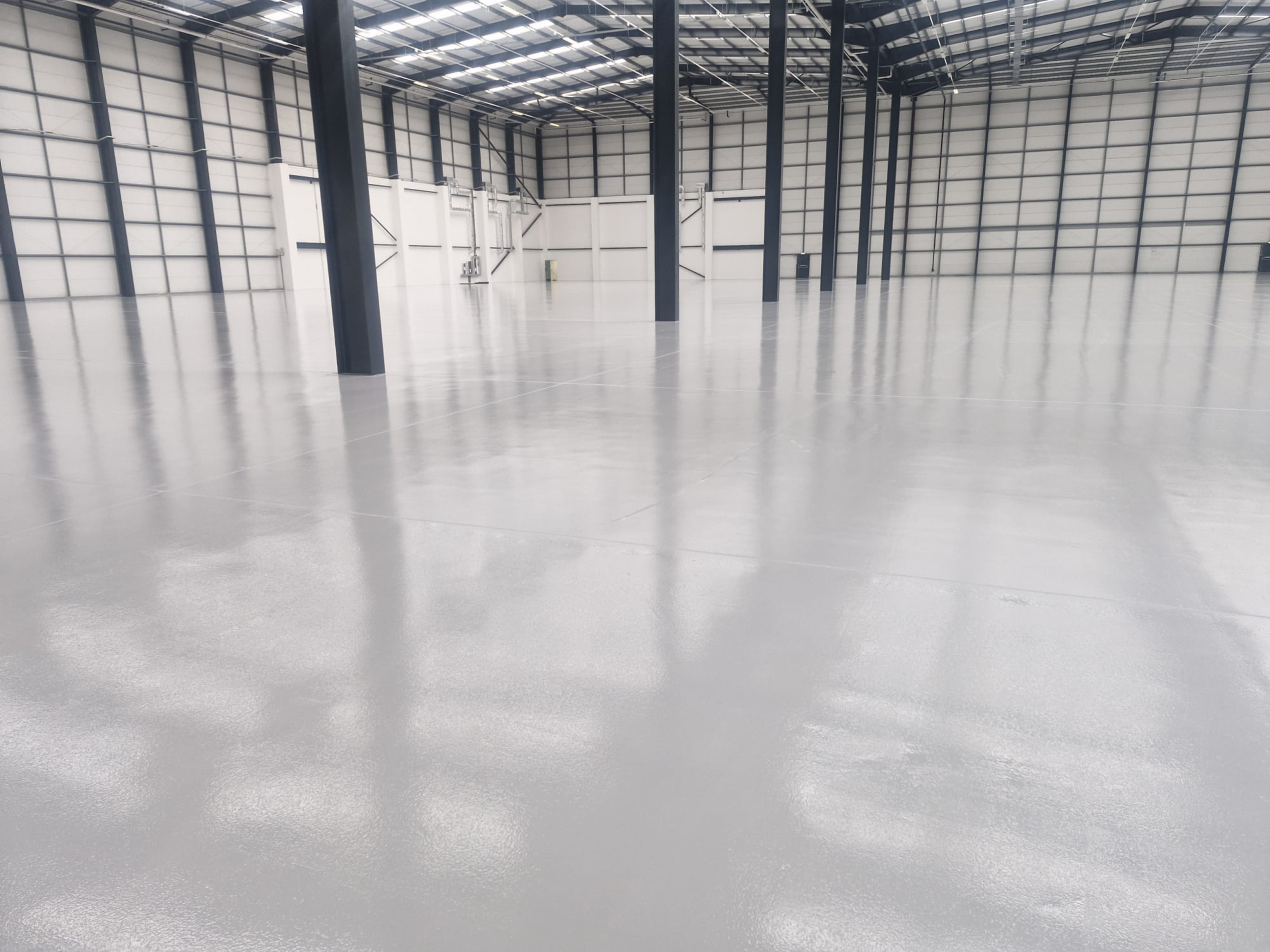
Three resin quotes, three different systems, and a price range wide enough to make the cheapest one look like the obvious answer.
Here is what we find when we are called in to replace somebody else’s resin floor. It almost never failed because the wrong system was specified. The cause is nearly always what sat underneath it, or what was not done to the slab before it went down.
So the comparison below is worth having. It is just not the thing that decides whether your floor is still working in ten years.
What actually kills a resin floor early
Three causes, and they come up again and again.
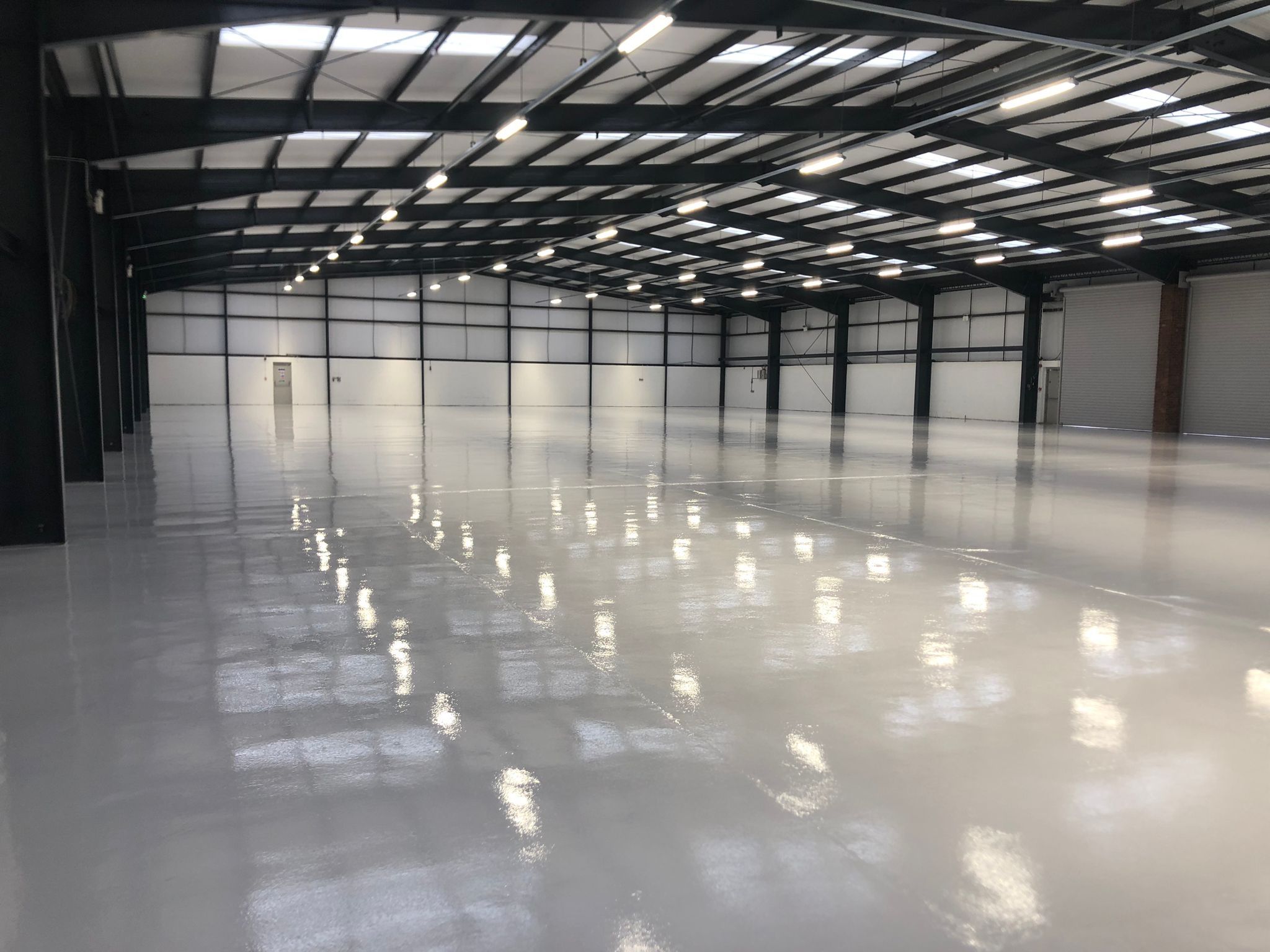
- Preparation. Number one by a distance. A resin floor needs a heavy grind or equivalent preparation to get a proper bond, and to take off any existing sealers or contamination. Where somebody has laid a floor themselves, or had it laid cheaply, this is almost always the step that got shortened.
- A weak subfloor. It is all about what is underneath. The best resin system in the world laid over a slab that is breaking up is money spent on a problem nobody addressed.
- No testing beforehand. Nobody looked at the substrate properly before a system was chosen for it.
Two of those three are decisions made before anyone opens a tin.
The five things that decide which system your floor needs
When we walk a site, this is the list we work through.
- Budget. Not the only factor, and not one we pretend does not exist.
- Slip resistance required. What the area is, whether it gets wet, and whether there is a specification to meet.
- Longevity required. How long this floor has to last before anyone expects to touch it again.
- Food safety and hygiene requirements. Whether the floor sits inside a hygiene envelope, and what cleaning regime it faces.
- The state of the floor in the first place. Which is usually the one that changes the answer most.
Every one of those is an “it depends”, and that is the honest shape of this decision. Anyone who tells you which resin system you need before they have been on your floor is telling you which system they install.
Epoxy: hard-wearing, chemical resistant, and not immortal
Epoxy is the workhorse. It takes chemical exposure and heavy daily traffic, it cleans easily, and in a production environment it does a job very little else does as economically.
We put a self-levelling epoxy into Molton Brown’s production facility, which makes luxury cosmetics and fragrance. The floor faced constant chemical exposure and heavy traffic, had to stay easy to clean, and had to hold up long term. Before any of that went down we diamond-ground the existing floor and applied a primer system, then finished with coved skirting so the floor and wall junction could be cleaned properly. The whole thing ran while numerous other trades were working the same confined space.
Note which part of that paragraph was the preparation and which was the product. The grinding and the primer are why that floor is still there.
Now the misconception worth naming, because it costs people real money. People assume epoxy will last forever simply because it is epoxy. It will not. Epoxy is a system with a service life like anything else, and the life it gets depends on what it was laid over and how hard the environment is on it.
PU screed: heat, water, impact and hygiene
Polyurethane screed is what we specify where the environment is genuinely hostile. Wet areas, washdown regimes, heat, impact, or all four at once.
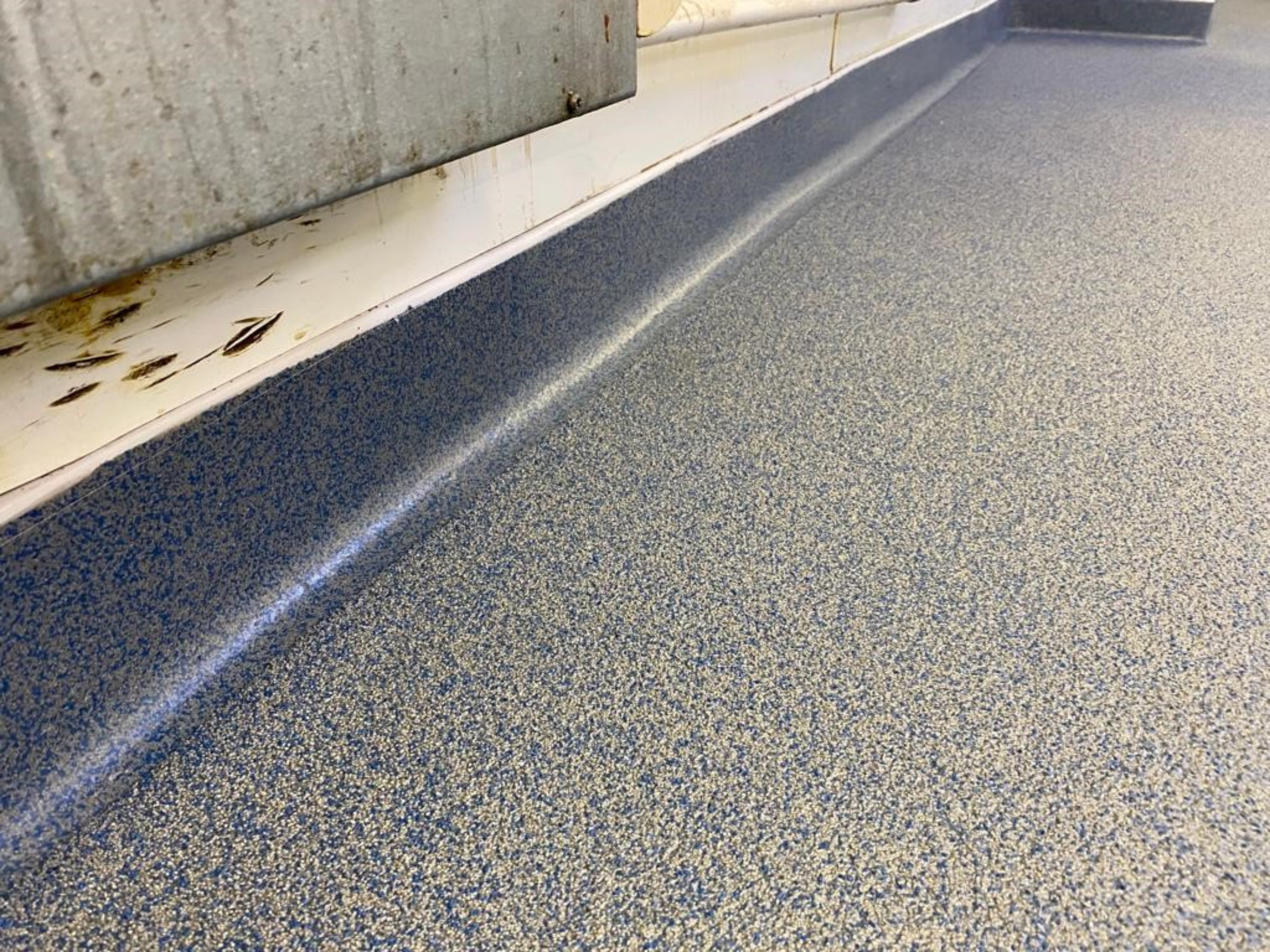
It is also food grade, and in food and drink work the hygiene properties are as much of the reason to specify it as the mechanical performance is. We have put PU screed into food processing floors with washdown many times, with integrated skirting details so there is nowhere for anything to sit.
Two specifics worth knowing.
Steam cleaning. If your cleaning regime involves steam, the floor has to cope with thermal shock or it will debond from the substrate. What achieves that is the system and its thickness: generally a polyurethane screed at 9 to 12mm or more. There is no shock rating to ask a contractor for, so do not let anyone sell you one.
Falls and drainage. Standing water in a wet production area is a floor design problem, not a cleaning problem. We install a polymer modified screed laid to falls before the PU screed goes down, so water runs to the gullies rather than pooling. The drainage and the flooring have to be designed together, which means the conversation needs to happen before either is installed.
One example of what PU screed is for: a keg store at a major UK venue, where kegs were being dropped onto the floor hard enough to smash the surface. The original PU screed had failed, and an interim metal checker-plate floor had failed too. We put in a heavy-duty polyurethane screed with cove skirtings, because the area needed anti-slip, very high hardness and chemical resistance at the same time.
MMA: when the floor has to be back in use quickly
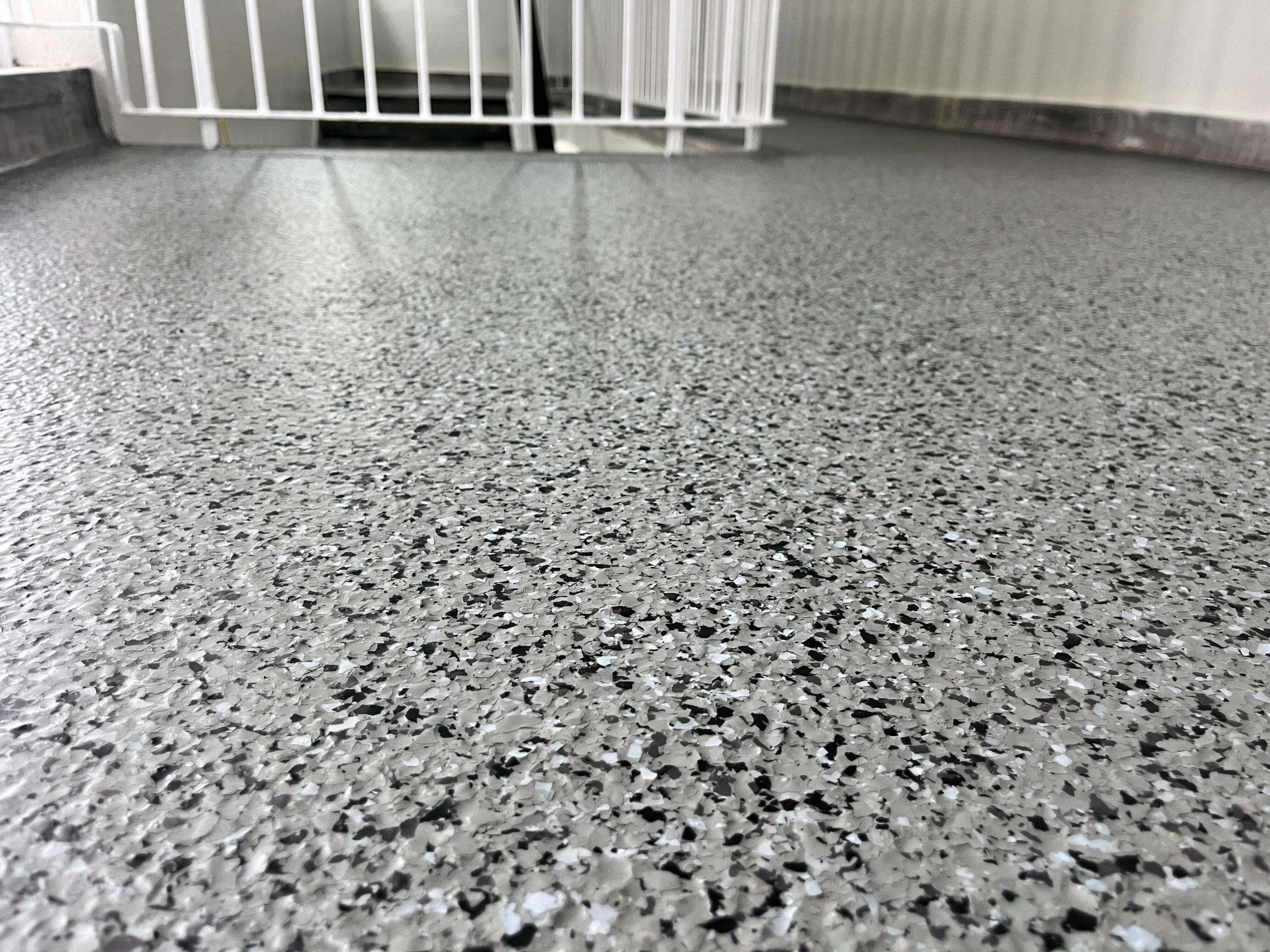
MMA is the fastest curing of the three. Where a site genuinely cannot give you the floor for long, it is usually the answer.
Commercial kitchens are where we see it most, and they are also where substrates are at their worst, with years of ingress into the slab. On one kitchen we laid a 40mm MMA screed and had the system on top of it within a couple of days, which a thicker conventional system could not have matched.
There is a principle underneath that, and it is the one that stops MMA being the answer to everything. We always put the quickest option forward, but it is not worth having if it will not do the job. Specify a fast-curing system for a food area that gets steam cleaned because the client wants the floor back tomorrow, and it will not last. It will come straight back up, and then nobody has the floor at all.
A resin floor is not a jointless floor
This one catches people out, and it is worth knowing before you compare quotes.
Where there is a joint in the concrete underneath, that joint has to be carried through the resin finish. Running an unbroken finish across a moving concrete joint is a common cause of early cracking, and it looks like better workmanship right up until it fails.
What you want is no unnecessary joints. Not no joints.
Why we test and prepare before we quote
Substrates are always worse than expected. That is not a figure of speech, it is the normal condition of an existing industrial floor, and it is the reason the preparation is the part of the quote worth reading carefully.
All our machinery is owned and maintained in house, which matters here because preparation is where jobs change shape. When we open a floor up and find something the survey did not show, we change the approach that day rather than waiting on a hire company to send different plant.
“Because DC Flooring installs every major commercial flooring system, we’re not limited to recommending what we know best. We recommend what’s right for your floor, your environment, and your budget.”
On resin that is the whole point. A contractor who only fits one system will find a reason your floor needs it.
DC Flooring is the UK’s specialist in commercial and industrial flooring for warehouses, logistics facilities, food production environments, and automated warehouse systems, with over 20 years of completed projects across the UK and into Europe.
Tell us your floor size and approximate condition — we’ll come back to you with a detailed quote within one working day. No obligation, no sales pressure. Just straight answers.

- Know your warehouse floor: was it built to FM or SR, and does that still matter? - October 21, 2026
- Concrete floor grinding: four machines, four different jobs, and the one your floor probably does not need - October 15, 2026
- Resin flooring: Epoxy, PU or MMA, and why the system you pick is not what decides how long it lasts - October 14, 2026
