

In data centres designed around these filtration and cleanliness targets, internal air is continuously circulated through MERV 8 filters, while incoming air may pass through higher-rated MERV 11 or MERV 13 filters to capture finer airborne particles. Some facilities also maintain ISO 14644-1 Class 8 cleanliness, which sets limits on airborne particle concentrations.
These controls help protect sensitive equipment from contamination, because dust accumulating on heat sinks or electrical contacts can affect equipment performance and reliability.
The floor, however, presents a different challenge: if the concrete surface deteriorates or generates dust under traffic, particles can be released directly inside the controlled environment, bypassing the incoming-air filtration system.

The thing installed to protect the floor is often the thing causing the problem
This issue can arise in a couple of ways, both of which deserve attention in data centre environments.
The first involves the raised access floor itself. Zinc whiskers can develop on zinc-electroplated steel components beneath floor tiles. These tiny, hair-like metallic structures can be around two microns in diameter and grow over time, potentially reaching lengths that allow them to detach and become airborne. Once released, they can enter the pressurised underfloor plenum, which supplies cooling air to the data hall. If these conductive particles reach sensitive electronic equipment, they can pose a risk of electrical shorts, system resets and equipment faults that may be difficult to diagnose. Lifting floor tiles or disturbing contaminated components can release accumulated particles into the surrounding environment, where airflow may carry them through the facility.
The second example comes from our own experience. We were called to a data centre where a previously applied floor sealer had failed. Before the concrete could be properly treated, the existing coating had to be removed. We stripped the failed sealer, then densified, polished and resealed the slab to create a more durable, dust-resistant surface.
In both cases, the material intended to protect the environment or the floor had become part of the problem, making it essential to identify the underlying issue before deciding on the right solution.

Image Credit: Zinc Whiskers (Sikla)
The floor that was not allowed to have cracks
A separate data centre client had extensive cracking across the floor and was seriously weighing up taking the whole slab out, because as a data centre they could not tolerate cracks at all.
The cause was in how it had been built. The floor was laid on a mezzanine decking system at first floor level, and that construction is prone to cracking if normal concrete is laid on it.
We repaired the joints with two-pack epoxy, laid fibreglass mesh over them, then applied a flexible self-levelling coating across the top. About a month on site, and no slab replacement.
That job is the reason I would always survey before anyone commits to demolition. A floor that cannot have cracks and a floor that needs replacing are not the same thing.
What a polished slab actually changes
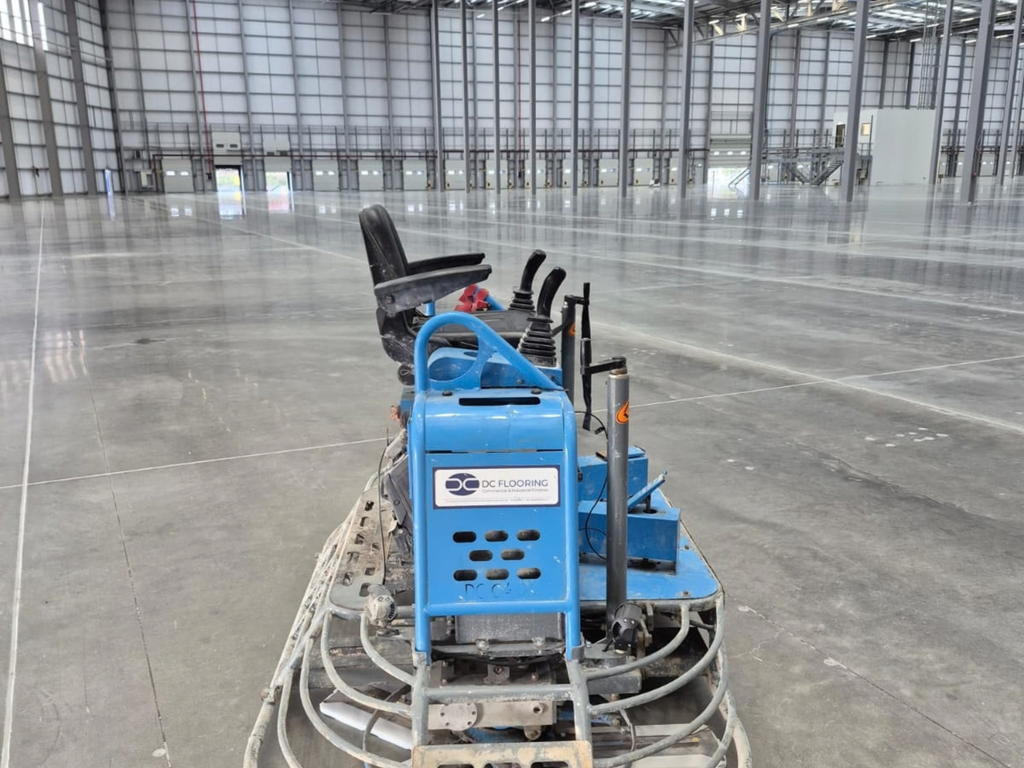
Grinding and densifying works on the concrete itself rather than putting a layer over it. The surface closes up, gets harder, and stops generating the fines an untreated or worn slab sheds under traffic.
On one floor we took the slab from Mohs 4 to over 7 with densification. Mohs 4 is roughly the hardness of fluorite and Mohs 7 is quartz, and the steps on that scale are nowhere near equal, so the real gain in abrasion resistance is a good deal larger than three points suggests.
Floor performance is particularly important in data centres, where heavy server cabinets can weigh between 2,500 and 3,000 lbs. While some data centre designs use 150 PSF (pounds per square foot) as a baseline for floor loading, the required capacity must be assessed against the building’s structural design and the equipment being installed. Cabinets are often wheeled into position across the concrete slab, placing concentrated loads on the surface. If the concrete is soft, weak or inadequately treated, this repeated movement can accelerate surface wear and generate dust, creating an avoidable contamination risk in an environment where equipment reliability is critical.
Our DCF Express installations carry a 10 year dust-free warranty as standard, conditional on the concrete meeting ACI 302.1R or TR34 4th Edition, a minimum compression strength of 30 MPa, and the floor being maintained to the DCF Express maintenance programme.
What to ask before you specify
1. What will the floor shed, and under what traffic?
Not how it looks on handover. What it sheds in year six under rolling rack loads.
2. What ESD performance does the room actually need, and how will it be evidenced?
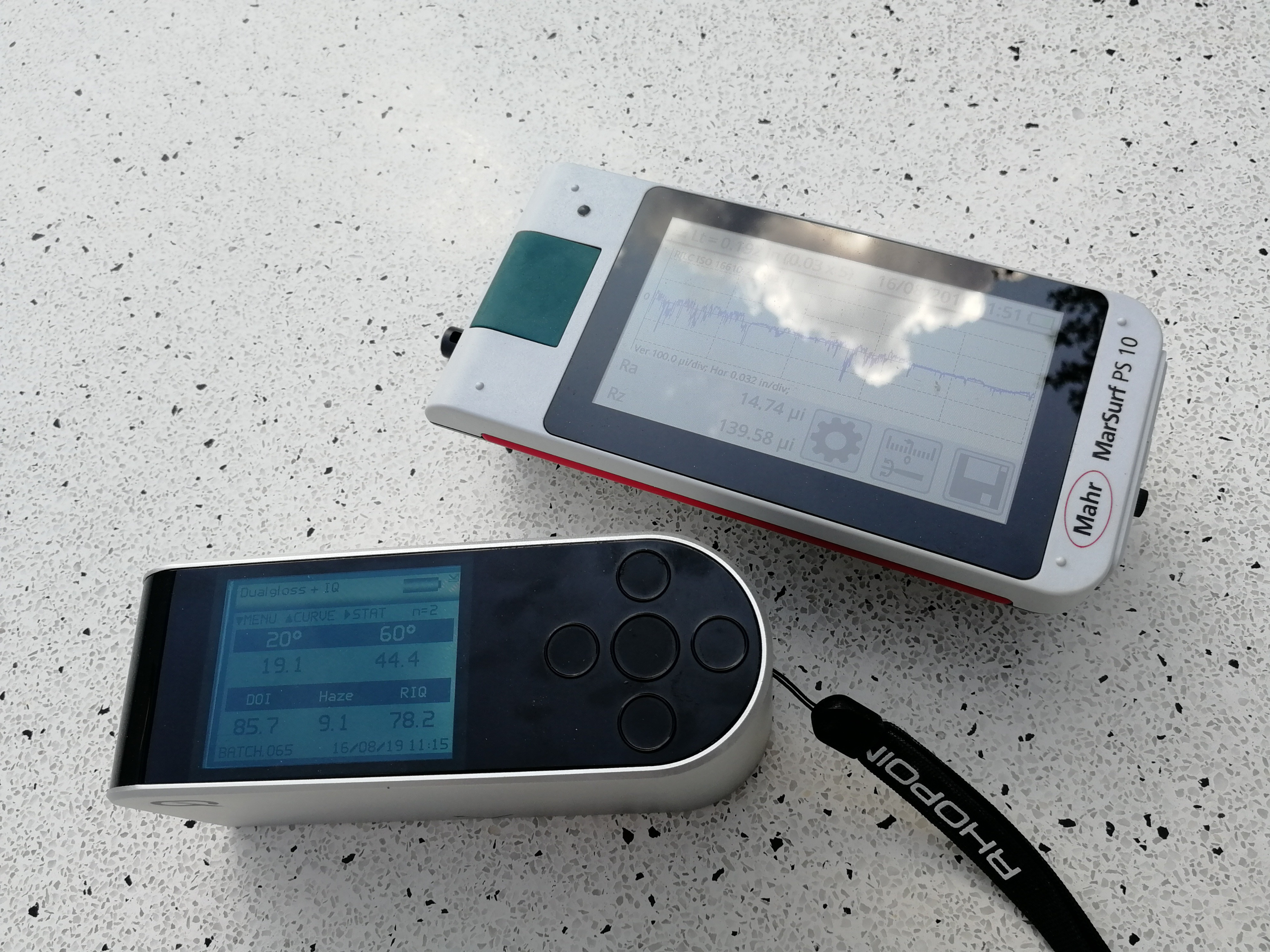
This is a real specification with real numbers behind it, ANSI/ESD S20.20 and IEC 61340-5-1 among them. Ask whoever is proposing a floor finish what resistance it achieves and how that is demonstrated. Any answer that does not include a figure and a test method is not an answer.
3. Can the work be done without stopping the hall?
Most of our work happens in live buildings, section by section, with the area handed back before we move on.
4. Is the problem the slab, or something on top of it?
Those are different jobs with very different costs, and only a survey tells you which you have.
Why it is worth getting somebody in early
All our machinery is owned and maintained in house. On this kind of work that matters, because when a floor turns out to have something on it that has to come off first, we change the approach that day rather than waiting on a hire company.
“Because DC Flooring installs every major commercial flooring system, we’re not limited to recommending what we know best. We recommend what’s right for your floor, your environment, and your budget.”
In a data centre that cuts both ways. The right answer for a hall and the right answer for the plant rooms, loading areas and corridors around it are often not the same system, and the same logic applies in manufacturing plants, warehousing, hangars and anywhere else running clean, dense, hard-wearing concrete.
Work is priced on what the survey finds, which is why we look at the floor before quoting rather than publishing a rate per square metre. You get a detailed quote before any work begins.
Rated 4.8 stars from 76 verified reviews on Trustist, you can read them on our website before making contact.
DC Flooring is the UK’s specialist in commercial and industrial flooring for warehouses, logistics facilities, food production environments, and automated warehouse systems — with over 20 years of completed projects across the UK and into Europe.
Tell us your floor size and approximate condition — we’ll come back to you with a detailed quote within one working day. No obligation, no sales pressure. Just straight answers.

- Know your warehouse floor: was it built to FM or SR, and does that still matter? - October 21, 2026
- Concrete floor grinding: four machines, four different jobs, and the one your floor probably does not need - October 15, 2026
- Resin flooring: Epoxy, PU or MMA, and why the system you pick is not what decides how long it lasts - October 14, 2026
