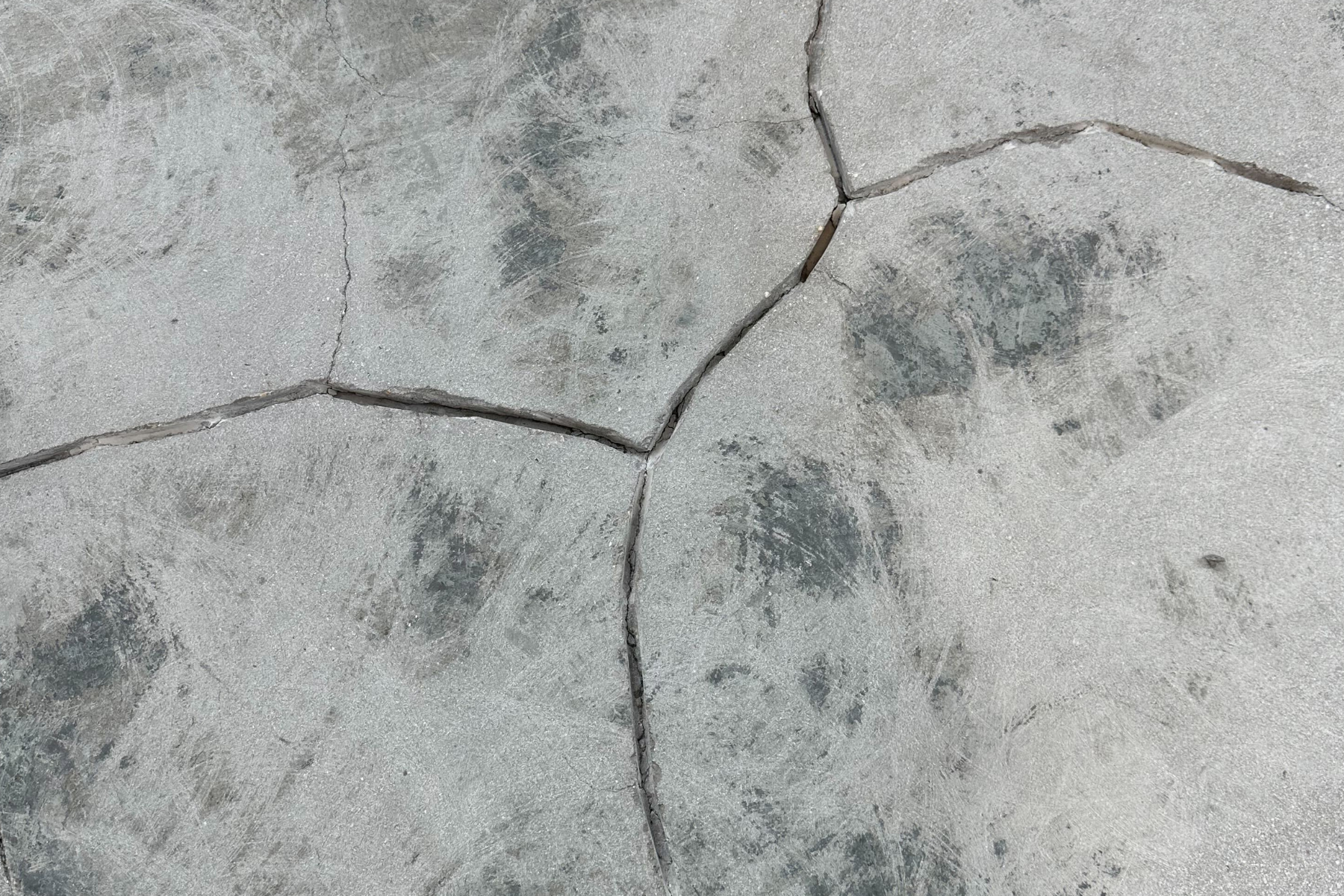
Somebody photographs a crack on Monday morning and sends it to the facilities manager. By Wednesday there are three quotes out with that photo attached and nothing else alongside it.
None of them is based on knowing what caused it.
Concrete is one of the toughest floor surfaces you can specify, and an industrial slab spends its whole life proving it. Forklifts, automated warehouse systems, pallet trucks and constant traffic put demands on it every single day. Some cracking is completely normal. Other cracks point to something underneath that will keep coming back until somebody deals with it, and telling those two apart is the whole job.
Is it normal for concrete floors to crack?
The simple answer is yes.
Concrete shrinks as it cures and keeps moving slightly throughout its life. Fine hairline cracking is often cosmetic and does not necessarily indicate a structural problem.
Larger cracks, widening joints or cracks that keep developing are a different matter. In warehouses, even relatively small defects cause significant issues for Very Narrow Aisle (VNA) trucks, Automated Guided Vehicles (AGVs), Autonomous Mobile Robots (AMRs) and other precision materials handling equipment.
One distinction worth knowing before you look at your own floor, because it catches people out. A crack that wanders is usually behaving like a shrinkage crack. One that runs neatly and evenly, without deviating, is following a line, and uniform straight cracking generally points to missing expansion joints and structural movement in the slab. So the alarming spider-web patch is often the harmless one, and the tidy crack nobody looks at twice is the one worth investigating.
The most common causes of industrial concrete floor cracking
Plastic shrinkage cracking
One of the earliest forms of cracking happens while the concrete is still curing.
Where moisture evaporates from the surface faster than it can be replaced, the concrete starts shrinking before it has gained enough strength. That creates fine, shallow cracks resembling a spider web or map pattern.
Hot weather, direct sunlight, strong winds and low humidity all increase the likelihood of plastic shrinkage cracking.
Drying shrinkage
Concrete does not stop shrinking once it has hardened.
As moisture slowly leaves the slab over months and even years, the floor continues to contract. Where walls, columns or other structural elements restrict that movement, tensile stresses build until cracks form.
Drying shrinkage is one of the most common causes of cracking we see in industrial warehouse floors.
Thermal movement
Temperature changes affect concrete too.
The slab expands as it heats and contracts as it cools. Rapid temperature swings or uneven cooling create internal stresses that eventually lead to cracking.
This shows up more in thicker slabs and large industrial floor installations.
Settlement beneath the slab
Not every crack originates in the concrete itself.
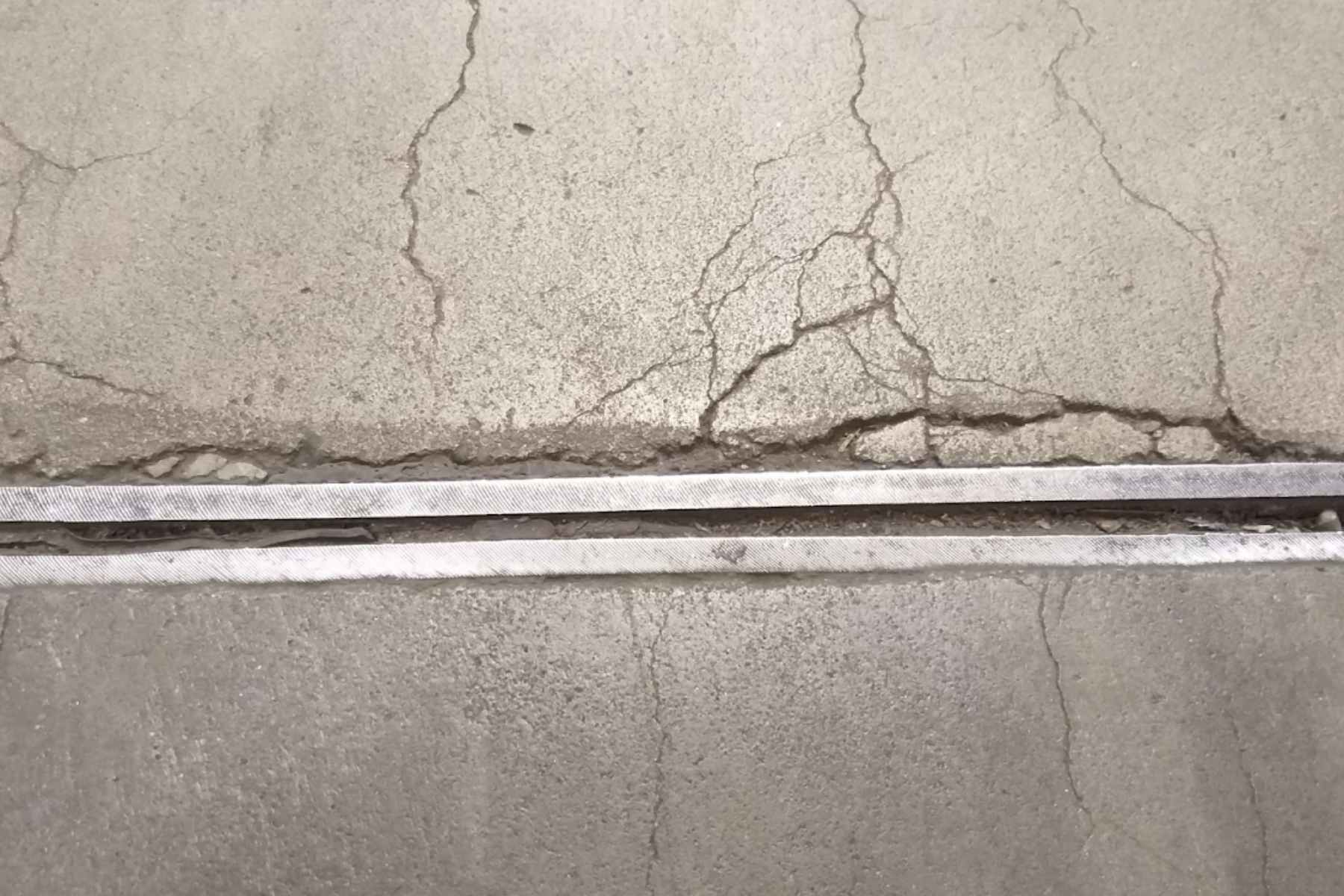
Where the sub-base settles unevenly or contains weak areas, sections of the floor lose their support. Heavy traffic then passes over unsupported concrete, the slab bends under load, and cracking follows.
Settlement cracks keep worsening until somebody addresses what is underneath them. This is the group most likely to come straight back after a cosmetic repair.
Excessive loading
Industrial floors are designed for specific load capacities.
When forklifts, storage systems or machinery exceed the original design specification, that extra stress transfers into the slab.
Over time this leads to structural cracking, particularly around heavily trafficked areas, loading bays and high-density storage systems.
Why cracks matter in modern warehouses
Warehouse operations rely on far greater floor precision than they did even ten years ago.
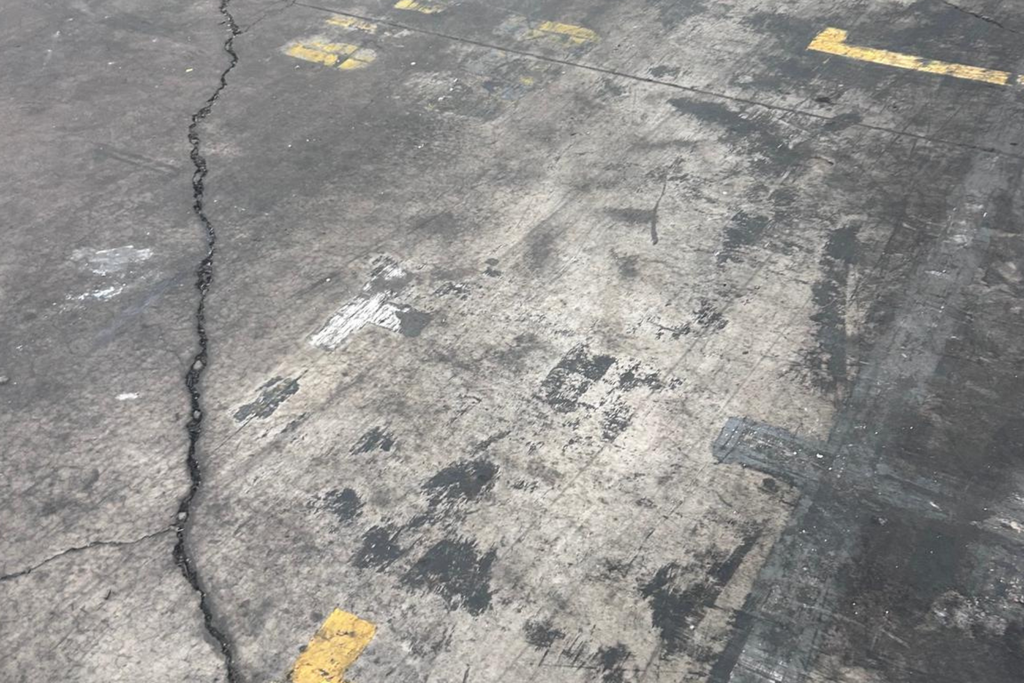
VNA forklifts, ASRS systems, AGVs and AMRs all depend on accurate, level floor profiles to run safely and efficiently. Cracks create vibration, reduce vehicle stability, increase tyre wear and interfere with automated navigation. A driver corrects for a bad joint without being asked. Robots run the same line over the same defect every pass and correct for nothing.
Small defects also develop into spalling, joint damage and uneven floor levels, all of which cost productivity and push up maintenance.
For facilities planning automation or robotic systems, floor condition matters more still
When should you investigate cracks?
Arrange floor testing and surveying if you notice:
- Cracks that continue to widen
- Multiple cracks appearing across large floor areas
- Cracks accompanied by spalling or joint breakdown
- Uneven floor levels around cracked sections
- Increased vibration during forklift operation
- Problems with AGV, AMR or VNA vehicle performance
Repairing the visible crack without identifying the root cause is the most expensive version of this job, because you end up paying for it twice.
What finding the cause first actually saves you
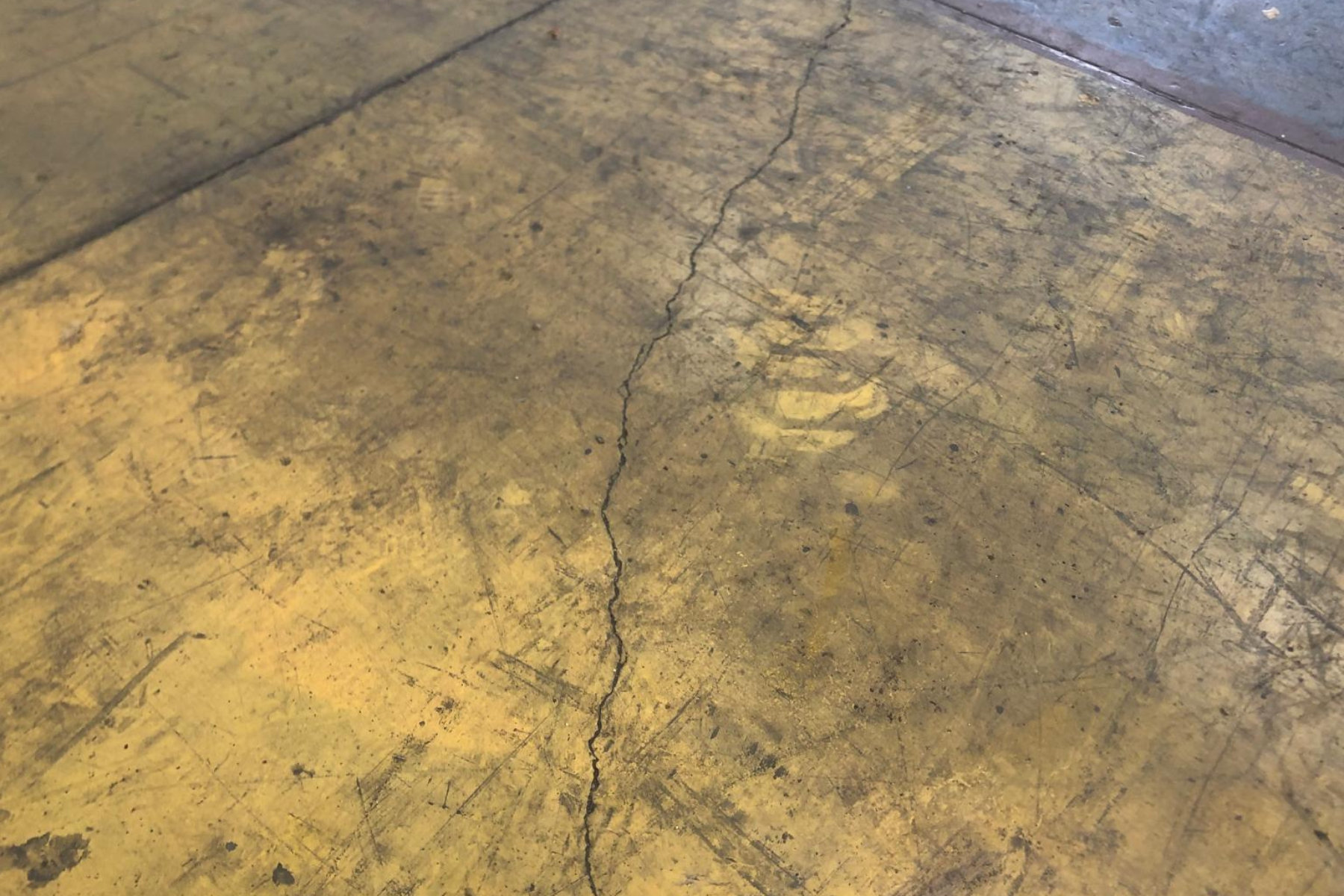
A data centre client came to us with extensive cracking across their floor. In a data centre, cracks are not a tolerance question, they are a contamination and reliability question, and this client could not live with them at all. Ripping the slab out and starting again was genuinely on the table.
The floor also needed a resin coating over the top, which is where these conversations usually get difficult. Put a rigid coating over a slab that is still moving and it cracks in the same places within a year. You have paid twice and you still have the problem.
So we built a system designed to move with it. Joints repaired with a two-pack epoxy, fibreglass mesh laid over, then a flexible self-levelling coating across the whole floor. The flexibility is the entire idea. It absorbs the movement instead of fighting it.
Around a month on site. The slab stayed where it was.
That is the version of this job most people never get offered, because diagnosing the movement takes longer than quoting a replacement.
How DC Flooring can help
We do not just repair cracked industrial floors. We investigate why the cracks happened first.
Our floor testing and surveying assesses floor flatness, structural condition and compliance to recognised standards including TR34. Using specialist surveying equipment we diagnose the underlying cause and recommend the repair that actually addresses it, rather than the one that looks cheapest on a quote.
Where your warehouse needs crack and joint repairs, concrete grinding, slab remediation or a full floor upgrade for automation, we carry that work out ourselves. All our machinery is owned and maintained in house, which matters more on repair work than it sounds, because when we open up a crack and find something the survey did not show, we change the approach that day rather than waiting on a hire company.
“Because DC Flooring installs every major commercial flooring system, we’re not limited to recommending what we know best. We recommend what’s right for your floor, your environment, and your budget.”
On cracking that cuts both ways. Sometimes the honest answer is that your slab is sound and the joint alongside it needs sealing.
Do not wait until small cracks become big problems
Not every crack is a cause for concern, but every crack deserves a proper assessment.
Early investigation prevents more extensive damage, reduces repair costs and keeps your warehouse floor performing safely for years to come.
DC Flooring is the UK’s specialist in commercial and industrial flooring for warehouses, logistics facilities, food production environments, and automated warehouse systems; with over 20 years of completed projects across the UK and into Europe.
Tell us your floor size and approximate condition, we’ll come back to you with a detailed quote within one working day. No obligation, no sales pressure. Just straight answers.

- Know your warehouse floor: was it built to FM or SR, and does that still matter? - October 21, 2026
- Concrete floor grinding: four machines, four different jobs, and the one your floor probably does not need - October 15, 2026
- Resin flooring: Epoxy, PU or MMA, and why the system you pick is not what decides how long it lasts - October 14, 2026