Warehouse floors are often overlooked, yet they carry the entire operation. From heavy racking systems to fast-moving forklifts, the floor supports it all. That’s why the TR34 standard plays such a big role in designing these spaces. It’s not just about laying down concrete. It’s about making sure the concrete floor meets every classification, requirement, and measurement needed for safety, performance, and durability. If you ignore TR34, you risk more than just uneven floors; you risk everything that sits on top of them.
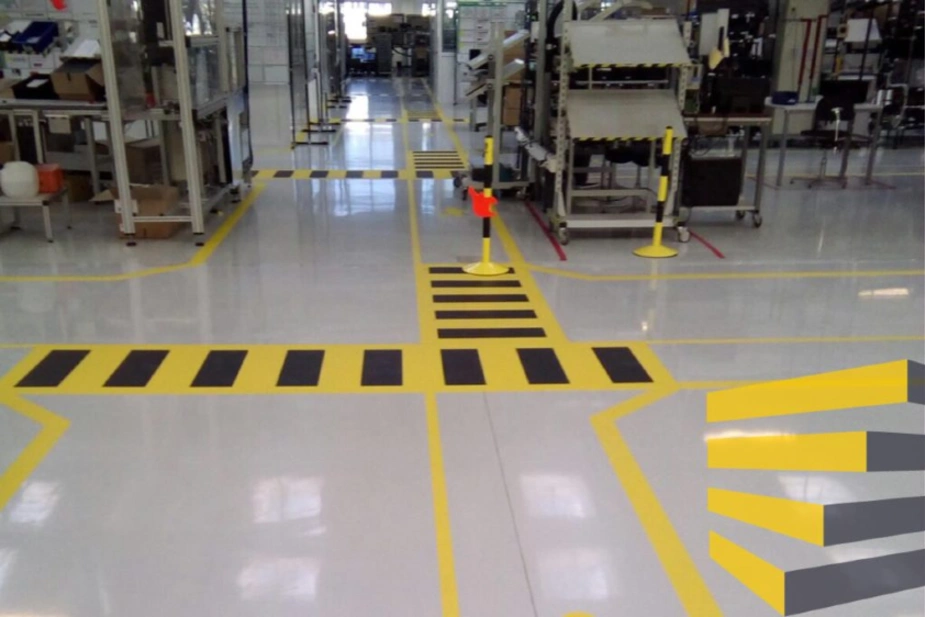
What is the TR34 Standard in the Flooring Industry?
The TR34 standard is a technical report developed to guide how warehouse and industrial concrete floors are designed, built, and assessed. It provides clear requirements for flatness specifications, levelness, load-bearing, joint detailing and regularity testing. The most current version, known as the TR34 4th edition, replaced the older TR34 3rd edition and includes updates that better suit today’s fast-moving and high-tech warehouses. Companies like DC Flooring use this standard to assess floors and ensure they meet the right classification and performance levels, especially in facilities that rely on automation and free movement (FM) systems.
4 Key Components of TR34 Standard
The TR34 4th edition covers several technical aspects to ensure concrete floors perform well over time. Whether you’re building new or assessing an old property, these four areas must be considered. Each one directly affects how the floor functions and how long it will last. Missing just one part can lead to serious issues later, like cracks, poor flatness, or damage to equipment.
1. Floor Flatness and Levelness
Floor flatness and levelness are at the heart of TR34. These measurements help determine how even and smooth the floor surface is. Using a defined grid and datum points, specialists can measure floor height differences in millimetres (mm). For FM classifications, even small bumps or dips can make a big difference. TR34 sets limits for acceptable variation. Flatness requirements are about bumps and dips over short distances. Levelness is about slope across the whole area. Poor results can affect forklift handling, decrease AMR output and cause loads to shift. That’s why accurate assessment is key.
2. Load-Bearing Design
A warehouse floor doesn’t just hold people-it holds racks, machines, and tonnes of stock. Load-bearing design is the part of TR34 that checks how the concrete handles all that weight. It takes into account slab thickness, sub-base strength, and how loads transfer through the floor. If this is not properly calculated, floors can crack or sink. Engineers use calculations and real-world data to make sure the floor won’t fail. TR34 helps make sure the structure works, not just today but for years ahead.
3. Joint Detailing
Joints are where different parts of the concrete slab meet. Without proper detailing, these points can become weak spots. TR34 4th edition sets clear guidance on joint spacing, materials used, and how joints should be shaped. This helps prevent edge breakdown or spalling. It also supports smoother transitions for forklifts and reduces wear. If joints are placed badly or the wrong sealants are used, you might face constant repairs. Joint detailing isn’t just about concrete; it’s about daily operations flowing smoothly.
4. Surface Regularity Testing
Surface regularity testing is how floor experts check if a concrete floor is flat enough for its intended use. It’s especially important in Very Narrow Aisle (VNA) systems where forklifts operate in tight spaces. TR34 outlines how to test regularity using precise tools and a tight grid. Results are compared to the allowed mm tolerances. The goal is to find and fix uneven parts before they cause problems. This step often includes flatness comparisons across the entire floor. It’s all about reducing bumps that could damage wheels or lead to unsafe handling.
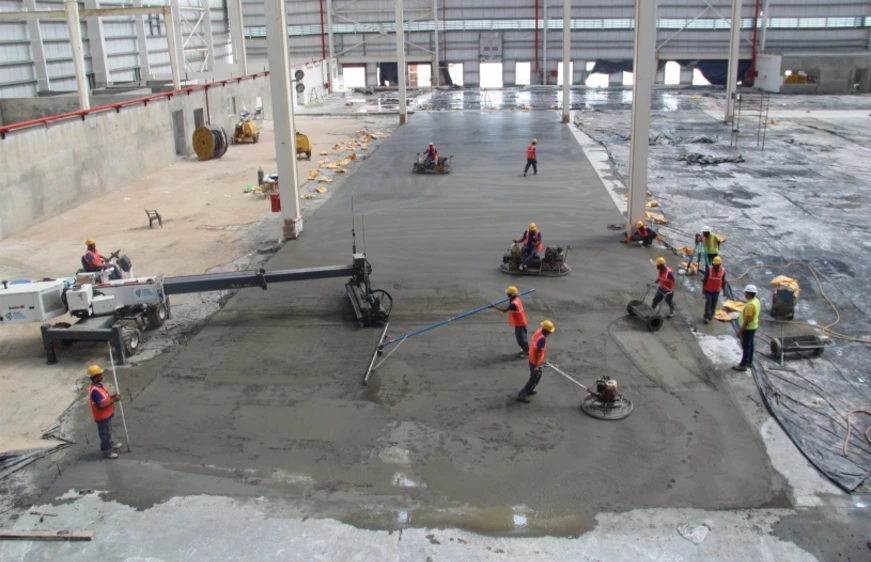
Why TR34 Matters in Warehouse Floor Design and Logistics Flooring?
Designing a warehouse floor without TR34 is like building a house without checking the foundation. This standard ensures that every concrete floor can support the operations it was built for. From storing heavy stock to fast movement of goods, everything depends on a flat, stable floor surface. TR34 gives a clear benchmark. It helps clients, contractors, and consultants speak the same language. It also helps with planning, especially when automation or robotics are part of the system. A floor that fails these standards won’t just crack-it could stop operations entirely.
- Influence on racking systems, forklift traffic, and safety: A floor that meets TR34 provides a stable base for everything above it. Racking systems need precise alignment to hold weight evenly. Forklifts need flat surfaces to move safely, especially in narrow aisles. If the floor tilts or sinks, racks can shift, and forklifts may tip. TR34 helps avoid that. It reduces health and safety risks. It also makes sure that insurance and BS standards are met. In short, TR34 protects workers, equipment, and the structure itself.
- Reducing wear and tear on automated equipment: Modern warehouses often use automated systems. Robots and guided vehicles follow fixed paths, and if the floor is uneven, it causes constant stress on their wheels and motors. Over time, this leads to more repairs and lower efficiency. The TR34 4th edition helps limit these issues by keeping the floor surface within tight mm tolerances. Less bouncing means longer machine life. It’s a simple way to reduce downtime and protect expensive systems.
- Provides industry‑recognised guidance: TR34 Concrete Society offers accepted best practice for assessing floor flatness, levelness and movement in industrial settings.
- Aligns design, construction and operation: ensures racking, MHE and floors are specified to compatible tolerances so systems work together reliably.
- Protects automated systems: sets criteria and survey methods (Property E/F, movement monitoring) that reduce risk to VNA trucks, AGVs/AMRs and robotic equipment.
- Prescribes measurement methods: defines how to measure and interpret flatness/levelness (grid, 300 mm gauge, instrumental profiling) for consistent, repeatable results.
- Supports acceptance and sign‑off: provides objective criteria for commissioning, handover and contractual acceptance of floors.
- Reduces operational risk and downtime: better-validated floors mean fewer collisions, less equipment damage and higher throughput.
- Informs remediation and specification: data from TR34 surveys guides targeted repairs or specification changes to meet operational needs.
- Lowers lifecycle cost: fewer repairs, less equipment wear and sustained productivity reduce total cost of ownership.
- Facilitates communication: gives a common technical language for clients, designers, contractors and operators to agree tolerances and responsibilities.
TR34 vs Other International Flooring Standards
TR34 stands out from other standards used around the world. While some countries use flatness rules from the American F-number system or DIN standards, TR34 is tailored to UK and European warehouse needs. It’s especially useful for FM systems and automated environments. Unlike others, it focuses on surface regularity in real-world settings. The TR34 4th edition also includes updates that address new technologies like robotics. It’s not just a set of numbers-it’s a guide for practical warehouse flooring. DC Flooring use it because it works, and because it’s built on real warehouse conditions.

10 Common Mistakes When Ignoring TR34 in Warehouse Floor Design
Skipping TR34 may save time upfront, but it leads to more problems later. Poor floors cost more than good ones.
- Uneven floors causing damage to forklifts and automated equipment, leading to higher repair bills and unexpected downtime that disrupts daily operations.
- Reduced operational efficiency due to poor surface flatness, which slows down forklift and robot movement and increases the time it takes to complete tasks.
- Increased maintenance costs for flooring and machinery, often caused by joints failing or floors cracking under load from racking systems.
- Safety hazards for workers and equipment operators, especially in areas where the floor surface dips or rises suddenly.
- Misalignment of racking systems and shelving units, which affects storage space and can lead to unstable loads and inventory damage.
- Non-compliance with health, safety, and insurance standards, putting the property at risk of legal action and costly fines.
- Higher likelihood of floor coating failure (e.g., epoxy, resin), as coatings won’t bond well to a surface that flexes or cracks over time.
- Difficulty operating VNA (Very Narrow Aisle) forklifts efficiently, with delays and increased risk of collision in narrow aisle environments.
- Costly rework or slab correction post-installation, including grinding or replacing whole sections that don’t meet the required classification.
- Negative impact on load-bearing performance and structural integrity, leading to cracks, sinking, and even floor collapse in extreme cases.
Best Practices for Meeting TR34 Standards
Following TR34 means starting with the right plan and sticking to it from day one. The earlier it’s part of the project, the better the outcome.
Surveying and flatness testing
Surveying is the first step in checking if a floor meets TR34. Tools measure the floor’s profile and compare it to the standard’s mm limits. Flatness comparisons are then done to find any spots outside tolerance. Tests are often done in a grid, and results are checked against the required classification. The goal is to find issues before machines and racks are added. Testing early helps avoid costly changes later.
Hiring the right specialists and contractors
Not all flooring companies can handle TR34 standards. Hiring contractors who know TR34 4th edition is key. Companies like DC Flooring are experienced in this area. They understand the classification and requirement details and use the right tools to measure and assess. They can also spot problems before they become serious. Getting expert help means getting the floor right the first time.
Importance of planning during the pre-construction phase
TR34 isn’t something to think about after the floor is built. It needs to be part of the plan before concrete is even poured. During pre-construction, teams should set the datum points, lay out the grid for measurement, and assess expected loads. Every part of the design (load-bearing, flatness, joints) must meet TR34 from day one. Planning early saves time, money, and stress later.
TR34 and Robotics/Automation: A Perfect Match
TR34 floors are ideal for automated warehouses. Machines like AGVs and robotics need smooth, flat surfaces to operate safely and efficiently. The tighter mm tolerances in TR34 4th edition make that possible. These floors reduce bumps, prevent wheel damage, and allow for quicker movement. When floors are tested and built to this standard, automation works better. It also means fewer breakdowns and faster floor maintenance. TR34 doesn’t just support machines; it helps them perform their best.
TR34 Floor Surveys and Compliance Checks
Surveying a floor for TR34 measurement standards means checking if it meets every part of the standard. That includes flatness, levelness, joint condition, and surface regularity. These checks are done by trained surveyors using tools that measure to the mm. Results are compared to the required classification. This shows if the floor is ready for use or if changes are needed. Regular checks keep the floor safe, especially when upgrading racks or adding machines.
How is TR34 compliance measured?
Compliance is measured by taking a series of readings across the concrete floor. These readings use datum points and are set on a grid. Specialists use tools like digital levels or profile graphs to capture surface changes. The numbers are compared to the tolerances set in the TR34 4th edition. If the surface falls outside these limits, it fails. If it’s within range, it passes. Simple but vital.
Types of surveys and reports available
Different surveys are done depending on the use of the floor. Some look at general flatness, while others are specific to Very Narrow Aisles. Reports may include profile graphs, flatness comparisons, and detailed maps of the floor surface. Companies like DC Flooring offer full technical reports. These help clients understand what changes (if any) need to be made. They also act as proof of compliance.
When to schedule a TR34 survey?
TR34 surveys should be done at different stages. Before construction, they help with planning. During and after concrete pouring, they check the surface. After installation, they make sure everything meets the required classification. It’s also smart to do a new survey when adding heavy racks, automation, or when issues appear. Regular surveys help catch problems early.
How DC Flooring Can Help You Achieve TR34 Compliance?
DC Flooring are experts in TR34-compliant installations. From early planning to final testing, we help clients every step of the way. Our teams use the most accurate and advanced floor measuring technology on site while surveying, installing and bringing existing floors into tolerance with specialist diamond grinding techniques. We understand how to measure, assess, and build floors that pass. We provide floor surface checks, joint detailing, and can survey to any standard. Whether you’re building new or upgrading a current property, DC Flooring ensures the floor is strong, level, and built to last.
Our state of the art machinery will provide you with before and after data on what’s required to fix your floor and then proof of how we’ve fixed it. This transparency keeps our customers informed of the process throughout the project.
FAQs
What happens if a warehouse floor doesn’t meet TR34 standards?
If a floor doesn’t meet TR34, it could lead to major issues. Forklifts may bounce or tilt, racks may shift, and automation may stop working. You might need to rework the floor, costing both time and money. Insurance could also be affected. In short, failing TR34 can affect safety, performance, and compliance. DC Flooring have the capabilities to fix any issues that your floor has.
Can TR34 standards be applied to existing floors?
Yes, TR34 standards can be used to assess existing floors. Surveys can check flatness, joints, and load capacity. If the floor fails, improvements can be made-such as grinding, joint repair or resurfacing. Applying TR34 helps older properties stay safe, especially if you’re adding automation or changing layout. It’s a smart way to future-proof the space.
Who sets and regulates the TR34 standard in the UK?
The TR34 standard is published by The Concrete Society in the UK. They update it to match changes in technology and industry needs. Although not law, it is widely accepted across the UK and beyond. Contractors, consultants, and companies like DC Flooring follow it for best practice. It’s trusted and proven.
How much does it cost to build a floor to the TR34 specification?
The cost depends on the size of the floor, the type of FM classification needed, and the condition of the site. Prices also vary by region and contractor. Generally, it may cost more upfront than a basic slab, but it saves money in the long term. Avoiding cracks, repairs and downtime is well worth the investment. For a quote, it’s best to ask a specialist like DC Flooring.
Does DC Flooring provide TR34-compliant installations across the UK?
Yes, DC Flooring offers TR34-compliant installations across the UK. We handle everything from design to testing. Our team works with TR34 4th edition and has experience in warehouse, logistics, and industrial flooring. Whether you need a brand-new slab or upgrades to meet TR34, we can help. Our goal is to build strong, level floors that support smooth and safe operations.

- Abrasion Resistance: Why It’s Critical for Industrial Floors? - November 11, 2025
- The Heel Drop Test: A Fast and Simple Way to Detect Delamination - October 30, 2025
- How a Cover Meter Survey Protects Reinforcement Integrity? - October 28, 2025